REVIEW · MILAN
Milan 3–Hour Cultural Bike Tour
Book on GetYourGuide →Operated by Guided Tour Milan · Bookable on GetYourGuide
Milan looks different at bike speed. I like how this Milan cultural bike tour strings together major landmarks with real-city context, from Castello Sforza to the Duomo. The commentary at each stop helps you connect Renaissance projects, Roman remains, and modern Milan in one smooth loop. One thing to weigh: it is a pricey private tour, and like any bike experience in city traffic, the ride depends a lot on bike condition and the guide’s pacing.
I’m also taken by the focus on history you can see right outside your handlebar—Roman-era archaeology, the Duomo’s skyline, and a stop at Teatro alla Scala. You’ll be in a private group with a live guide speaking English, Italian, German, Spanish, or French, which makes it easier to ask questions on the spot. Just plan on bringing along a bag for your stuff and dressing for comfortable city biking.
In This Review
- Key highlights worth your attention
- Why a 3-Hour Milan Bike Tour Clicks
- Starting at Stazione Centrale: Finding the meeting point fast
- Castello Sforza: Milan’s Renaissance power story on wheels
- Roman-era archaeological remains: the city gets older fast
- Duomo time: seeing why Milan orbits this cathedral
- Teatro alla Scala: Milan’s arts world, not just a landmark
- Leonardo’s projects and ancient basilicas: connecting the centuries
- Biking in Milan traffic: comfort, bike condition, and pacing
- Price and value: what $325.13 buys you here
- Who this tour suits best
- Should you book the Milan 3-Hour Cultural Bike Tour?
- FAQ
- How long is the Milan 3-hour cultural bike tour?
- Where does the tour start and end?
- What’s the closest metro station to the meeting point?
- Is bike rental included?
- Is the tour private?
- What languages are available for the live guide?
- Does the tour price include meals and drinks?
- What should I wear for the tour?
- Can I cancel for a full refund?
Key highlights worth your attention
- Castello Sforza first: you start with the Renaissance fortress that shaped Milan’s ruling power.
- Roman-era remains: you cycle past archaeological traces tied to when Milan was central to the Empire.
- Duomo’s 135 spires: the tour frames the cathedral as Milan’s signature landmark, not just a photo stop.
- Teatro alla Scala: you get the arts connection with one of the world’s best-known opera houses.
- Guide commentary at every stop: you won’t just ride past things; you’ll understand why they matter.
Why a 3-Hour Milan Bike Tour Clicks
A 3-hour bike tour is one of the best formats for Milan because the city is compact enough to cover ground, but detailed enough that walking can feel too slow. On two wheels, you can move between eras—Renaissance seats of power, Roman traces, and modern institutions—without burning half a day just getting oriented.
What makes this one feel especially practical is the way it’s built around visible landmarks in a logical order. You’ll start at the big Renaissance statement (Castello Sforza), shift backward to the Roman layer of Milan, then land on the Duomo and the opera-house world of Teatro alla Scala. That sequence helps your brain build a timeline instead of collecting random stops.
The guide’s role is big here. With live commentary at each stop, the sights connect to Milan’s story instead of staying as separate postcards. And since it’s offered in multiple languages, you’re less likely to miss the point when questions come up.
You can also read our reviews of more cycling tours in Milan
Starting at Stazione Centrale: Finding the meeting point fast
You meet at the front door of the building, then you ride and come back to the same spot at the end. The closest metro stop is Stazione Centrale, served by the yellow line 3 and green line 2. If you’re arriving from elsewhere in Italy, Stazione Centrale is a familiar hub—so it’s a solid place to anchor your day.
Before you set out, I’d do two simple things:
- Get clear on the exact meeting-door location when you arrive.
- Make sure your belongings have a bag you can carry securely.
Comfort matters for the first 10 minutes. Even if you’re a confident rider, you’ll feel more relaxed if you’re dressed for city biking rather than for formal sightseeing shoes.
Castello Sforza: Milan’s Renaissance power story on wheels
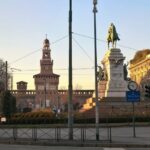
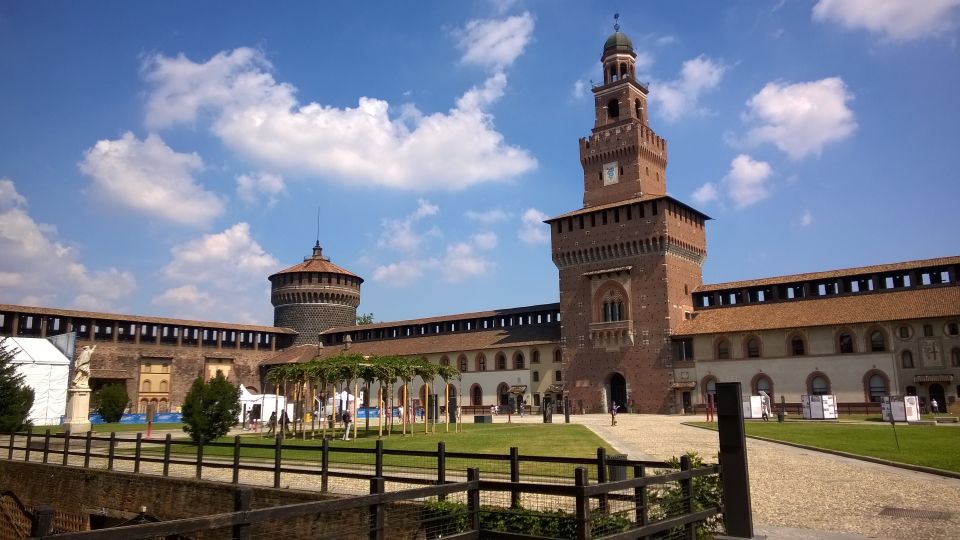
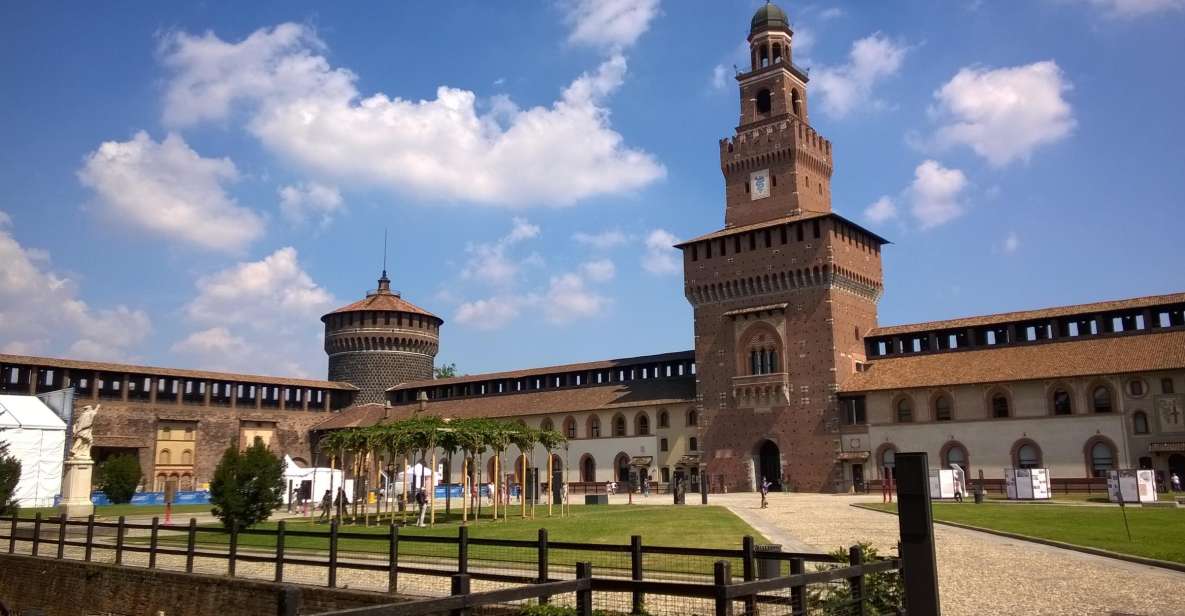
Castello Sforza sets the tone right away. This fortress was home to Milan’s ruling families during the Renaissance, so it’s not just an impressive building—it’s a key to understanding who held power and why Milan mattered in that era.
On a bike tour like this, the value of starting here is that you begin with the city’s political backbone, then you can contrast that later with the older Roman layer. Your guide’s historical commentary is especially helpful because you’re seeing the physical presence of power, but without a guide it’s easy to treat it like scenery.
A practical note: fortress exteriors and surrounding streets can create lots of visual angles. Bring your attention to small details—shapes, layouts, and how the streets position the building—because that’s where the story clicks.
Roman-era archaeological remains: the city gets older fast
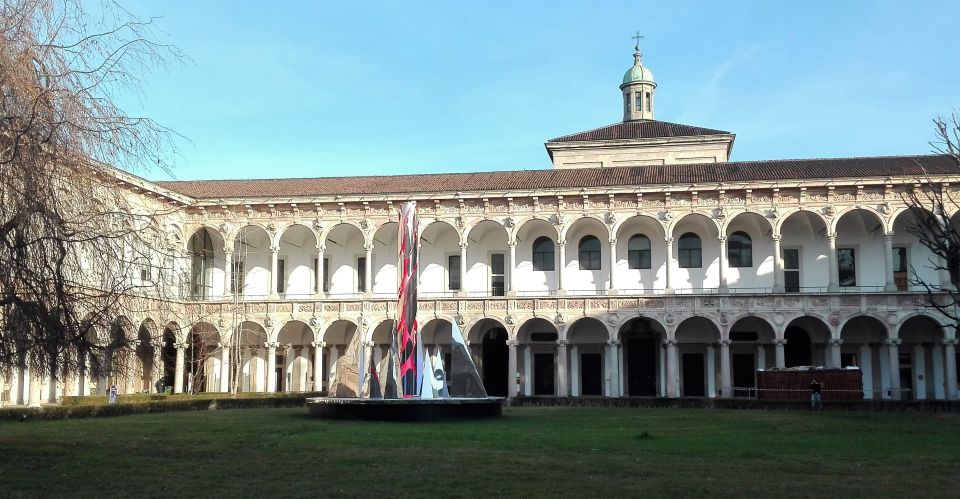
After the Renaissance start, the tour heads to ruins of the Roman era—when Milan acted as a key capital in the Empire. Cycling to Roman remains in the middle of modern traffic is a great reality check. Milan doesn’t replace its past; it layers over it.
This stop is valuable for two reasons:
- You’re looking at traces tied to a specific period of Roman influence.
- You’re getting a guided explanation that turns ruins into context, not just fragments.
If you’re the kind of traveler who loves making sense of a city’s “why,” this is where the bike format shines. You’re not stuck in museum-think mode; you’re reading history in the street environment.
Duomo time: seeing why Milan orbits this cathedral
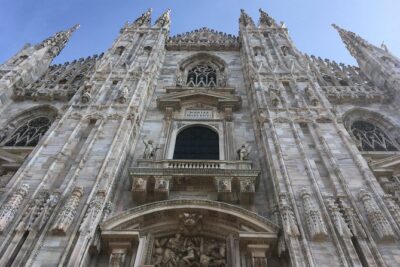
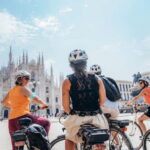
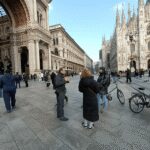
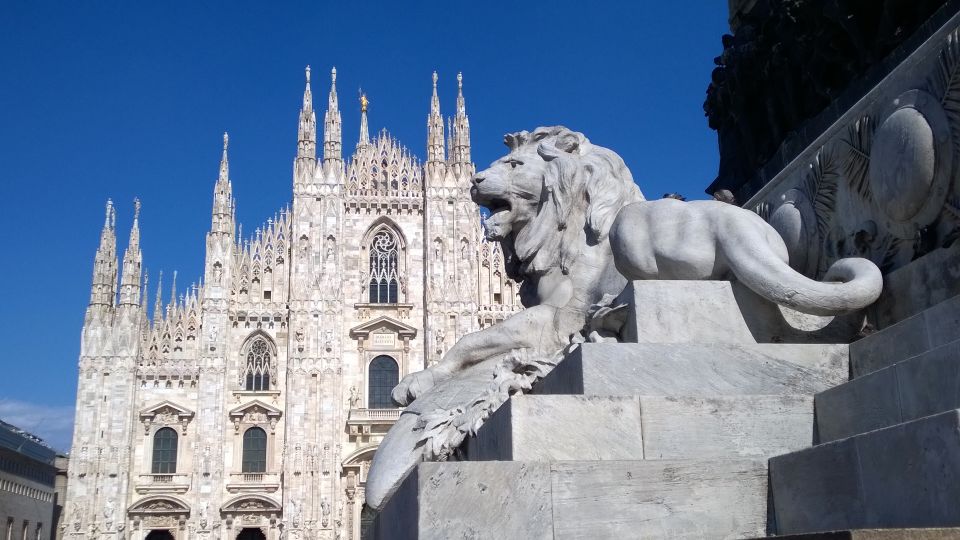
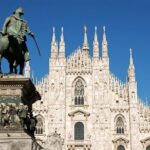
The Duomo is Milan’s symbol, and the tour treats it like the core landmark it is. You’ll get to admire the Duomo Cathedral and focus on its scale and signature design, including the fact that it has 135 spires.
A guided stop here is more useful than it sounds. The Duomo can feel like an obvious must-see, but a guide helps you notice what your eyes would otherwise skip: proportions, visual rhythm, and the way the spires shape the skyline. Even if you’re not going deep into architecture, you’ll leave with a clearer sense of why this cathedral became Milan’s shorthand for identity.
I’d also use the Duomo stop to reset. After Roman ruins and Renaissance fortress energy, pause and let your senses catch up—then you’ll enjoy the shift toward opera and arts.
Teatro alla Scala: Milan’s arts world, not just a landmark
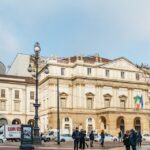
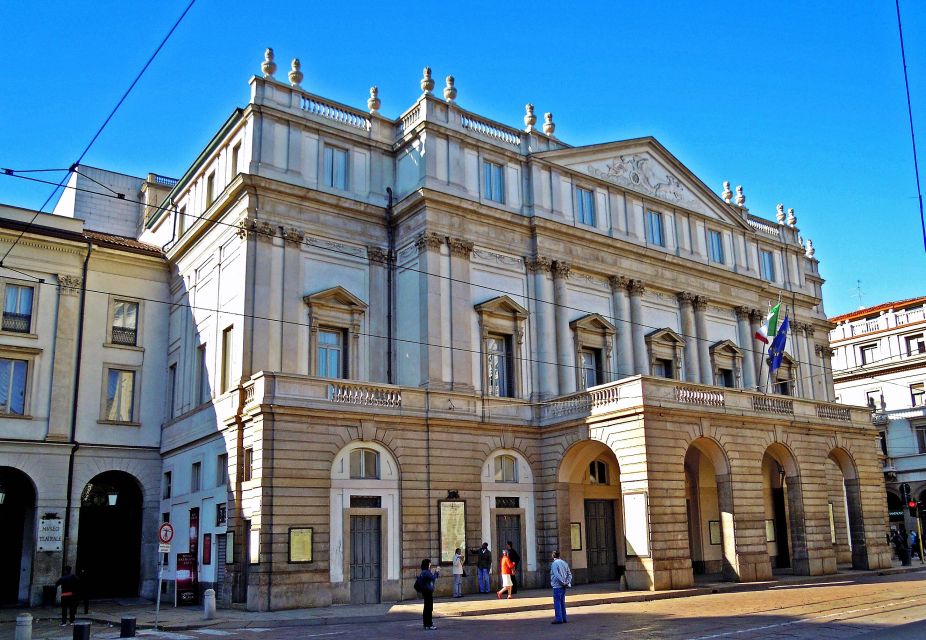
From the Duomo, the tour moves to Teatro alla Scala, one of the leading opera houses in the world. This stop matters because Milan isn’t only monuments; it’s also a city of performance, craft, and cultural institutions.
What I like about including Teatro alla Scala on a short bike tour is the balance it provides. After two “power” stops (Renaissance and Roman), opera gives you a different kind of Milan influence: how the city expresses itself through art.
Your guide’s historical commentary at this stop also helps you connect Milan’s cultural image to the buildings and streets you’ve been seeing. Without that, it can turn into a quick exterior glance.
Leonardo’s projects and ancient basilicas: connecting the centuries
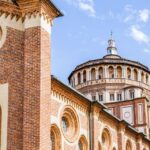
The tour doesn’t only chase famous names. It also weaves in Renaissance monuments and references to Leonardo’s projects, plus ancient basilicas. The point isn’t that you’ll get a full textbook lesson. It’s that you’ll see how Milan’s development connected art, engineering ideas, and religious architecture over time.
This is where a guide makes a big difference. Leonardo’s name alone doesn’t teach you much unless someone ties it to buildings and the city’s evolution. In the same way, “ancient basilicas” becomes more meaningful when you understand what role those religious sites played in earlier Milan.
Even for first-timers, I think this is one of the best ways to build confidence. You don’t need to know Milan already to follow the story—you just need a guide who explains what you’re seeing.
Biking in Milan traffic: comfort, bike condition, and pacing
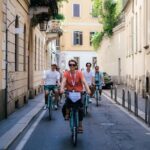
Let’s talk reality. You are riding through city streets, so traffic and stop-and-go moments are part of the experience. Most guides handle this well, and one account highlighted a guide named Vera as competent and safety-minded while guiding riders through Milan’s streets.
Still, I’d treat bike condition and logistics like a checklist, not a wish. In at least one experience, the tour was interrupted, bikes were described as having no locks, and a chain problem left a rider stuck in only first gear. That’s not the kind of trouble you want during a short 3-hour outing.
So here’s how to protect your experience:
- At the start, check the bike basics immediately: brakes, gears, and that the chain feels smooth.
- Ask whether your bike comes with locks or how belongings are expected to be secured during stops.
- Tell your guide your comfort level right away. A private group should allow adjustments in pace.
Also keep in mind that you’ll want practical clothing for city biking, not special-occasion outfits. Comfortable wear helps you enjoy the stops instead of thinking about your back or feet.
Price and value: what $325.13 buys you here
The price is listed as $325.13 per group up to 1, and the tour is private. That pricing structure means value depends on your situation.
Here’s how I’d judge the value:
- Included: bike rental (with available accessories) and an expert guide.
- Not included: meals and drinks.
- Format: 3 hours with live commentary at every stop.
If you’re a solo traveler who wants a guided, structured overview without spending hours planning your own route, the guide and bike inclusion can make the cost feel more justified. If you can share the cost with others, it’s easier to see this as a practical way to get orientation in a city that’s dense and design-heavy.
If cost is your main concern, compare what you’ll actually use. If you want Duomo context, Roman remains explained, and Teatro alla Scala framed in story form, you’re paying for interpretation plus the bike rental. If you’re the type who only wants quick photos, you might feel the price more.
Who this tour suits best
This Milan 3-hour bike tour is a good fit if you want:
- A guided overview that connects Renaissance, Roman, and arts landmarks.
- A practical route that gets you oriented quickly.
- A private setup where the guide can respond in multiple languages.
It’s less ideal if you’re uncomfortable riding in city traffic or if you strongly prefer long, slow, museum-style visits with lots of time off the bike. Also, because bike condition can affect the experience, make sure you’re comfortable doing a quick bike check on arrival.
If you love city stories you can literally ride through, this one has a lot going for it.
Should you book the Milan 3-Hour Cultural Bike Tour?
I think you should book it if your top priority is a fast, guided sweep of Milan’s most important landmarks, with explanations that make Roman remains, the Duomo’s 135 spires, and Teatro alla Scala feel connected rather than random. The private-group setup and multilingual guide are strong perks when you want questions answered in real time.
I’d pause and ask a few practical questions before you go:
- Confirm bike condition and whether locks are provided.
- Ask the guide about pacing in heavy traffic so you know what to expect.
- If you have any comfort limits with biking, say so up front.
If you line up those basics, this can be an excellent way to see Milan’s layers of time in just 3 hours.
FAQ
How long is the Milan 3-hour cultural bike tour?
The tour lasts 3 hours.
Where does the tour start and end?
It starts at the front door of the meeting point building and ends back at the same meeting point.
What’s the closest metro station to the meeting point?
The closest metro stop is Stazione Centrale, with yellow line 3 or green line 2.
Is bike rental included?
Yes. Bike rental is included, and there are available accessories.
Is the tour private?
Yes, it’s a private group.
What languages are available for the live guide?
The live guide is available in English, Italian, German, Spanish, and French.
Does the tour price include meals and drinks?
No. Meals and drinks are not included.
What should I wear for the tour?
Wear clothing comfortable for city biking. Specific sportswear is not necessary.
Can I cancel for a full refund?
You can cancel up to 24 hours in advance for a full refund.