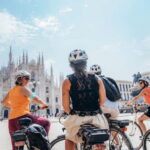
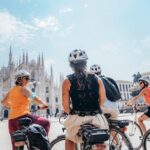
Milan looks bigger at bike speed. In just 3.5 hours, I love how you pedal from the classic Duomo zone into Brera and beyond, with guides like Paulo sharing stories that make the city click, all on an aquamarine bike that feels like part of the day. You get a real sense of Milan without the usual back-and-forth chaos.
What really works is the mix: major sights plus quieter neighborhoods, all linked by an easy route that keeps your legs fresh. One rider summed up the vibe well: it covers the main parts of Milan and still gives you places that buses and fast walking tours tend to skip.
One thing to consider: this is not for people who cannot ride confidently. You also need to be at least 4 ft 4 in (135 cm), since the tour isn’t suited for smaller riders, and the biking is the whole point.
In This Review
- Key Highlights You’ll Actually Feel
- First Pedal From Ticinese: Where the Tour Starts to Make Sense
- Duomo, Palazzo Reale, and Galleria Vittorio Emanuele: Seeing the Icons Without Burnout
- La Scala to Brera: Turning a Sights Tour Into an Art Lover’s Walk-and-Ride
- Porta Nuova’s Cutting-Edge Look and Castello Sforzesco’s Power Mood
- Parco Sempione and Arco della Pace: A Real Breather Between Big Stops
- Roman Remnants Close Out the Ride: Milan’s Empire Footnotes
- Biking Milan the Easy Way: Aquamarine Bikes, Helmets, and Flat-Street Confidence
- Value at About $44: Why This Tour Often Beats a Pick-and-Choose Day
- Who Should Book (and Who Might Want Another Plan)
- Should You Book This Milan Highlights and Quieter Corners Bike Ride?
- FAQ
- How long is the Milan bike tour?
- What’s included with the ticket?
- What language will the guide speak?
- Where do I meet the guide?
- Does the tour run in the rain?
- Do I need to be an experienced cyclist?
- Is there a minimum height requirement?
Key Highlights You’ll Actually Feel
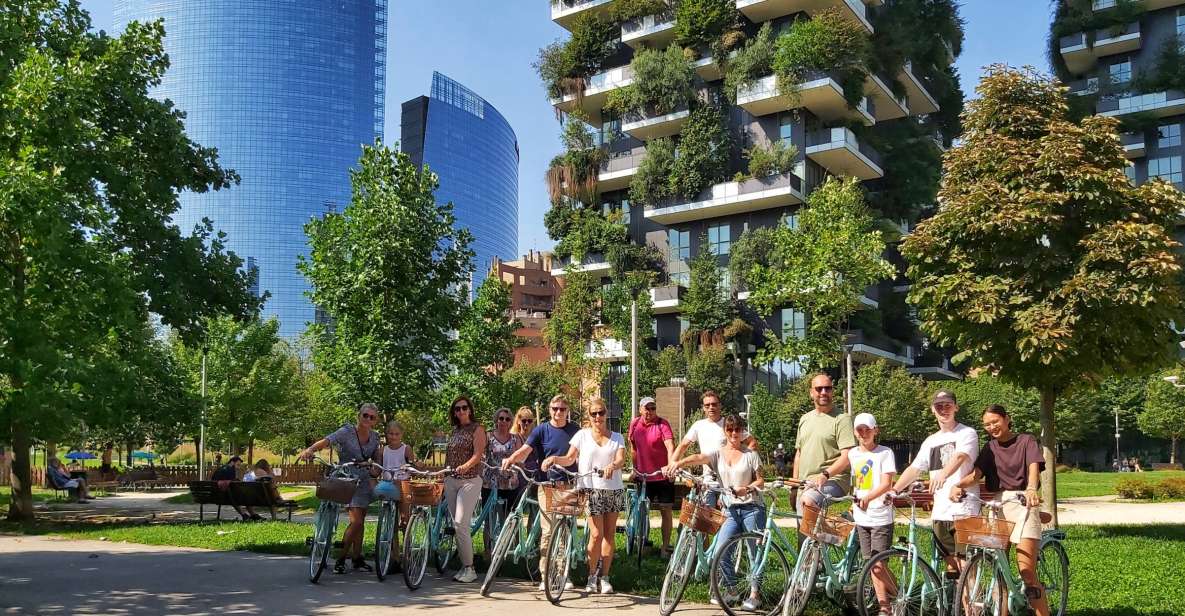
- Aquamarine bikes that look fun and ride comfortably, with helmets included
- A tight 3.5-hour overview that hits Duomo, La Scala, Brera, Porta Nuova, and more
- Guide stories with real scene-setting, including history and present-day hints
- Flat, easy pedaling through Milan, designed for a leisurely group pace
- Stops often include a break mid-ride, with options like coffee and gelato on some departures
First Pedal From Ticinese: Where the Tour Starts to Make Sense
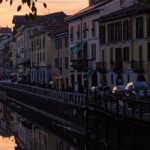
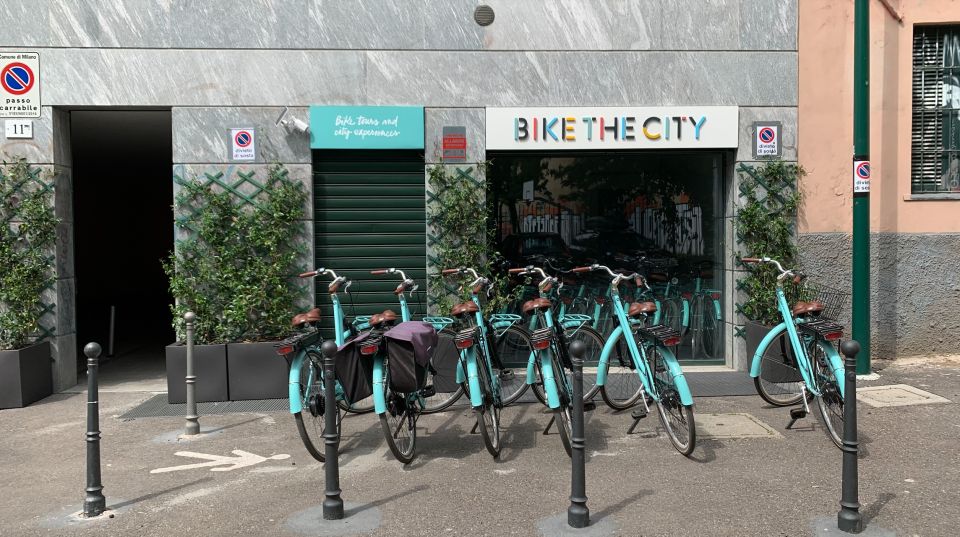
The tour begins in the Ticinese district, which is a smart place to launch from if you want Milan to feel like a city you can live in, not just a museum. It’s lively, local, and close enough to the center that you can get to the big icons quickly.
If you’re arriving by metro, the start is easy to reach:
- Vetra (M4): about a 3-minute walk
- Duomo (M1 and M3): around 14 minutes on foot, or you can use tram option no. 3
- S. Ambrogio (M2): roughly 12 minutes walking, or bus 94
- Porta Genova (M2): about 1.3 km, around 17 minutes on foot
If you’re driving, pay attention to the ZTL area rules. The meeting instructions warn you not to enter the Ztl zone by car, because fines are very real. It’s one of those details that doesn’t sound exciting—until it costs you money.
You can also read our reviews of more cycling tours in Milan
Duomo, Palazzo Reale, and Galleria Vittorio Emanuele: Seeing the Icons Without Burnout
The early part of the ride takes you through Milan’s center highlights, and it’s paced so you can actually enjoy the scenes instead of sprinting between photos.
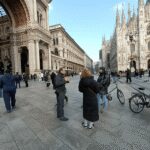
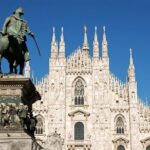
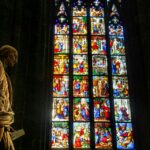
You start with the Duomo Cathedral area, where Gothic architecture dominates everything around it. Even if you’ve seen pictures, being there from street level (and then moving past it on bike) helps you understand why this place is such a magnet for designers, artists, and just plain architecture lovers.
Next comes the Palazzo Reale, which brings a different mood: refined and elegant. It’s the kind of building where you notice details more when you’re not stuck behind a slow bus line.
Then you roll into the Galleria Vittorio Emanuele, Milan’s grand shopping arcade. This is a great stop on a bike tour because the scale hits you fast. You get the feeling of the city’s old-school glamour while your guide ties it to what Milan became over time.
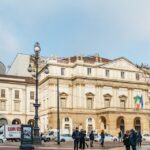
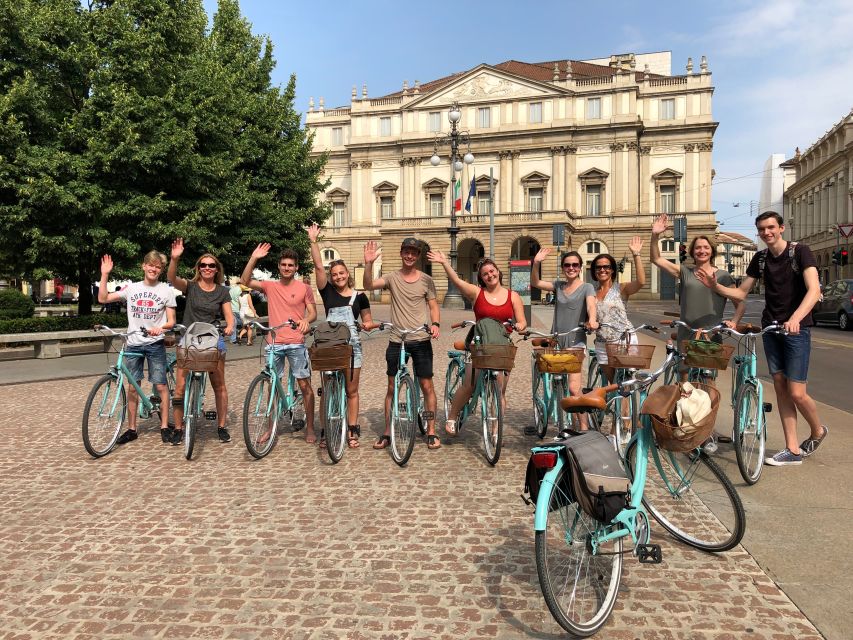
At some point, you’ll also ride by La Scala, the opera house. This part is less about rushing in and more about context: why the building matters, and how Milan treats culture like something you can see from the street.
La Scala to Brera: Turning a Sights Tour Into an Art Lover’s Walk-and-Ride
After the city center icons, the route moves toward Brera, often described as Milan’s artistic heart. On two wheels, Brera feels like a change in temperature. The streets get more intimate, and your guide’s stories land better because you’re not just looking at one monument. You’re moving through a neighborhood.
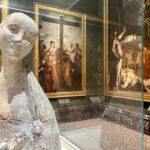
Brera also connects naturally to the Pinacoteca area. Even if you don’t do a full museum visit, it’s valuable to understand where Milan keeps its art attention. You end up with an easier plan for later—what you want to see up close after you’ve gotten your bearings.
The ride here is also where I like the group pace the most. You’re not stuck in long tourist lines, but you still get frequent “look, notice, remember this” moments from the guide. It’s the difference between seeing Milan and learning how the city organizes itself.
If you’re the type who wants to decide where to spend more time, Brera is where your next-day itinerary tends to form.
Porta Nuova’s Cutting-Edge Look and Castello Sforzesco’s Power Mood
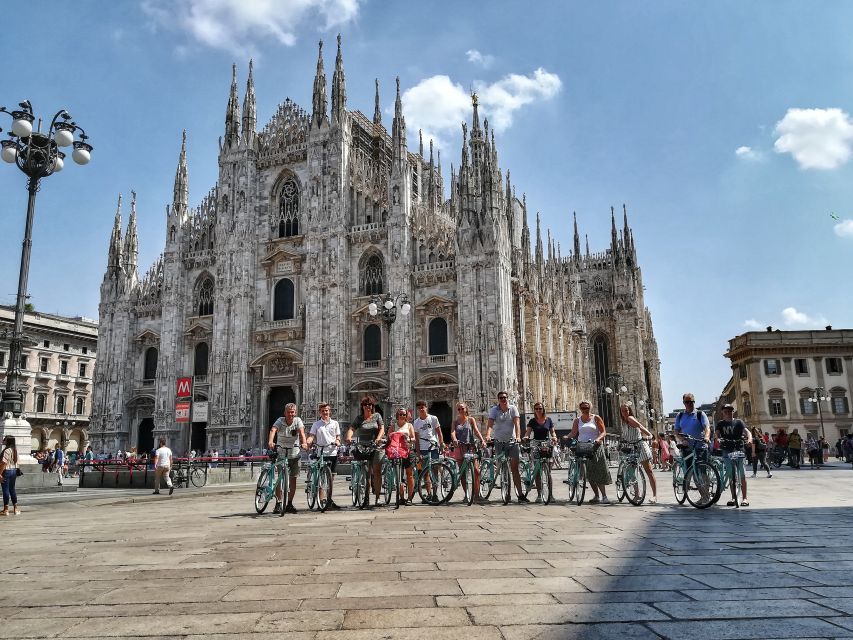
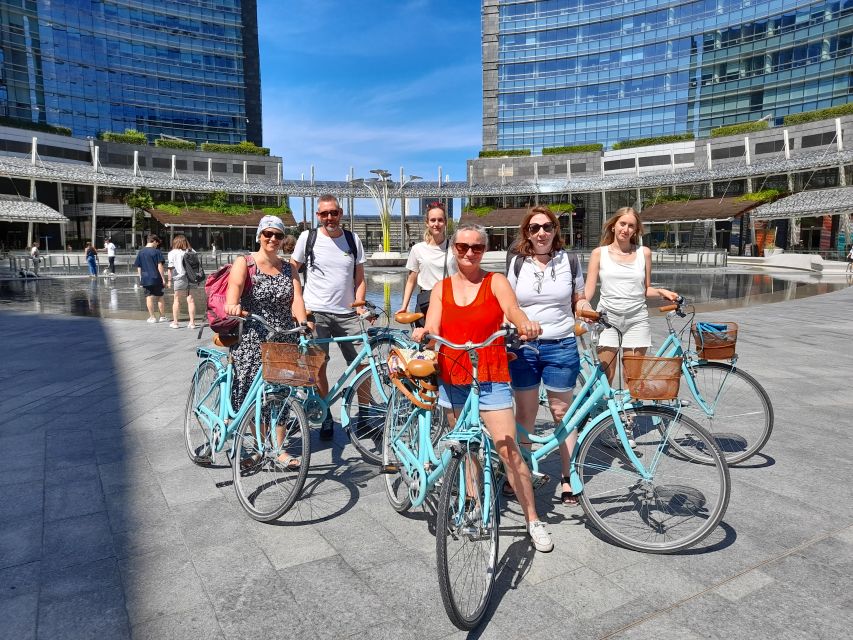
Next comes a big contrast: Porta Nuova. This district is where Milan leans into modern architecture and the city’s forward-looking side. From bike level, you see how the streets are planned—what’s wide, what’s intentional, where the design wants you to flow.
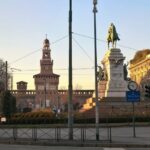
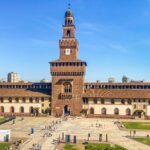
Then the route swings back into a classic “main character” moment with Castello Sforzesco. This is Milan at full historical weight. The castle complex isn’t just a pretty stop; it’s a reminder that Milan used to be a political center with real muscle behind it.
One of the best parts of doing this by bike is that you’re not bouncing between eras as an abstract idea. You’re physically traveling from one mood to another in minutes. That makes the city feel like one place with layers, instead of separate destinations stacked on top of each other.
Parco Sempione and Arco della Pace: A Real Breather Between Big Stops
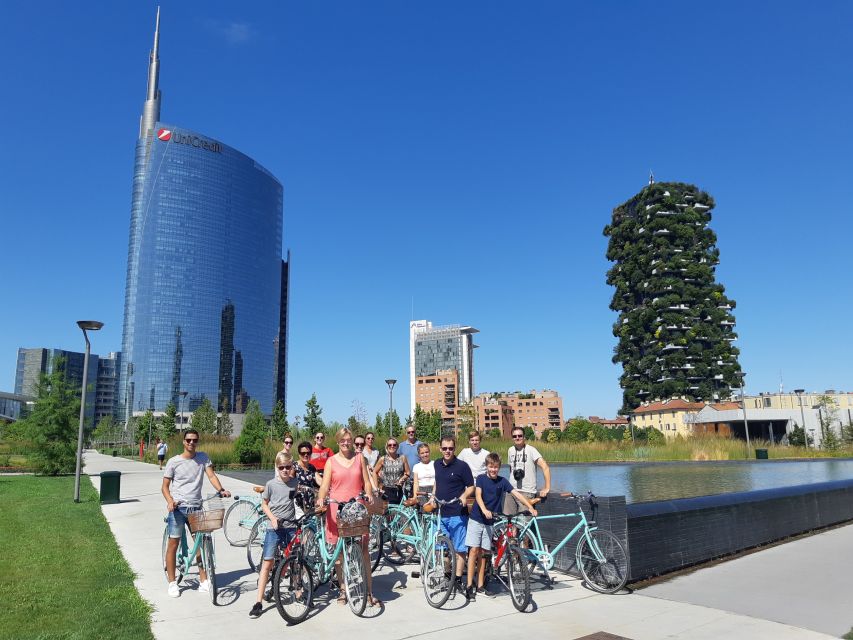
After the heavier sights, you get Parco Sempione, Milan’s green lung. A park stop on a bike tour is more than a break from the handlebars. It gives your brain space to absorb what you’ve seen, and it slows you down at the exact moment you might otherwise feel museum-burned.
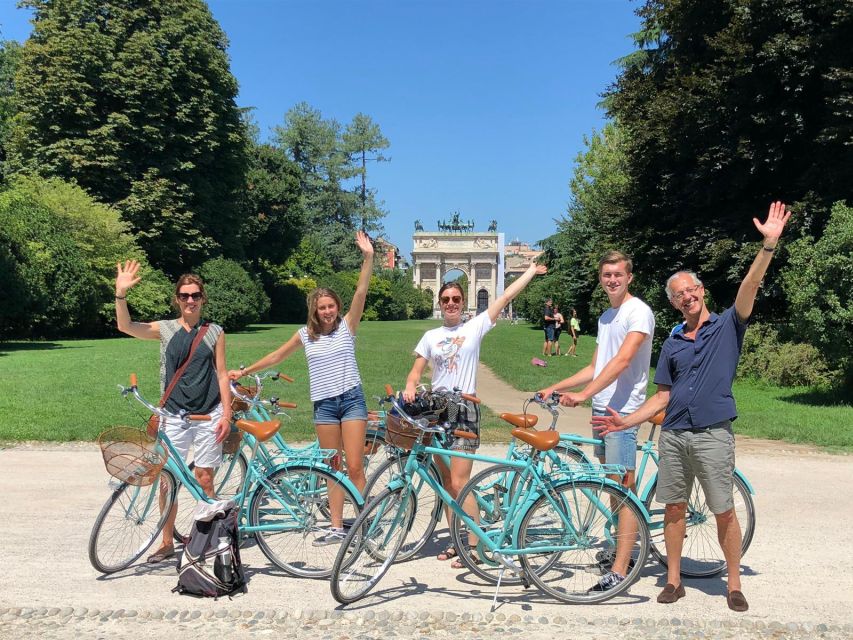
Then the ride continues toward the Arco della Pace. It’s a strong finish to the monument sequence because it connects the open, calmer park setting with the feeling of civic importance. You get a “wow” moment without needing another ticket line.
This section is also where you often notice how the guides manage pacing. The tour is built for smooth movement, but it doesn’t feel like a race.
You can also read our reviews of more guided tours in Milan
Roman Remnants Close Out the Ride: Milan’s Empire Footnotes
The final stretch adds something many first-timer itineraries skip: Roman ruins that recall Milan’s time as a capital in the Roman Empire.
You visit remnants tied to the imperial palace, plus the circus and amphitheater areas. This is one of the most interesting ways to end the ride because it reframes Milan. You’re not only looking at fashion, art, and modern design—you’re seeing a deeper foundation under the streets you’re pedaling.
And because the tour ends after this segment and returns you back to the meeting point, it feels complete. You don’t end with “Okay, now what?” You end with a sense that you’ve walked through the city’s timeline, one block at a time.
Biking Milan the Easy Way: Aquamarine Bikes, Helmets, and Flat-Street Confidence
A lot of bike tours advertise convenience. This one leans into it in practical ways.
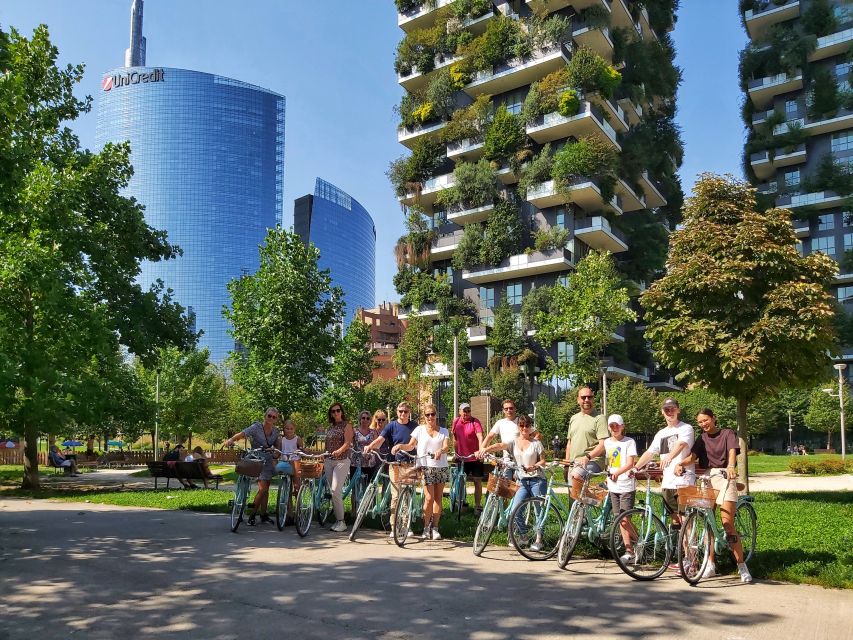
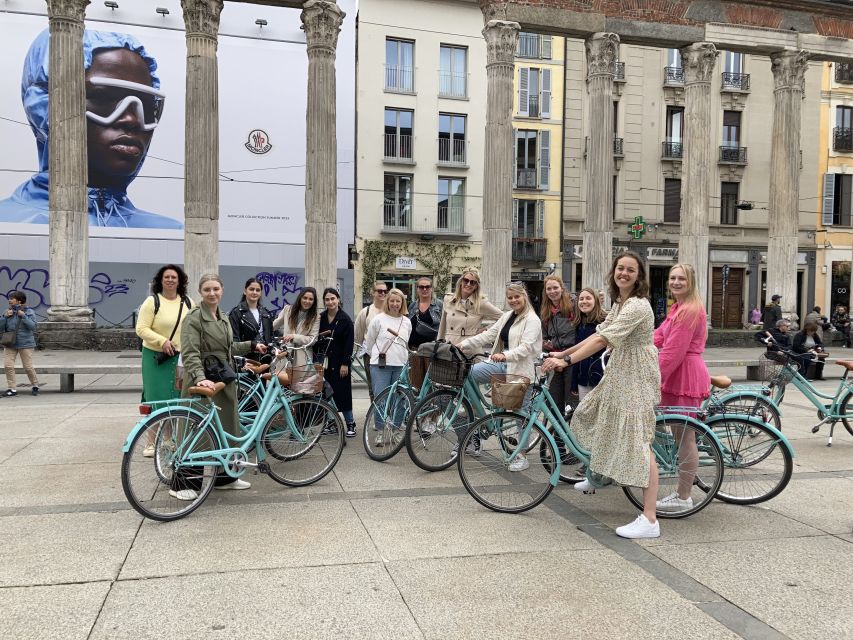
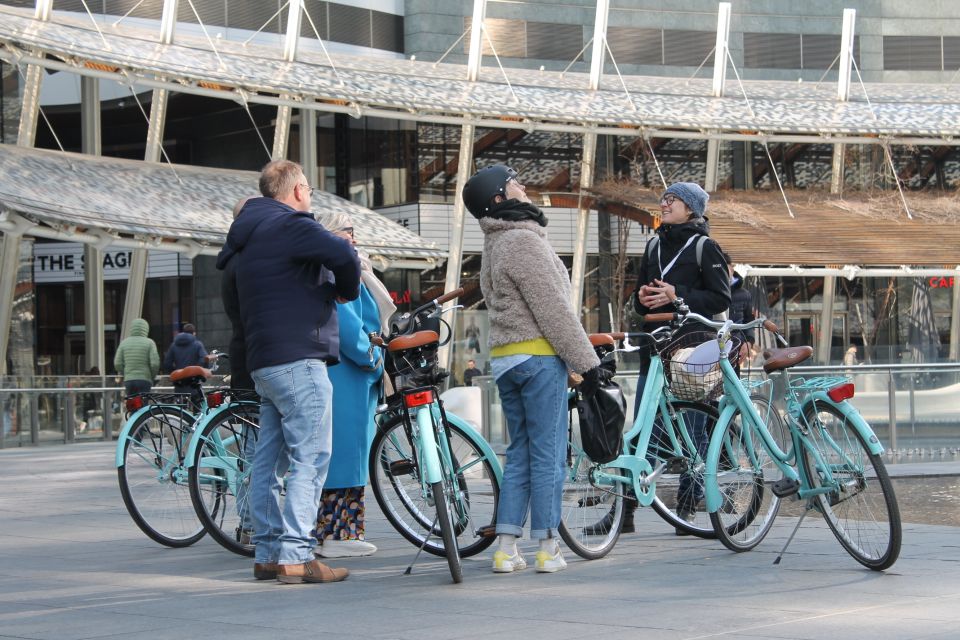
You ride on an iconic aquamarine bike, and the tour includes a helmet and an official guide. There’s also third-party liability insurance and a waterproof jacket in case the weather turns.
The ride itself is designed to feel doable. Many riders noted the roads are flat and easy to pedal, and that you don’t need to be constantly thinking about gears. That matters in Milan, where even a short ride can feel intense if you’re stressed about traffic or hills. Here, the route planning helps keep your focus on the sights.
Pace and stopping style are another standout. The tour is built with frequent pauses for explanations and photo time. Some departures also include a mid-ride break where you can grab coffee and gelato, and there’s even an option for a pause halfway through on smaller groups. That’s a small detail, but it makes a 3.5-hour tour feel like a relaxed afternoon instead of a chore.
The guides are also a big reason people rate this tour so highly. Names that show up in standout feedback include Paulo, and also Sandra, with praise for clear explanations, friendly guiding, and solid navigation through streets where safety matters.
Value at About $44: Why This Tour Often Beats a Pick-and-Choose Day
At around $44.41 per person for 3.5 hours, this is priced for value if you want maximum sight coverage without spending your whole day in transit.
Here’s what you’re getting beyond the bike:
- Bike + helmet included
- An official guide to connect the dots between buildings and districts
- Waterproof jacket so drizzle doesn’t ruin your mood
- Third-party liability insurance
- A route that links the biggest names (Duomo, La Scala, Brera, Castello) with other districts (Porta Nuova and Roman remnants)
If you tried to do this day on your own, you’d spend time figuring out how to sequence everything, where to park or how to manage transit, and where the best neighborhoods are for a second visit. This tour compresses that decision-making into one guided sweep.
Is it a bargain? It’s one of those prices that becomes a bargain the moment you realize you’re not just ticking boxes—you’re leaving with a mental map of Milan. And for many first-time visitors, that’s the real payoff.
Who Should Book (and Who Might Want Another Plan)
This is a great fit if:
- You’re in Milan for a short time and want a big-picture overview quickly
- You want to see more than just the Duomo area
- You like history and art stories, but you also want them tied to real street scenes
- You want a fun way to rest your legs after walking all day (a bike day can be a recovery day in disguise)
It’s not the best fit if:
- You cannot ride a bike confidently
- You’re under 135 cm (4 ft 4 in)
- You expect a walking-only tour with no biking involved
If you’re arriving in the city by metro, this tour is especially convenient thanks to the clear station walking distances.
Should You Book This Milan Highlights and Quieter Corners Bike Ride?
I’d book it if you want an efficient, guided day that blends major landmarks with neighborhood texture. The route makes sense, the bikes are well cared for in feedback, and the guides (including Paulo and Sandra, based on strong positive mentions) are a big part of why people feel they got more than just photos.
I’d skip it only if you’re nervous about riding or you’d rather spend your energy on museums and ticketed interiors. This tour is about movement, context, and seeing the city from street level at an easy pace.
If Milan is new to you, do this early in your trip. You’ll leave with a shortlist of where you want to go back—on foot, on transit, or with longer time.
FAQ
How long is the Milan bike tour?
The tour lasts about 3.5 hours.
What’s included with the ticket?
You get the bike, a helmet, an official guide, third-party liability insurance, and a waterproof jacket in case of rain.
What language will the guide speak?
The live tour guide is offered in Dutch and English.
Where do I meet the guide?
You can find the start near Metro Station Vetra (M4), about a 3-minute walk. The tour also lists walk/tram/bus options from Duomo, S. Ambrogio, and Porta Genova. The end returns to the meeting point.
Does the tour run in the rain?
It will go ahead even with a gentle sprinkle. If weather becomes heavier, you’ll be contacted about rescheduling or a full refund.
Do I need to be an experienced cyclist?
No experience is mentioned as required, but the tour is not suitable for people who cannot ride a bike.
Is there a minimum height requirement?
Yes. The tour is not suitable for people under 4 ft 4 in (135 cm).