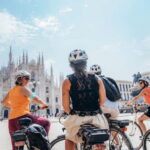
Milan looks different once you’re on wheels. This guided ride threads together big-name landmarks and more everyday neighborhoods, so you get context fast and keep moving when walking would take all day.
I really like that the tour includes the basics—bike and helmet—and the route covers an impressive stretch of the city in one morning. You’ll also get stop-by-stop history as you pedal, plus photo pauses so you’re not just speed-walking from one postcard to the next. One thing to consider: you’re riding through narrow streets, pedestrian-heavy areas, and some uneven pavement, so it’s better if you’re comfortable sharing space and staying alert.
In This Review
- Key things I’d plan around
- How This 3-Hour Bike Loop Fits a Busy Milan Day
- Porta Ticinese to Duomo: Starting With Milan’s Power and Fashion Mood
- Teatro alla Scala and Brera’s Picture-Postcard Streets
- Porta Nuova: Modern Milan’s Skyline for Architecture Fans
- Castello Sforzesco and Parco Sempione: Power, Then Peace
- Colonne di San Lorenzo: Rome’s Footprints Inside Milan
- Bikes, Safety, and the Reality of Street Riding
- Price and Value: Is $47.16 a Good Deal?
- Should You Book This Milan Bike Tour?
- FAQ
- What’s included in the tour price?
- How long is the Milan bike tour?
- Where does the tour start and end?
- Is the tour offered in English?
- What are the age and height requirements?
- Do I need to worry about weather?
Key things I’d plan around
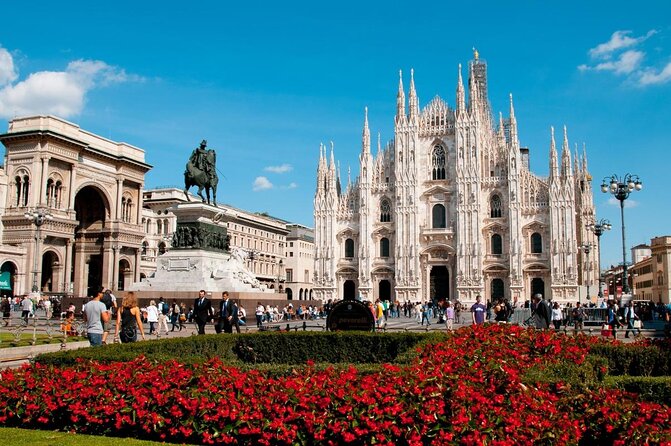
- Bike-first city orientation: a fast way to get your bearings for the rest of your trip
- Major sights without ticket stress: several top stops are viewed from the outside
- Old-meets-new route: Roman ruins, Renaissance power, and modern skyline architecture
- Guides like Paulo, Sandra, Angelo, Marco: consistently praised for pacing and city stories
- Real street conditions: cobbles/brick can mean a bumpy ride, and groups can feel crowded
How This 3-Hour Bike Loop Fits a Busy Milan Day
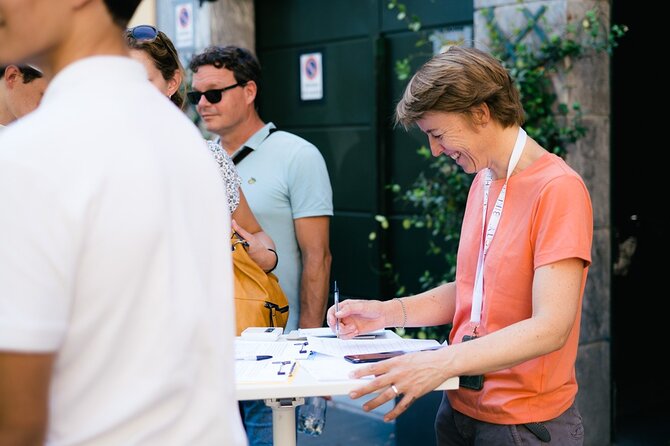
This is the kind of tour that makes sense if you only have one day (or you want your first taste of Milan before you start picking neighborhoods on your own). It runs about 3 hours 15 minutes, starting at 10:00 am, and it ends right back at the meeting point. That timing is handy: you can still have a full afternoon for museums, shopping, aperitivo, or more biking.
At $47.16 per person, the value comes from what’s included and what you cover. You’re paying for a guided route through multiple districts, with a bike and helmet provided. Since several of the landmarks are stop-and-see from the outside, you’re not constantly dealing with long ticket lines just to understand the city.
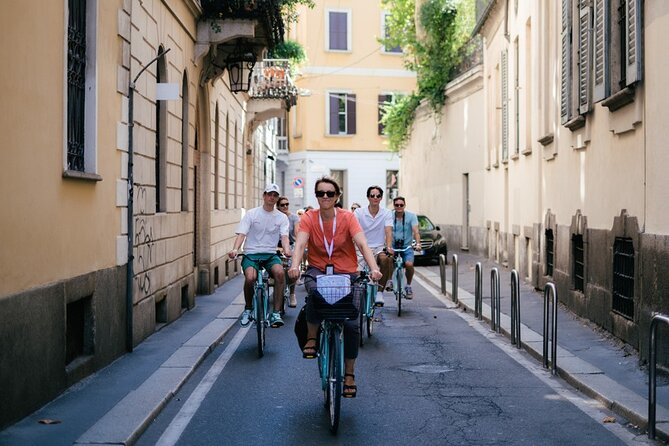
The tour also tends to be an easy ride in terms of effort: many people describe it as not difficult, with a good pace. Still, don’t ignore the reality of Milan streets—small lanes, lots of people, and pavement that isn’t always smooth. If you’ve got basic bike balance and you can stay patient in busy public space, you’ll be fine.
You can also read our reviews of more cycling tours in Milan
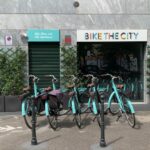
Porta Ticinese to Duomo: Starting With Milan’s Power and Fashion Mood
The ride kicks off near Via Vetere 11. You meet your guide, get a quick safety rundown, and hop on a classic Dutch-style bike. That setup matters: a steadier bike style helps a lot when the route switches from quieter back streets to busier areas.
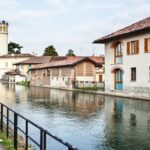
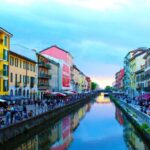
The first real flavor is Porta Ticinese, a district tied to the old city gate and a more bohemian vibe. This opening leg is a great warm-up. It also helps you understand how Milan moves beyond the “museum strip” idea—Milan has real neighborhoods with their own energy.
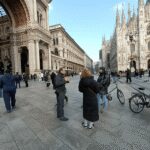
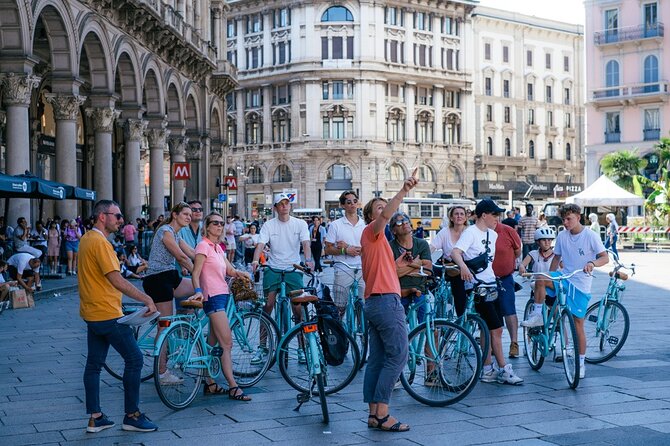
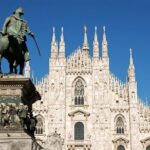
Next comes the Duomo di Milano area. You’ll see the cathedral from the outside and also catch the surrounding landmarks clustered nearby, including the Royal Palace, the Museo del Novecento, and the Galleria Vittorio Emanuele. Even if you’re not going inside, this is a strong way to orient yourself. The Duomo sits at the center of so many city walks that seeing it early makes everything else easier to plan.
A practical note: Duomo-area streets can be crowded, and stopping for photos is part of the deal. If you prefer low-friction sightseeing, just expect some slowdowns right around the most famous sights.
Teatro alla Scala and Brera’s Picture-Postcard Streets
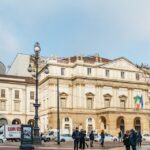
After Duomo, the tour heads to Teatro alla Scala. You’ll view the theatre from the outside and get context about what makes it such a major cultural landmark—its prestige, and why it matters to Milan’s identity. This is one of those stops where the guide’s framing is the value. You’re not just seeing a famous facade; you’re learning what role it plays in the city’s story.
Then you roll into Brera, one of Milan’s most charming areas for wandering. Here, the streets feel older and more human-sized. You’ll pass through lanes lined with historic houses and churches, and you’ll connect the “art world Milan” idea to what you actually see on the ground—small workshops tucked into a maze of streets.
If you’re the type who likes to come back later, Brera is a smart stop. It’s perfect for a second visit on foot after your bike tour gives you the lay of the land. You’ll also be in the right mindset for the kind of small pauses and slow looking that Brera rewards.
Downside? Brera is the kind of place where pedestrians are everywhere. The upside is atmosphere. The challenge is bike navigation. Keep your eyes up, assume foot traffic will drift into your path, and you’ll enjoy it.
Porta Nuova: Modern Milan’s Skyline for Architecture Fans
One of the smartest things about this tour is that it doesn’t only treat Milan as a Renaissance and cathedral city. After Brera, you head into Porta Nuova, where the look changes fast.
Along this stretch you may spot:
- Palazzo Lombardia
- Biblioteca degli Alberi
- Unicredit Tower
- Bosco Verticale
This is a great segment for architecture lovers because it isn’t just one building—it’s an entire “future Milan” district with multiple signatures. Seeing these from the bike lane gives you a sense of scale you don’t always get from photos taken from a single angle.
It’s also a mental reset. After classic stone and history, your brain gets a breather with clean lines and open views. If your travel style is “I want variety,” this part is one of the reasons the tour feels efficient.
Castello Sforzesco and Parco Sempione: Power, Then Peace
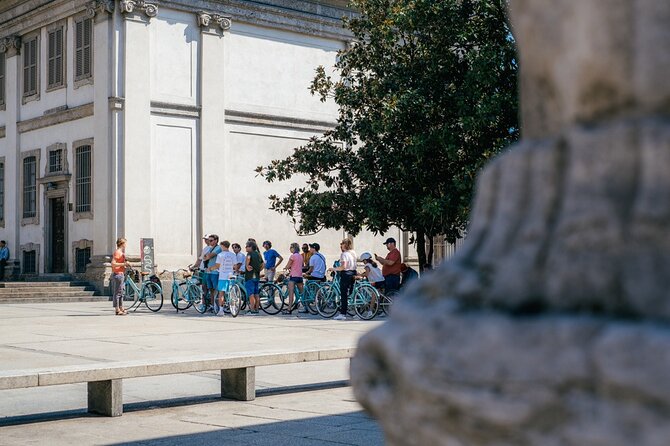
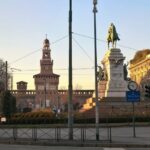
Next up is Castello Sforzesco, one of the most recognizable historical symbols in the city. The bike route sets you up for a dramatic entrance vibe. You’ll learn how this fortress was built for the first Duke of Milan in the 14th century, and you’ll also hear about Leonardo da Vinci, who was called to Milan by Ludovico il Moro in 1482.
Sforza Castle is also one of those places where just stopping near the grounds helps you grasp Milan’s medieval layers. Even if you don’t go inside, it gives weight to the city beyond the shopping and the fashion headlines.
Then you slow down in Parco Sempione, Milan’s green pause. You’ll visit the park area and see the Peace Arch. This section is more than a scenery break—it’s how the tour balances sightseeing with your energy. A little time on grass and trees helps you reset before the Roman history stop.
If you’re sensitive to pace, this is a highlight. Several guides are praised for timing breaks well, and a park segment makes that easier without forcing everyone to scramble.
Colonne di San Lorenzo: Rome’s Footprints Inside Milan
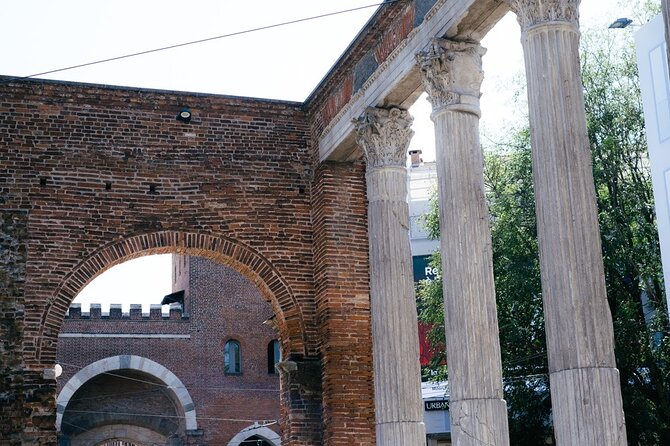
To wrap up, you’ll head toward Colonne di San Lorenzo. This stop connects Milan to the Roman empire era—an angle that many first-time visitors don’t expect. The area is tied to the old Roman ruins from when Milan was a capital in the imperial world, and you’ll see the San Lorenzo columns as part of that story.
The best part of ending this way is how it lands. You started with the Gothic icon of Milan, spent time moving through Renaissance power and artist neighborhoods, toured the modern skyline, and then—right at the end—you get the Roman thread. It turns Milan from a set of sights into a timeline you can actually feel while riding.
The tour finishes back at the meeting point, so you can transition smoothly to lunch, museum hopping, or just your favorite coffee stop nearby.
Bikes, Safety, and the Reality of Street Riding
The tour includes bike and helmet rental. E-bikes are not included, but they’re listed as available for a €15 add-on (subject to availability). If you’re unsure about riding comfort, an e-bike can help, especially if you want to keep your energy for later in the day.
Most riders describe the cycling itself as easy. Still, it’s smart to take “easy” in the practical sense—not “perfect roads.” Cobblestones and brick stretches can mean vibrations, and some dedicated bike paths are not paved smoothly. Also, streets are narrow and pedestrian traffic can be heavy. That means you should have at least a little confidence riding in busy places.
Your feet and posture matter. The tour lists a minimum age of 9, and for riders 135–155 cm tall, you’re asked to email to reserve a suitable bike due to limited availability. If you’re in that height range, don’t wait until the last minute.
Group size is another factor. The maximum is 30, and some people noted that larger groups can feel crowded in pedestrian zones. If you’re sensitive to slow-moving crowds on bikes, aim for good weather and an off-peak day if you can.
Price and Value: Is $47.16 a Good Deal?
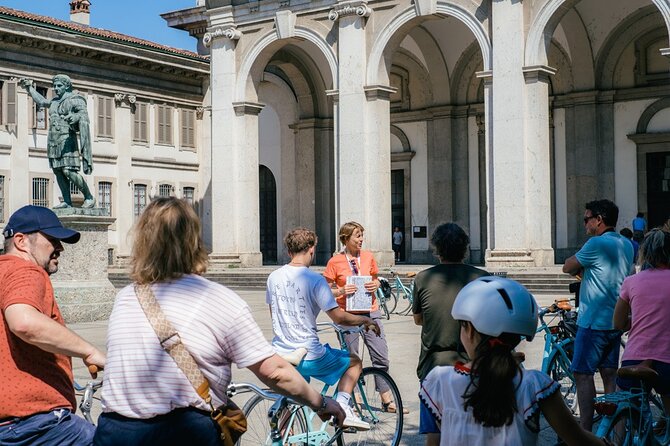
Here’s how I’d judge the value.
You’re paying for:
- a guided route that hits multiple districts
- bike and helmet included
- multiple major photo stops and orientation points
The practical advantage is that several stops are “see from outside” moments, so you’re not stuck coordinating tickets for every landmark just to understand why it matters. And because you’re covering a broad loop, you’re less likely to waste your first day circling the same downtown areas.
Would it be cheaper on your own? Sure. But you’d lose the stop-by-stop context that makes Milan feel logical instead of random. A good guide helps you connect the Duomo area, the theatre culture, the castle’s political story, and the Roman remnants into one coherent picture.
If you want a second, deeper day later—by foot in Brera, by museum visits near the Duomo, or by returning to Sforza—you’ll get more out of that time because your bike tour gives you the map in your head.
Should You Book This Milan Bike Tour?
If you want an efficient way to see a lot of Milan early in your trip, I’d book it. It’s especially worth it if you:
- have limited time and want a strong overview
- like photo stops with historical context
- want to compare old Milan and modern Milan in one morning
I’d be cautious if:
- you’re very uncomfortable on a bike with mixed surfaces
- you hate crowded pedestrian areas
- you’re expecting a fully off-street, smooth-path ride
If you’re somewhere in the middle, you’ll probably enjoy it most if you treat it like a guided ride with sightseeing pauses—not like a relaxed bike path cruise.
FAQ
What’s included in the tour price?
The tour price includes bike and helmet rental. E-bikes are not included, but they are available for €15 per person subject to availability.
How long is the Milan bike tour?
The tour is about 3 hours 15 minutes.
Where does the tour start and end?
It starts at Via Vetere, 11, 20123 Milano MI, Italy and ends back at the same meeting point.
Is the tour offered in English?
Yes, it’s offered in English.
What are the age and height requirements?
The minimum age is 9 years. For riders between 135 and 155 cm tall, you need to email to reserve a suitable bike, since availability is limited.
Do I need to worry about weather?
The experience requires good weather. If it’s canceled due to poor weather, you’ll be offered a different date or a full refund.