REVIEW · MILAN
Milan’s Must See: Half-Day Tour of Last Supper, Duomo & La Scala
Book on Viator →Operated by Zani Viaggi · Bookable on Viator
Milan hits fast, and this tour delivers. I like that you get real access to The Last Supper plus skip-the-line entry, and I also love how the day links major landmarks (Duomo → La Scala → Santa Maria delle Grazie) with guide commentary that explains what you’re actually looking at. One catch: it’s a lot of walking at a brisk pace, and the viewing time at the mural is strictly limited to 15 minutes.
If it’s your first time in Milan, this is a strong way to get oriented quickly. The Duomo visit is built for scale and detail, La Scala adds the city’s artistic pulse, and the Last Supper stop is the centerpiece with conservation rules you can feel in the timing and crowd control. You’ll just want to plan for an active half-day and follow the dress and ID rules so you don’t lose time on-site.
In This Review
- Key things to know before you go
- The best value here: timed access to the hardest ticket in Milan
- Milan in 3.5 hours: what the flow feels like
- Galleria Vittorio Emanuele II: the stylish warm-up before the big sights
- Entering Duomo di Milano: scale, detail, and the dress code reality check
- La Scala: the opera house view (and when you might not get the box)
- The Last Supper at Santa Maria delle Grazie: why the 15 minutes feel like more
- How the guide and audio headphones change the day
- Walking pace: the part you should take seriously
- Price vs. what you actually get
- When things don’t go perfectly: closure and schedule changes
- Who should book this tour (and who might not love it)
- Should you book this tour?
- FAQ
- How long is the half-day tour?
- What attractions are included?
- How long do I get to see The Last Supper?
- What do I need to bring for entry to The Last Supper?
- Is there a dress code?
- Where does the tour start and end?
Key things to know before you go
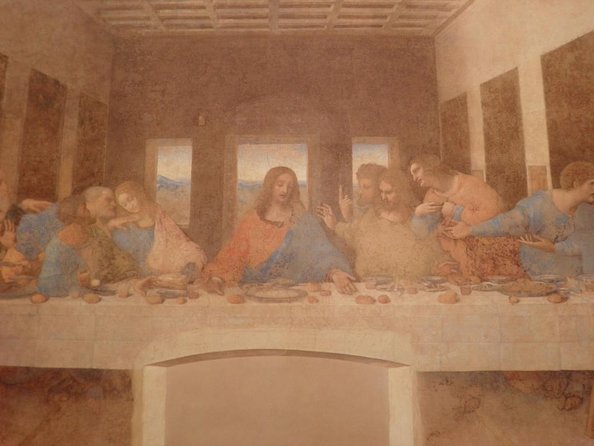
- Skip-the-line Last Supper entry (15 minutes max) so you’re not fighting for scarce timed tickets
- Duomo roof-and-statue scale lesson with an included admission visit (great for first-timers)
- La Scala public box view depends on schedules if there’s a rehearsal or show, the box may be skipped
- ID and full details are mandatory for Last Supper entry (full names, surnames, and dates of birth)
- Dress code is enforced at worship sites: knees and shoulders covered, no shorts or sleeveless tops
- Expect a brisk pace: you’ll have a short window to rest, but this isn’t a slow stroll day
The best value here: timed access to the hardest ticket in Milan
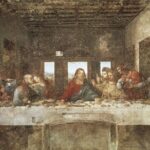
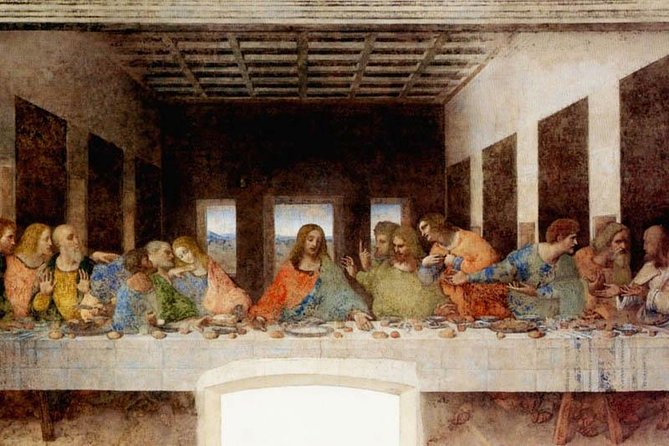
Leonardo da Vinci’s The Last Supper is the reason most people book this tour, and it’s easy to see why. The mural is housed at Santa Maria delle Grazie, and the painting’s fragile condition comes with strict visitor limits. That’s why your visit is capped at 15 minutes, and why entry is tightly controlled.
In plain terms, you’re paying for two things: the guide to put the artwork in context, and the pre-booked, skip-the-line entry that would be stressful to secure on your own. At $130.96 per person, it’s not cheap, but the included admissions (Duomo, La Scala theatre and museum, and The Last Supper) help justify the price—especially if you’re short on time.
The tour is designed around the reality that Last Supper tickets are difficult to obtain. The fact it’s typically booked about 85 days in advance is a big clue: the best experience comes when you lock it in early and show up ready to move.
You can also read our reviews of more tours and experiences in Milan
Milan in 3.5 hours: what the flow feels like
The tour runs about 3 hours 30 minutes and mixes walking with transport. You start at the Milan Visitor Center (Zani Viaggi) at Largo Cairoli, and the tour ends at Leonardo’s Last Supper Museum near Piazza di Santa Maria delle Grazie. There’s an air-conditioned vehicle and you’ll get audio guide headphones, which matter because this is a busy, city-center route.
The itinerary order can shift depending on the day, traffic, or operational needs. That’s normal for Milan, but it does affect your expectations for timing. Your best strategy is to arrive a little early, keep your ID accessible, and don’t schedule anything tight right after the tour.
Size-wise, it’s capped at 40 travelers, which is still “a group” but small enough that the guide can keep momentum. Headsets help with coverage, though I’d watch out for the occasional static reported by some participants—bring a calm attitude and be ready to ask the guide to repeat key points if you miss something.
Galleria Vittorio Emanuele II: the stylish warm-up before the big sights
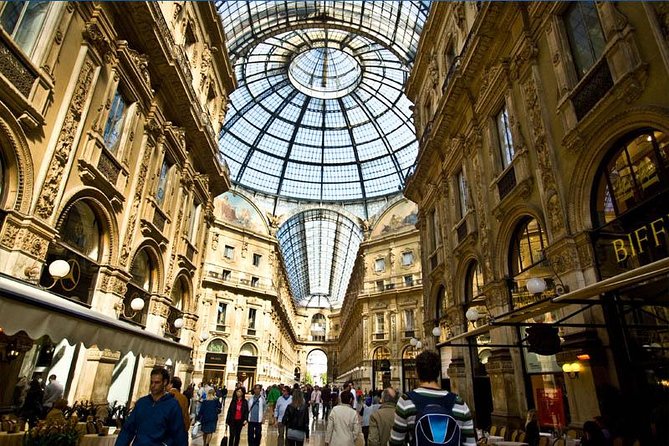
Your first stop is the Galleria Vittorio Emanuele II, Milan’s famous 19th-century shopping arcade. This isn’t just a place to browse. It’s a quick taste of Milan’s “drawing room” vibe—glass-vaulted, high-ceilinged, and built for people-watching.
What I like about this stop for your mental map is how it sets the tone for the day. You get that sense of Milan as both art city and fashion capital before you hit the religious and cultural heavyweights. It’s also a decent moment to regroup before the Duomo, even if you’re not planning to buy anything.
Also, the arcade is busy, so keep your bag situation simple. The tour later includes strict rules at the Duomo, and you’ll feel better if you’re not changing how you carry things mid-day.
Entering Duomo di Milano: scale, detail, and the dress code reality check
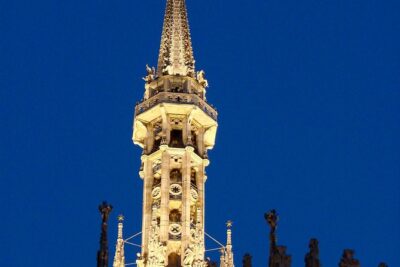
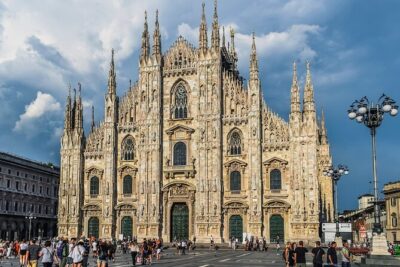
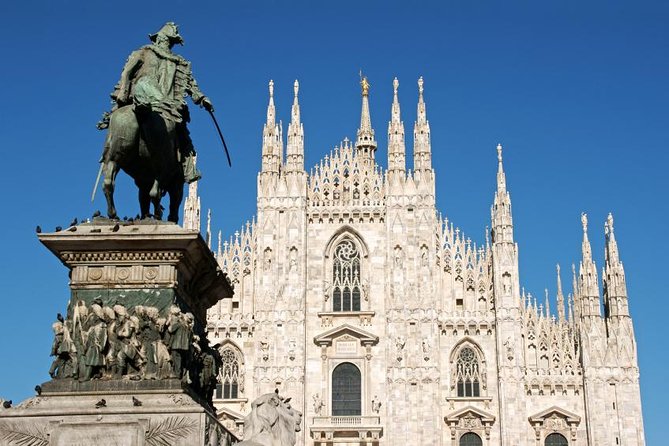
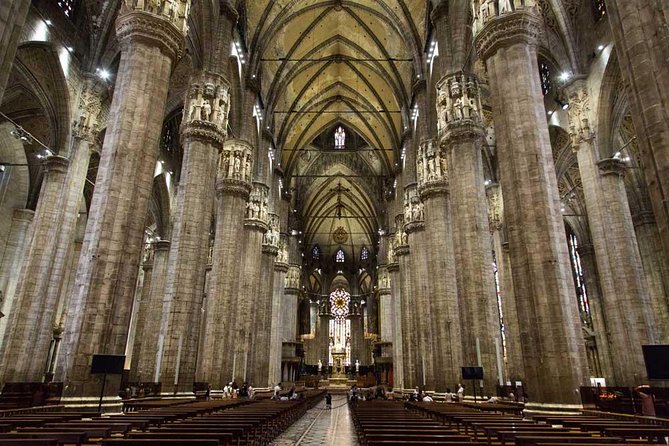
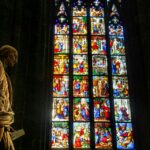
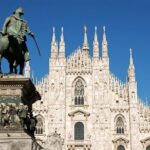
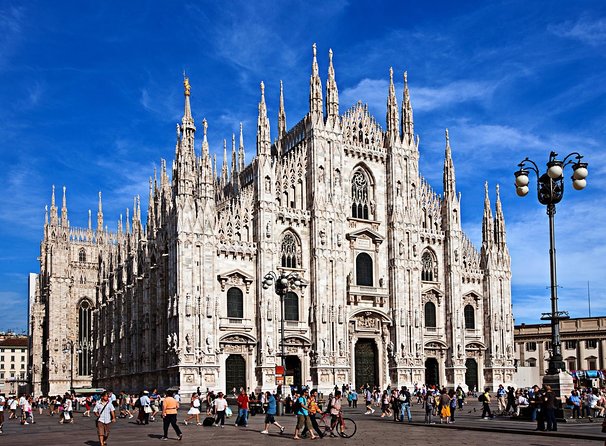
The Duomo di Milano visit is about scale—and not in a “wow, tall building” way. It’s about how much stone is actually packed into the design. The cathedral roof and facade are covered with roughly 135 spires and around 3,200 statues, which is almost impossible to process without seeing it in person.
You get about 30 minutes and included admission. That’s enough time for an impactful first look plus some guided orientation, but it’s not a long architectural deep dive. If you’re the kind of person who likes to stop for 20 photos of one detail, you’ll need to pace yourself.
Two practical notes you should treat as non-negotiable:
- Dress code for worship sites is enforced: no shorts and no sleeveless tops; knees and shoulders must be covered for everyone.
- Inside the Duomo, no strollers, bulky bags, or umbrellas.
This is the part where some people get surprised. A quick fix: bring a light layer you can wear over bare shoulders, and keep bags small enough to pass smoothly through security.
La Scala: the opera house view (and when you might not get the box)
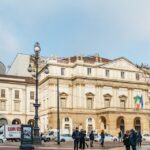
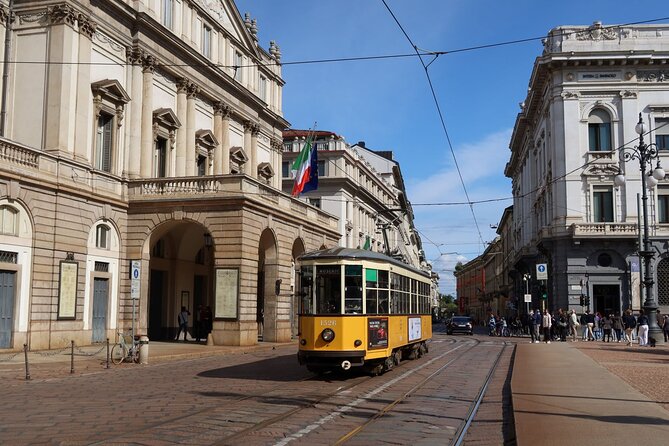
La Scala is Milan’s most famous opera house, founded in 1778 and still active today. With a guide, the building starts to feel like a living stage rather than a photo spot.
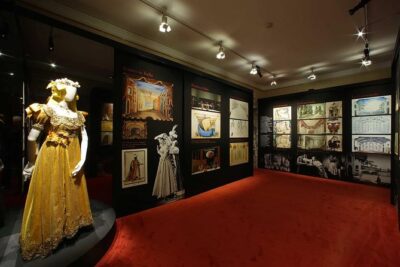
Your La Scala time is also about 30 minutes, including admission to the theatre and museum. One of the tour’s standout perks is that you may get a view down toward the orchestra pit from a public box—and this can be truly special if the day’s schedule allows it.
But here’s the thing to plan for: if a rehearsal or show is taking place during your visit, you may not visit the public box. Even then, the theatre and museum access is still valuable, and your guide should help you make sense of what you’re seeing.
A few names came up for guide quality in people’s experiences—Andrea, Maximus, and Massimo are mentioned as guides who kept the tone lively and the explanations clear. That matters here because La Scala can be intimidating if you don’t know what to look for.
If you need one reason to like this stop beyond the building itself: it connects Milan’s fashion-and-design energy with its performance culture. You’ll likely walk out thinking about how people dressed, gathered, and watched history unfold inside these walls.
The Last Supper at Santa Maria delle Grazie: why the 15 minutes feel like more
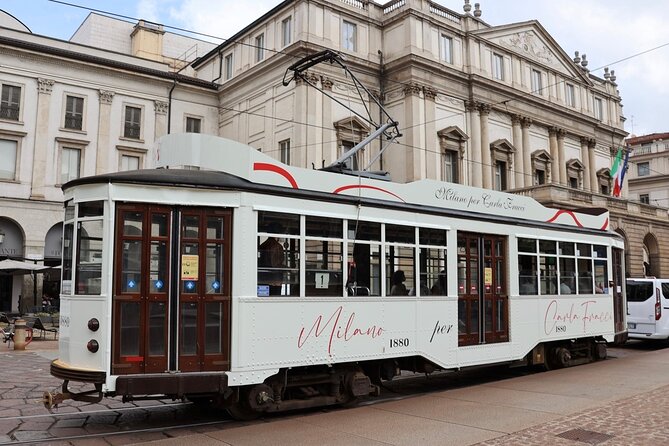
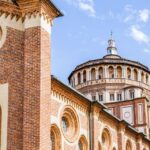
This is the heart of the tour. You’re taken to view Leonardo da Vinci’s The Last Supper, a UNESCO World Heritage site located at Santa Maria delle Grazie in Milan. Conservation is the whole story here—because the mural is delicate, visitor access is limited and controlled.
Your on-site viewing time is 15 minutes, and yes, they manage the timing tightly. That sounds short until you’re standing in the space. Many people are shocked by how quickly the guided framing makes those 15 minutes feel full: the guide explains why restrictions exist, what you’re noticing, and why the mural remains so compelling centuries later.
You’ll also need to show picture ID on arrival at the site, and you must have supplied the tour with your full names, surnames, and dates of birth. That’s not busywork; it’s part of how the museum keeps entry controlled.
Photo-wise, you should assume the rules will be enforced, but the big takeaway is that you’re there for focus. Try to use your camera sparingly and spend most of the time looking with your own eyes.
A final timing note: the tour ends at the Last Supper Museum. There’s no promise you’ll be dropped back at the starting point or your hotel. Plan your return route ahead of time.
How the guide and audio headphones change the day
A half-day tour lives or dies by its guide. The best guides don’t just list facts; they help you build a mental model as you walk. From the experiences people described, guides like Andrea, Maximus, and Massimo tend to connect the sights to Milan’s identity—religion and politics, art and performance, craftsmanship and everyday city life.
Audio headphones help you hear commentary without constantly leaning toward the guide in crowds. Still, watch for occasional headset static reported by some participants. If you can’t hear clearly, ask to adjust the channel or let the guide know right away.
This is also why the tour works well for first-timers. Without guidance, you can see the Duomo and La Scala and still miss how they fit together. With guidance, those stops become part of one story.
Walking pace: the part you should take seriously
This tour includes a walking component, and it’s not a slow wander. Expect city crowds, quick transitions, and a brisk group pace. Some people said they felt they were moving constantly and could occasionally be separated from the guide in busy areas.
If you want to make this easier on yourself:
- wear comfortable walking shoes
- keep water in mind (food and drinks aren’t included)
- keep your bag light so you don’t get slowed by security or crowd flow
You’ll get the most breathing-room during the longer stop moments—especially inside La Scala—so use those pauses to reset before the final Last Supper push.
If you have mobility concerns, this tour includes indoor/outdoor transitions and stairs at sites. For example, one participant mentioned their mobility needs weren’t anticipated, so take extra care if stairs could be an issue for you.
Price vs. what you actually get
Let’s talk real value. You pay $130.96, and you receive:
- Duomo admission
- La Scala theatre and museum admission
- The Last Supper admission (timed, pre-booked access)
- A professional guide plus audio headphones
- A mix of walking and air-conditioned transport
The included admissions matter because the Last Supper is the one attraction that often costs more time and effort to secure independently. If you tried to build this yourself, you’d likely spend extra energy hunting tickets, dealing with timed entry, and figuring out what’s worth your limited hours.
That said, this is still a group tour with limited flexibility. If you want long independent time inside any one site (especially the Duomo), the short stop windows may feel tight.
When things don’t go perfectly: closure and schedule changes
Two factors can affect your day without notice:
- Order and timing can change due to traffic or organizational requirements.
- If Duomo or La Scala closes due to circumstances beyond the provider’s control, there may be no partial refunds.
Also, La Scala’s public box viewing is schedule-dependent, as noted earlier. These aren’t “rare” issues in a city with rehearsals, crowd patterns, and day-to-day operations. The best mindset is flexible expectations: your plan is still the best highlights route, but you should be ready for minor shifts.
One more practical note: some participants described moments where they weren’t guided back and had to make their own way after being dropped near the end point. Since the tour ends at the Last Supper Museum, it’s smart to plan your return using metro or taxi so you’re not stuck in cold or rain with nobody to regroup with.
Who should book this tour (and who might not love it)
This is ideal if:
- you’re seeing Milan for the first time
- you want the big three (Duomo, La Scala, Last Supper) in one half-day
- you value guided context so you understand what you’re looking at
- you want a reliable way to access The Last Supper without ticket stress
It might not be the best fit if:
- you dislike brisk walking and crowd navigation
- you need very flexible pacing at each stop
- you can’t meet the strict dress and ID requirements
- you’re hoping for lots of free time inside the monuments
Should you book this tour?
If you’re choosing between winging it and doing the heavy-hitter sights with structure, I’d lean toward booking. The combination of pre-booked Last Supper entry, included admissions, and an expert guide gives you a day that actually makes sense in the limited time most people have in Milan.
Book it early, follow the dress code, and bring your ID. Then show up ready to walk and look. You’ll finish the tour with the Duomo’s scale in your head, La Scala’s theatre feeling real, and The Last Supper’s controlled 15-minute visit still sitting with you long after you leave.
FAQ
How long is the half-day tour?
The tour runs about 3 hours 30 minutes.
What attractions are included?
Admission is included for the Duomo, La Scala theatre and museum, and Leonardo da Vinci’s The Last Supper.
How long do I get to see The Last Supper?
Your viewing time is limited to 15 minutes.
What do I need to bring for entry to The Last Supper?
You must provide full names, surnames, and dates of birth as required by the museum, and you must bring a valid ID document (or a copy) for the visit.
Is there a dress code?
Yes. For places of worship, knees and shoulders must be covered. No shorts or sleeveless tops are allowed.
Where does the tour start and end?
It starts at the Milan Visitor Center – Zani Viaggi (Largo Cairoli, 18) and ends at Leonardo’s Last Supper Museum (Piazza di Santa Maria delle Grazie, 2).