REVIEW · MILAN
Milan: Bike tour of the city
Book on GetYourGuide →Operated by AllRide Milan · Bookable on GetYourGuide
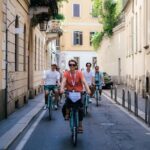
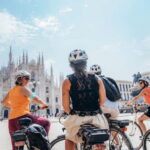
Ride Milan like a local guide. This small-group bike tour is designed for people who want city sights plus the kind of local road knowledge you only get with Rossignoli bikes and a real guide. You’ll pedal through Milan’s center and hear stories and practical curiosities as you move.
I love the pacing and how it stays friendly for keeping the group together, with guides working the front and rear. I also like that you get the basics handled for you—helmet, top-notch bikes, and a live guide in English or Italian—so you can focus on seeing the city.
One consideration: this isn’t for everyone. You need to be able to ride a bike, meet the height/fitness limits, and it’s not suitable for children under 14.
In This Review
- Key things I’d bet you’ll care about
- Why a 3.5-hour bike tour works so well in Milan
- Meeting at Allride: the simple start that sets the tone
- Porta Nuova: the first taste of modern Milan
- Brera District: the kind of streets you remember later
- Piazza della Scala: music-and-power energy, up close
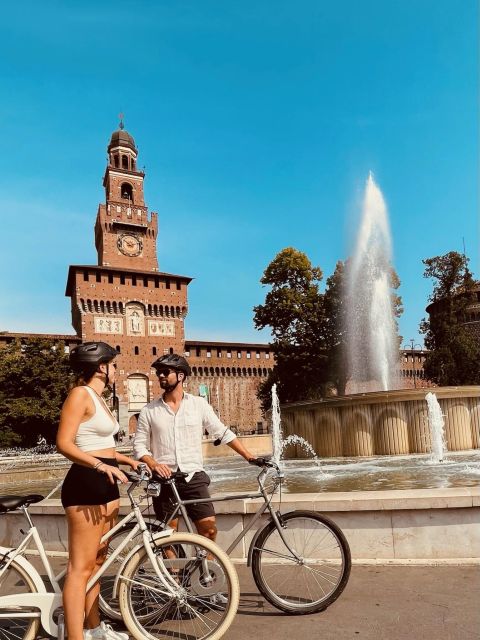
- Sforza Castle: a landmark stop you can actually enjoy
- Navigli District: canals, atmosphere, and “slow down for a moment” energy
- Porta Ticinese: a neighborhood transition you’ll feel in your legs
- Milan Cathedral: why this stop matters even if you’ve seen photos
- Quadrilatero della Moda: shopping streets and city geometry
- Villa Necchi Campiglio and Indro Montanelli gardens: the quieter break
- Price and value: what you really get for $55.80
- Who should book this Milan bike tour, and who shouldn’t
- Should you book it?
- FAQ
- How long is the Milan bike tour?
- What languages are the live guides?
- What’s the group size limit?
- What’s included in the price?
- Is the tour suitable for children?
- Is free cancellation available?
Key things I’d bet you’ll care about
- Small group size (10 max): easier conversation, more photo stops, and less waiting around.
- Rossignoli bicycle comfort: you’re riding a premium brand, not a rental feel.
- A local guide who actually rides: routes include the turns and “less obvious” bike paths.
- Well-paced 3.5 hours: enough time for big highlights without turning it into a full-day project.
- Two-guide setup: you stay together, with support both at the front and rear.
- Lots of major districts, not just monuments: Brera, Navigli, Porta Ticinese, and more.
Why a 3.5-hour bike tour works so well in Milan
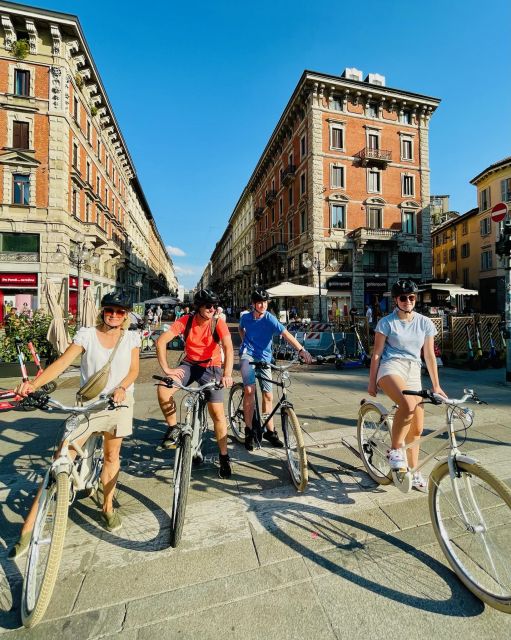
Milan can be a lot on foot: you’re constantly crossing streets, losing time at bottlenecks, and getting stuck behind tour groups. Here, you get motion plus views in the same stroke. In 3.5 hours, you’ll cover enough ground that the morning feels like a real orientation, not just a highlight reel.
The route is built for “see it, then learn it” travel. The stops are frequent enough that you don’t feel trapped in one big commute, but spaced enough that you can actually enjoy the ride between them. If you like a plan with room for questions, this format is a good fit.
You can also read our reviews of more cycling tours in Milan
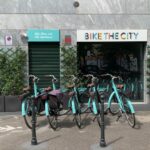
Meeting at Allride: the simple start that sets the tone
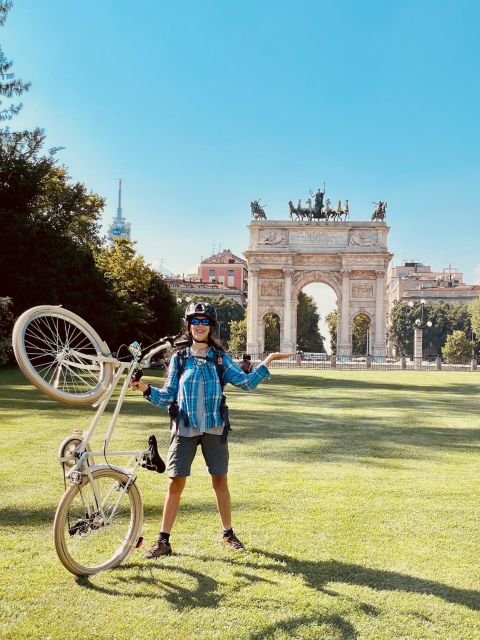
You start at Allride – Bike Tour Milan, meeting by a fountain at the center of the tree-lined square. That matters more than it sounds. It’s an easy landmark, so you waste less time trying to find the group before you even begin.
From there, you’re set up with a helmet and a premium Rossignoli bicycle. You don’t have to juggle gear or worry about whether the bike is comfortable enough for multiple districts. You also get a live guide in English and Italian, which helps if you want to ask follow-ups instead of just listening.
With a small group (limited to 10 participants), you’ll feel the difference right away. You’re not packed in like a city bus. And because there are typically guides at the front and rear, you’re less likely to get separated when traffic or intersections demand attention.
Porta Nuova: the first taste of modern Milan
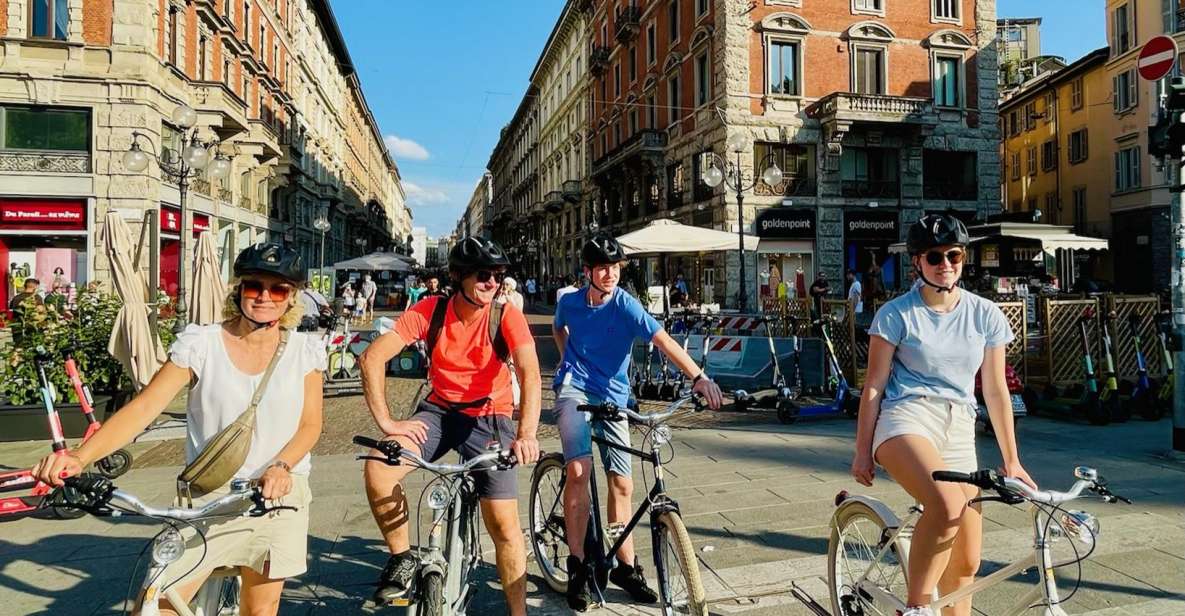
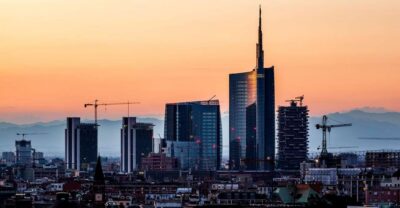
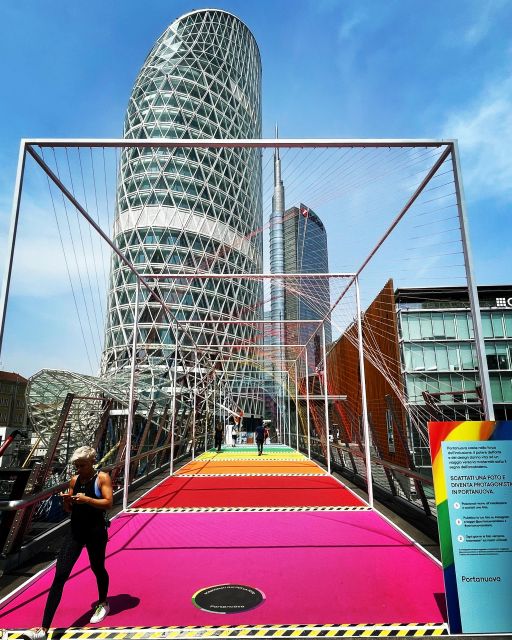
Your ride begins with a short stop at Porta Nuova (about 15 minutes). This is a smart opening because it helps you get rolling in the right rhythm while still seeing a part of Milan that contrasts with the older center.
This early segment also functions as a warm-up. The group gets used to the bike flow, the guide’s pacing, and the way the route threads through traffic and bike-friendly stretches. If you’re a confident cyclist, you’ll appreciate that the ride starts moving rather than stalling on a single viewpoint.
Brera District: the kind of streets you remember later
Next up is Brera District for about 30 minutes. Brera is the sort of neighborhood where the streets feel designed for wandering, but on a bike you can cover more ground without turning it into a walking marathon.
This stop is one of the reasons bike tours beat “only photos” sightseeing. You don’t just pass landmarks—you get time to absorb the neighborhood vibe. The guide stories and anecdotes make that absorption stick, because you’re not just looking at buildings, you’re learning the why behind the scenes.
One practical note: Brera is popular. On a bike tour, you’ll still have company, but the format keeps things moving so you don’t spend the whole time waiting.
Piazza della Scala: music-and-power energy, up close
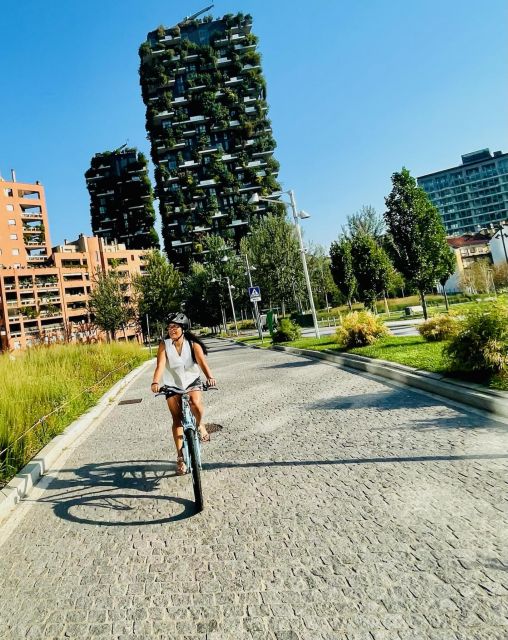
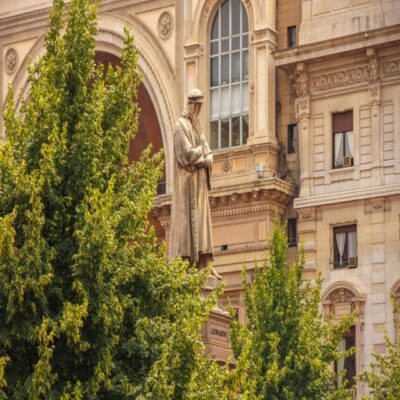
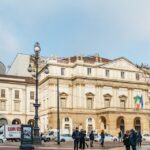
You then reach Piazza Della Scala for about 15 minutes. Even if you’re not a hardcore opera fan, this area has gravitas. It’s one of those city-center zones where the architecture and the open square feeling help you “read” Milan in one glance.
This stop is timed well—short enough to avoid long delays, long enough to get your bearings and photos. The guide approach tends to focus on quick, usable context: what you’re looking at and how it fits into Milan’s bigger story.
If you’re the type who likes to know what you’re seeing right away, this is a good moment to ask questions.
You can also read our reviews of more city tours in Milan
Sforza Castle: a landmark stop you can actually enjoy
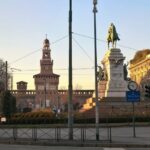
About 15 minutes at Sforza Castle gives you time to take in the scale without turning it into a rushed sprint. With a guided ride, you also get the advantage of moving in and out of the area efficiently.
A castle stop on a bike tour works differently than visiting on foot. You’re not trapped inside a long walking circuit. You’re approaching, pausing, then rolling out—so the castle becomes a highlight in the flow of the city rather than the entire plan.
Navigli District: canals, atmosphere, and “slow down for a moment” energy
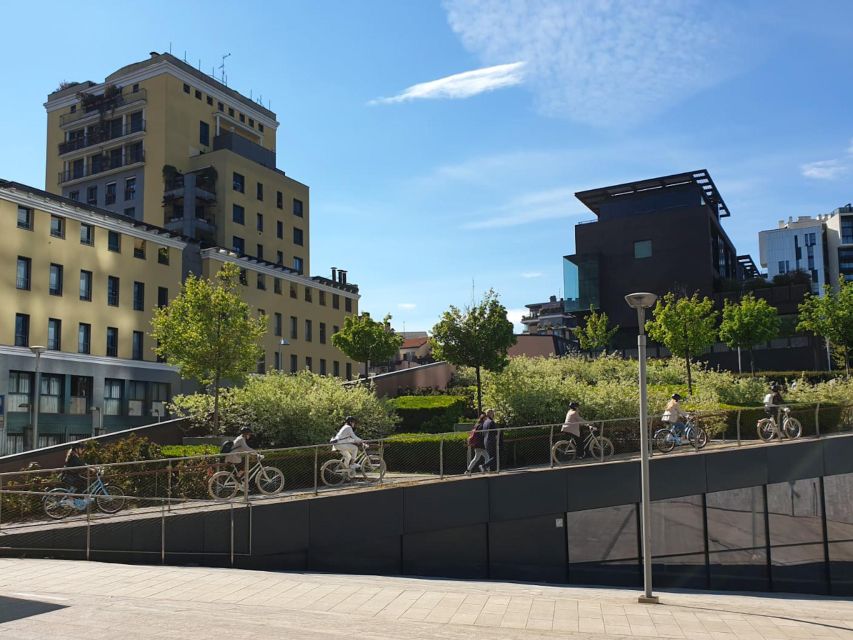
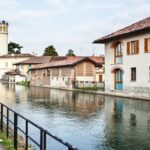
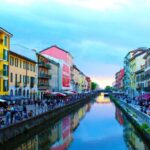
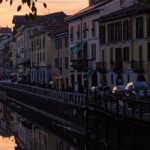
Next is Navigli District for about 30 minutes. This is one of the stops that tends to make people slow down. The canal-side feel changes the way the city sounds and moves around you.
On a bike tour, you get a double benefit here. You experience the neighborhood as a lived-in space, but you also keep momentum. That matters because Navigli can feel like the kind of place you want to linger in—but you still want to cover the rest of the route.
If you’re hoping for an enjoyable mix of “major sight” and “I want to stroll later,” this is the part of the tour that often leaves people with that urge.
Porta Ticinese: a neighborhood transition you’ll feel in your legs
You’ll spend about 15 minutes at Porta Ticinese. Think of this as the bridge between classic center and the parts of Milan that feel more local, more everyday.
This is also a nice time to reset. After Navigli, you get a quick neighborhood look, then you move forward to bigger icons. It keeps the tour from turning into a straight line of only the most famous names.
Milan Cathedral: why this stop matters even if you’ve seen photos
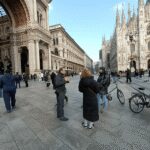
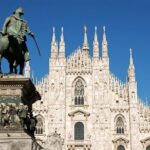
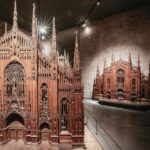
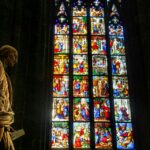
Your itinerary includes about 30 minutes at Milan Cathedral. This is the obvious headline stop, but the value of a bike tour is that you don’t just stop at a single photo angle. You get time in the area and a guided explanation that helps you understand what you’re looking at.
Cathedral stops can be tricky on foot because of crowds and constant rerouting. Here, the bike format makes it easier to keep the day’s pace. You still get time to look, but you avoid spending the whole segment stuck behind slow moving groups.
If you want to take your time around the cathedral, 30 minutes is a realistic window. It gives you a chance to observe, then move without feeling frantic.
Quadrilatero della Moda: shopping streets and city geometry
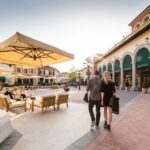
Next is about 15 minutes at Quadrilatero della moda. This is Milan’s fashion-core area, and even if you don’t plan to shop, it’s fun to walk the vibe for a moment.
Why it works in a bike tour: you’re not committing to a long shopping walk. You’re getting an outside view of how the city’s identity shows up in street layout, storefront energy, and pedestrian flow. It’s also a short stop, so it doesn’t steal time from the more neighborhood-feeling sections.
The guide storytelling helps here too. Without it, this could just be another district pass. With it, you understand the significance in context.
Villa Necchi Campiglio and Indro Montanelli gardens: the quieter break
You’ll spend about 30 minutes at Villa Necchi Campiglio, then about 15 minutes at Giardini Pubblici Indro Montanelli. This is a standout pairing because it balances built environment with breathing space.
Villa time gives you a chance to see a different side of Milan—less “big monument,” more “this is how the city’s taste shows up in private and semi-private spaces.” Then the public gardens add relief. After a morning of major icons and busy streets, green space is a reset button.
On a bike tour, that reset is extra useful. It’s easier to recharge your focus when you’re not trapped in a long walking segment. You’ll likely feel ready for the final ride back.
Price and value: what you really get for $55.80
At $55.80 per person for roughly 3.5 hours, this tour feels priced like more than a simple rental-and-ride. You’re paying for a live guide, a helmet, and a premium Rossignoli bicycle—plus the planning behind the route.
The real value is efficiency. You’re seeing a wide cross-section of Milan’s center in a short window without the constant friction of moving on foot. And because the group is limited to 10 participants, the experience tends to feel more personal than mass tours.
If you’re the kind of visitor who likes a guided start (so you can explore more on your own later), this is a strong use of time. It gives you ideas of where to return, and it helps you understand the city’s structure so the rest of your stay is easier.
Who should book this Milan bike tour, and who shouldn’t
This tour is best for people who can ride confidently and want a guided city look in one morning. It’s not suitable for children under 14, and it’s not for anyone who can’t ride a bike. There’s also a minimum height requirement of 150 cm, plus guidance that it’s not for people with low fitness levels.
You’ll also get the most out of it if you like learning through conversation. The guide format is interactive, and the pacing supports questions rather than one-way lectures.
If you’re visiting with limited time, and you want a first pass at Milan’s highlights plus real neighborhoods, this kind of ride makes sense. If you prefer a slow, wandering-only trip with no cycling, you’ll probably prefer walking or museum time instead.
Should you book it?
I’d book this tour if you want a practical orientation to Milan that mixes big landmarks with neighborhood feel. The small-group size, premium bike setup, and the fact that guides help you stay together make it a calmer way to see the city quickly.
I’d skip it if you’re not comfortable riding or if your fitness level means you’ll feel stressed on a 3.5-hour bike plan. It’s also a poor match if you want a totally unstructured day with no meeting-point rhythm.
In short: if you can ride and you want Milan with momentum, this is a smart way to spend the morning.
FAQ
How long is the Milan bike tour?
The tour lasts 3.5 hours.
What languages are the live guides?
The guide provides live commentary in English and Italian.
What’s the group size limit?
The tour is limited to a small group of up to 10 participants.
What’s included in the price?
You get a Rossignoli bicycle, a helmet, and a live guide.
Is the tour suitable for children?
No. It’s not suitable for children under 14.
Is free cancellation available?
Yes. You can cancel up to 24 hours in advance for a full refund.