REVIEW · MILAN
The Magic of Navigli: Self-Guided Puzzle Quest in Milan
Book on Viator →Operated by Questo · Bookable on Viator
One clue at a time, Milan makes sense. This self-guided phone puzzle quest turns a simple stroll into a story route through the Navigli side of town. I like that it’s fast and flexible (about 25 to 55 minutes) and that it helps you bounce between recognizable sights without needing tickets. One thing to watch: the experience depends on your phone working smoothly, and getting the game on multiple devices may be tricky.
You’ll start at Via Vetere, 12 and work your way through 11 stops, with short clue moments and plenty of time to look around at your own pace. I also like that it’s offered in English and supported 24/7, so if something goes wrong, you’re not stuck guessing. Since it’s private and only your group participates, it can work well when you want something more self-directed than a guided tour.
In This Review
- Key Highlights You’ll Care About
- Entering the Navigli Mood: Why This Puzzle Walk Feels Different
- Price and Timing: Getting Value from a 25–55 Minute Quest
- How the Questo App Works (So You Don’t Lose Time)
- The Route Plan: 11 Stops Along Milan’s Navigli Edge
- Stop 1: Via Vetere, 12
- Stop 2: Porta Ticinese Medievale
- Stop 3: Piazza Vetra
- Stop 4: Basilica di Sant’Eustorgio
- Stop 5: Conca del Naviglio
- Stop 6: Arco di Porta Ticinese
- Stop 7: Conchetta
- Stop 8: Santa Maria del Sasso
- Stop 9: Ponte Alda Merini
- Stop 10: Vicolo Privato Lavandai, 14
- Stop 11: Viale Gorizia, 9 (Finish at Ponte Alexander Langer)
- What You’ll Actually See (No Tickets Needed)
- Good for Families, Couples, and Solo Walkers
- Staying on Track Without Feeling Rushed
- Booking Smart: When to Reserve
- Should You Book This Navigli Puzzle Quest?
- FAQ
- Where does the self-guided puzzle quest start?
- Where does the experience end?
- How long does the activity take?
- How much does it cost?
- Do I need admission tickets for attractions during the walk?
- Is the experience available in English?
- Do I need to use a phone for the game?
- Is there customer support if I get stuck?
- Can I cancel for a full refund?
Key Highlights You’ll Care About

- Self-guided phone game (Questo app): you follow the next directions after each clue check.
- A tight route with 11 stops: designed for a short outing, not a whole-day commitment.
- Outdoor viewing focus: no attraction entry tickets are needed to complete the walk.
- Time to wander at key canal stops: a few stretches are explicitly open-ended so you can slow down.
- Private experience for your group: no mixing with strangers on this one.
Entering the Navigli Mood: Why This Puzzle Walk Feels Different
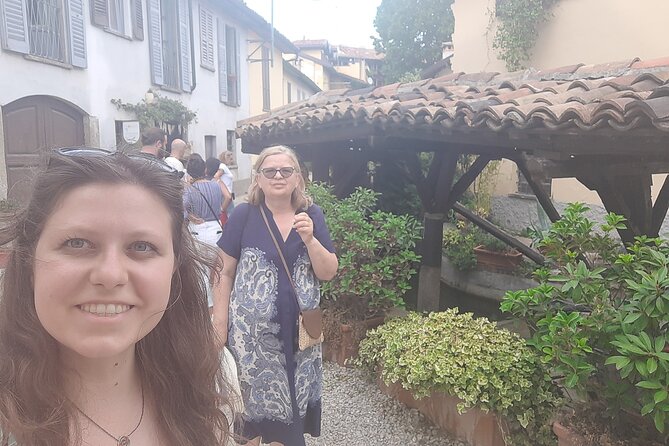
Milan can feel oddly split between the postcard center and everything else. This experience helps you bridge that gap by steering you through the Navigli area’s medieval textures, canal engineering, and church façades, all while you’re solving quick clue steps.
The appeal is not just the route. It’s the rhythm: you arrive, read the clue, solve it, and then move on. That structure keeps you moving, but it doesn’t trap you. Several of the later stops let you linger as long as you like, which matters because the best Milan moments often come from pausing at the right corner.
Price-wise, $6.60 per person is low enough that you can treat it as a fun add-on to your day rather than a big splurge. You’re paying for a guided-feeling experience without a guide, plus a built-in logic game that makes the city feel like it’s responding to you.
You can also read our reviews of more guided tours in Milan



Price and Timing: Getting Value from a 25–55 Minute Quest
At about 25 to 55 minutes, this is the kind of activity that fits the in-between parts of travel days. You can slot it before dinner, after a museum visit, or as an easy “second walk” once the main sights are done.
You’re also not paying extra for entry tickets. The experience notes that admission tickets to attractions aren’t needed to complete the tour. That’s a big value point in a city where ticket costs and lines can add up fast.
The tradeoff is also practical: because it’s phone-based, your experience is only as smooth as your device and your ability to load the app. I’d treat this as a light adventure, not a guaranteed hands-off experience.
How the Questo App Works (So You Don’t Lose Time)
You’re given clues at each stop, and solving them points you to the next location. The format is simple enough that most people can participate, and the app is available in English.
Before you start, do three small things that can save you stress:
- Make sure you can access the game content on your phone before you leave the start area.
- Bring a charger or a fully charged battery, since you’ll be on your screen while you walk.
- If you’re coming with more than one person who wants their own ticket/device, test your setup early. One review highlighted trouble downloading the info, where it worked on one phone but not others.
If you do hit a snag, there’s 24/7 customer support, which is reassuring when your day is timed around getting around on foot.
The Route Plan: 11 Stops Along Milan’s Navigli Edge
This walk is built for a logical progression. Each stop is only about a few minutes at a time, but some sections explicitly allow you to keep exploring at your own pace. Think of it like a guided hike with built-in breaks.
Below is what to expect, plus the practical “why this stop matters.”
Stop 1: Via Vetere, 12
You begin at Via Vetere, 12 and get the first clue right away. This is where the experience sets its pace. If the app isn’t behaving, starting here is still early enough to troubleshoot without derailing your whole outing.
Why I like this start: it gets you moving quickly rather than spending time “getting oriented.”
You can also read our reviews of more tours and experiences in Milan






Stop 2: Porta Ticinese Medievale
Next, you’ll reach Porta Ticinese Medievale for another clue moment. This stop helps anchor the route in a more historic Milan feeling, so the puzzle walk doesn’t just become a canal stroll.
Practical tip: slow down enough to read the clue on-site, then step away to solve it without blocking foot traffic.
Stop 3: Piazza Vetra
At Piazza Vetra, you study the next clue. Squares like this are useful puzzle checkpoints because there’s more space to stop, look around, and reset your bearings.
Watch-out: in open squares, you can get turned around if you’re trying to solve while walking. Pause, solve, then move.
Stop 4: Basilica di Sant’Eustorgio
Now you’re at Basilica di Sant’Eustorgio. Even if you don’t go inside, the game uses this kind of recognizable landmark to keep your mental map clear.
This is a good moment in the route to appreciate the way Milan’s religious architecture mixes with street life. You’re not forced into tickets or long detours.
Stop 5: Conca del Naviglio
At Conca del Naviglio, you’ll look up your next clue. This stop matters because it shifts you from “pretty façades” to canal engineering and waterways—very on-brand for Navigli.
If you like photos: this is one of the natural places to glance around for water reflections and canal details before you move on.
Stop 6: Arco di Porta Ticinese
Here you get another clue at Arco di Porta Ticinese, and this is one of the stretch points where you can stop as long as you like and continue exploring at your own pace.
This is a smart design choice. Arches and gates in cities aren’t just transit points. They’re photo anchors and good “memory markers” for later when you want to remember the route.
Stop 7: Conchetta
At Conchetta, you receive the next clue. This is another place where you can stay longer if you want to slow down and enjoy the surroundings.
Why it works: the puzzle keeps the structure, but this stop gives you room to experience the canal atmosphere rather than just passing through.
Stop 8: Santa Maria del Sasso
At Santa Maria del Sasso, the game encourages you to enjoy the view and explore at your own pace. This is one of the later stops, so by now you’ve already built momentum.
Use this moment to stand still and let the scene “land.” A puzzle walk goes faster than a normal stroll, so late-stage pauses help you balance speed with enjoyment.
Stop 9: Ponte Alda Merini
At Ponte Alda Merini, you explore while admiring the bridge. Bridges are great puzzle stops because they naturally frame your walking direction and offer a clean “look here, then go there” flow.
If you care about getting good photos: this is usually where you’ll want a quick stop even if the puzzle timing moves you onward.
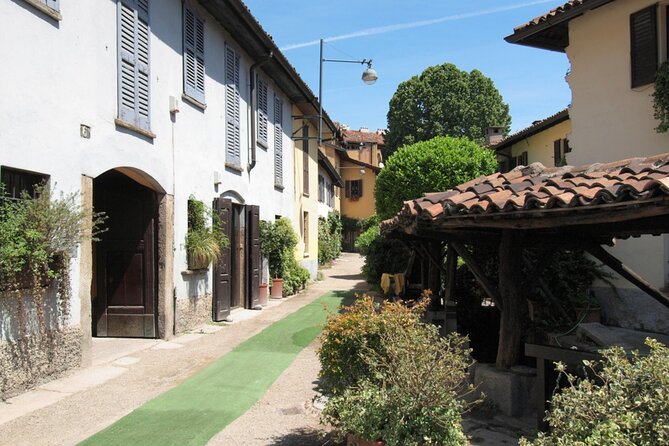
Stop 10: Vicolo Privato Lavandai, 14
Now you’ll reach Vicolo Privato Lavandai, 14. This is another clue stop that’s connected to McSorley’s Old Ale House.
Even if you don’t plan on ordering anything, this stop is useful. It gives the route a real-world reference point, so you can reconnect the puzzle path to actual places you can return to later.
Stop 11: Viale Gorizia, 9 (Finish at Ponte Alexander Langer)
Your walk ends at Viale Gorizia, 9 with the finish at Ponte Alexander Langer. This closing point is practical: you end with a landmark bridge view and a clear end location instead of a vague “nearby” finish.
I like finish locations like this because it makes the whole outing feel like a completed loop rather than a route that dissolves at the end.
What You’ll Actually See (No Tickets Needed)
One of the best parts here is that the experience focuses on finding your way between well-known public areas and landmarks without requiring attraction entry tickets. That means you’re not forced to choose between the game and a paid museum plan.
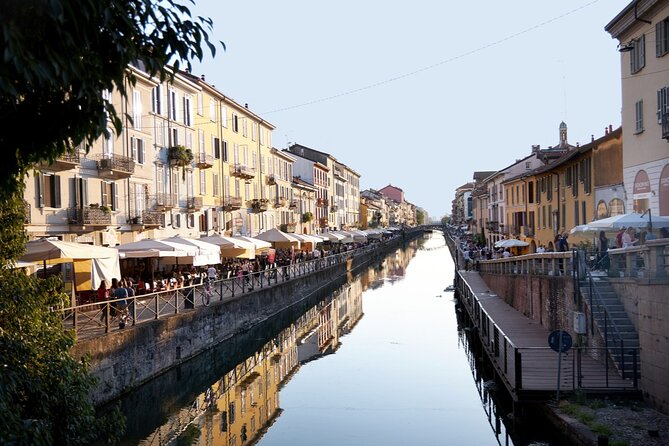
You’ll also get a route that feels more “Milan at street level” than “Milan in a single museum.” The mix of gates (Porta Ticinese areas), church architecture (Sant’Eustorgio), and canal features (Conca del Naviglio and the surrounding waterways) keeps the walk from feeling repetitive.
Good for Families, Couples, and Solo Walkers

This is marked as “most travelers can participate,” and the format works for a range of groups because the steps are short. The outing can be especially appealing when you want something interactive that doesn’t demand physical scrambling.
- Families: the quick clue moments and short segments help keep attention. Just make sure device access is sorted for each person who wants to use the app.
- Couples: it’s an easy way to walk together while still giving each person moments to focus.
- Solo travelers: it’s nice when you don’t want to plan a complex route but still want variety.
It’s also private, so only your group participates. That can make the experience feel calmer and more controllable, especially at puzzle-stopping points.
Staying on Track Without Feeling Rushed
Since the whole outing is designed around short stop durations, it helps to manage expectations. You’re not expected to “tour” each landmark fully. You’re meant to use the landmarks as stepping stones while solving the next clue.
A simple strategy:
- Stop for the clue.
- Solve quickly.
- Move to a spot nearby where you can look around without holding up others.
- Repeat.
And if you want extra time for photos or pauses, use the stops that explicitly allow you to linger (like the Arco di Porta Ticinese, Conchetta, Santa Maria del Sasso, and Ponte Alda Merini sections).
Booking Smart: When to Reserve
On average, this gets booked about 9 days in advance. That suggests it’s popular enough that you shouldn’t wait until the last minute, especially if you’re planning a specific evening or weekend slot.
The good news: the route is available for a long window each day (from 12:00 AM to 11:30 PM), so you often have flexibility once you’re there.
Should You Book This Navigli Puzzle Quest?
I’d book it if you want a short, structured, phone-guided walk that helps you see Milan beyond the most obvious hits. It’s good value for $6.60 because you’re paying for the navigation and the puzzle format, not for a pile of attraction tickets.
I’d think twice if your group relies on multiple devices and you’re worried about tech issues. One frustration shared with this experience involved difficulties downloading or accessing the game on additional phones. If you’ll be traveling with kids or multiple adults who each want their own device, do a quick app test before the outing begins.
If you’re comfortable treating it as a light adventure and you’re okay with solving clues while walking, this is a fun way to experience the Navigli area with less guesswork and more momentum.
FAQ
Where does the self-guided puzzle quest start?
It starts at Via Vetere, 12, 20123 Milano MI, Italy.
Where does the experience end?
It ends at Viale Gorizia, 9, 20123 Milano MI, Italy, with the finish at Ponte Alexander Langer.
How long does the activity take?
The duration is approximately 25 to 55 minutes.
How much does it cost?
The price is $6.60 per person.
Do I need admission tickets for attractions during the walk?
No. Admission tickets to attractions are not needed to complete the tour.
Is the experience available in English?
Yes, it is offered in English.
Do I need to use a phone for the game?
Yes. It includes a city exploration game available on your phone (Questo app).
Is there customer support if I get stuck?
Yes, there is 24/7 customer support.
Can I cancel for a full refund?
You can cancel up to 24 hours in advance for a full refund.