REVIEW · MILAN
Milan: Street Art Tour of Ortica, Milan’s open air museum
Book on GetYourGuide →Operated by Tour in Milan · Bookable on GetYourGuide
Street art here tells real neighborhood stories. This 2-hour walking tour in Ortica shows how Milan’s first open-air museum district grew from an industrial fringe into a canvas of memory. I like how the guide ties the walls to the Or.Me. Project and what it means for today’s city.
I also like the small group size (up to 8) and the fact the tour is in English with guides who are friendly and easy to chat with, like Lucy or Luca. One possible drawback: you will mainly look at murals on buildings and walls, so if you expect street art to cover whole house facades, you may want more variety.
In This Review
- Key points before you go
- Ortica: Milan’s open-air museum neighborhood in plain terms
- Why the Or.Me. Project matters on a street art tour
- Argonne meeting point and the first 15 minutes that set the tone
- The main 45-minute Ortica walk: murals, stories, and meaning
- Photo stop and the 10-minute free moment you should actually use
- The second guided segment: how public art changes places
- Viewpoint photo stop: seeing the neighborhood as a whole
- Price and what you get for about $49
- Who this tour fits best (and who might want to adjust expectations)
- Practical tips: shoes, weather, and respectful photo habits
- Should you book this Ortica street art tour?
- FAQ
- FAQ
- Where is the meeting point for the tour?
- How long is the Milan street art tour in Ortica?
- How much does the tour cost?
- Is the tour guided in English?
- How many people are in the group?
- Is the tour wheelchair accessible?
- Are food and drinks included?
Key points before you go
- Ortica is Milan’s first open-air museum district, not a temporary exhibit
- Or.Me. murals turn community memory into big, walkable storytelling
- You’ll hear the origin story of graffiti, from underground rebellion to accepted art
- The guide connects technique to meaning, including different styles and methods
- Backstreets, alleys, and a viewpoint make it easy to find good photos
- English tour, small group (max 8) keeps the pace relaxed and the questions coming
Ortica: Milan’s open-air museum neighborhood in plain terms
Ortica is the kind of Milan you feel before you fully understand. It sits on the city’s edge of movement—shaped by viaducts, railway tracks, and the winding Lambro River. For a long time, it had a working-class reputation and felt a bit cut off from the center.
In the last decade, that changed fast. Street art became the most visible signal of a bigger neighborhood shift, and the district is now treated like an open-air museum. The tour doesn’t just point at pretty walls. It explains why these images belong here.
You’ll also get a useful reality check: street art isn’t always only decoration. A simple graffiti tag can carry identity, and a big mural can push a whole area toward renewal. This walk is built around that idea.
You can also read our reviews of more museum experiences in Milan
Why the Or.Me. Project matters on a street art tour
At the heart of Ortica’s transformation is the Or.Me. Project (often tied to the idea of Ortica Memoria). It’s an urban art initiative by the local artist collective Orticanoodles, and it’s big—over 20 large-scale murals.
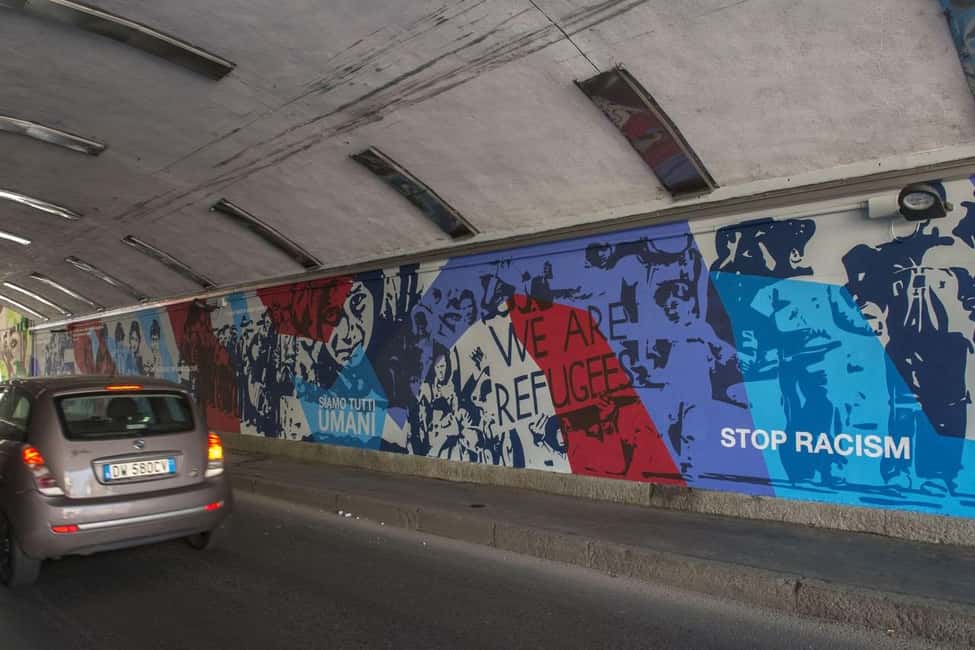
What makes Or.Me. worth your attention is the subject matter. These murals aim to represent the collective memory of Milan: heroes, workers, musicians, activists, and even people who were overlooked. The stories aren’t abstract. They’re about real categories of city life.
Another reason this matters on foot: you get to see how murals function like chapters. As you walk from one wall to the next, you start spotting themes—resistance, labor, culture, gender roles, and hope for what comes next. The tour’s framing helps you read the images instead of just photographing them.
And the best part for a visitor: you’re not expected to be an art expert. The guide connects the dots between the images and the way neighborhoods change.
Argonne meeting point and the first 15 minutes that set the tone
You start outside the metro stop Argonne (line 4). The guide meets you there with the agency logo, so it’s usually a straightforward find if you’re on time and not wandering around the station looking for a mural by vibes alone.
That first guided block is about 15 minutes. Think of it as your orientation. You’ll get the street art context you need before you step into the quieter backstreets—especially how graffiti culture evolved in Milan.
This short start matters more than you might expect. If you arrive with no background, murals can feel like random scenes. With the basics in place, the walk becomes a story you can follow.
The main 45-minute Ortica walk: murals, stories, and meaning
The tour then moves into Ortica for the biggest chunk—around 45 minutes of guided walking. This is where you’ll see many of the most creative, evocative, and significant street art works, and where the guide connects them to the broader history of graffiti and street art in the city.
You’ll learn how the neighborhood’s past shaped the art. Ortica’s setting—once isolated and industrial fringe—helps explain why street art here carried strong messages. The tour covers the shift from underground rebellion to street art recognized as a cultural form.
As you go, you’ll also hear about different techniques and styles used by today’s artists. That doesn’t mean you’ll get a spray-paint masterclass. It’s more about understanding what changes between one piece and the next, and why an image might use a specific style to communicate a specific emotion.
And then there are the stories behind the murals. The tour focuses on themes that include anti-fascist partisans, jazz legends, factory workers, and feminist icons. Even if you don’t know every name, the idea is clear: these murals track cultural identity across time.
Photo stop and the 10-minute free moment you should actually use
After the main guided walking section, there’s a photo stop of about 10 minutes. This is your chance to slow down, frame shots, and move from reading the art to collecting your own visual record.
Don’t rush it. Murals can look very different from up close versus from across a street, especially in a neighborhood with alleys and tight corners. Use those minutes to try a couple of angles and not just one quick click.
Next comes around 10 minutes of free time. This is the part I like most on tours like this because it gives you breathing room. You can grab a snack nearby if you packed one (food and drinks aren’t included), or you can simply stand back and look without a guide talking over your thoughts.
It’s also a good time to make sure you’re not missing a key piece because you were focused on the next corner. Street art rewards patience.
You can also read our reviews of more tours and experiences in Milan
The second guided segment: how public art changes places
The itinerary includes two more guided sections after the free moment—one of about 20 minutes and another around 10 minutes. Together, they tend to focus on how street art transforms daily life in a neighborhood.
This is where you’ll hear the tour’s big takeaway: public art can help redefine a place. It can inspire change, reframe who the neighborhood is for, and make the streets feel more alive. In Ortica, that shows up in the sheer volume of mural work connected to the Or.Me. Project.
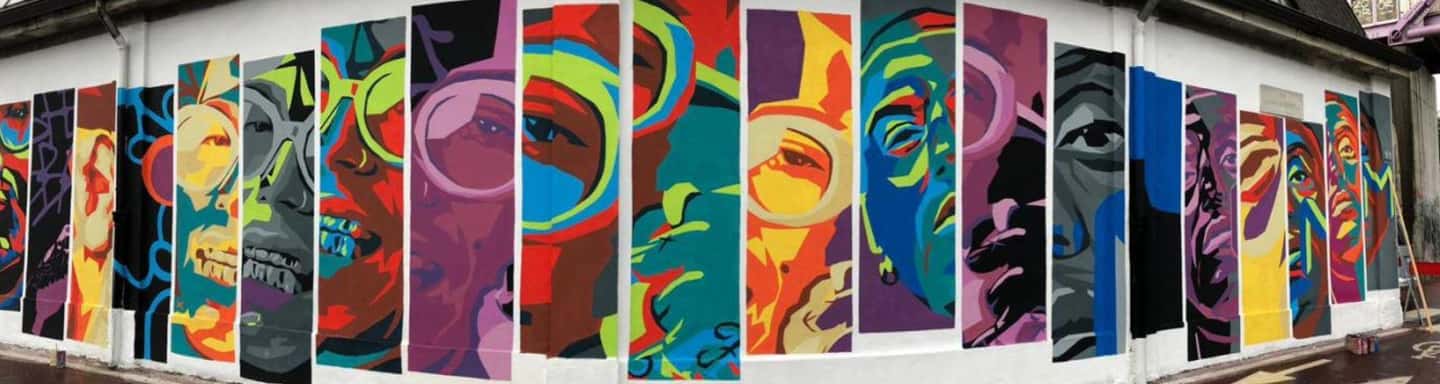
You’ll also connect technique and meaning again. The guide circles back to how graffiti evolved—from writing as defiance to painting as storytelling. You’ll start to notice how different pieces communicate in different ways: through symbolism, portraits, text, color choices, or the sheer scale.
One thing to keep in mind: this tour is about the art’s cultural and social impact, not just aesthetics. If you’re the type who likes to know why something exists, you’ll feel right at home here.
Viewpoint photo stop: seeing the neighborhood as a whole
You’ll finish with a viewpoint photo stop of about 10 minutes. This isn’t just for pictures for the sake of pictures. A viewpoint helps you understand the layout—how Ortica’s street network, alleys, and built structures shape what you’ve been seeing.
When you’ve been focused on walls at close range, it’s easy to forget the setting. This stop brings the bigger picture back in: the neighborhood, the shapes of the streets, and how the murals sit within the real space where people move each day.
Use this final stretch to slow down and do one more scan. It’s the moment where you can spot patterns across the walk: recurring themes, similar visual styles, and the way murals relate to the surrounding architecture.
Price and what you get for about $49
At $49 per person for a 2-hour guided walk, the value comes from a few specific things, not just the fact that it’s a fun activity.
First, you’re paying for interpretation. The tour doesn’t treat street art like a random photo tour. You get context on the history, origins, present, and future of street art, plus the specific meaning behind the Or.Me. murals and the community angle tied to Orticanoodles.
Second, the group size is kept small—limited to 8 participants. That matters because it makes questions easier and the pace more human. You’re not stuck listening to a rushed script while everyone else barrels ahead.
Third, you’re getting an organized way to explore Ortica’s backstreets and hidden alleys. Transportation to and from the tour isn’t included, so you’ll handle that part. But once you’re there, the guide does the heavy lifting in terms of what to see and why.
If you love street art and want more than a quick mural hit, this price feels fair for what you’re learning and walking through.
Who this tour fits best (and who might want to adjust expectations)
This is a strong pick if you:
- like guided tours that explain meaning, not just location
- want a clear introduction to Milan street art culture through Ortica
- enjoy walking in neighborhoods with character and side streets
- care about how art connects to social change
It may be less ideal if you want:
- street art focused on house fronts or door-to-door exterior coverage (the walk centers on murals and works on walls and structures)
- a slow museum-style pace with lots of sitting time
- a tour that includes food or a built-in meal plan (none is included)
If you’re somewhere in the middle, I’d still encourage you. The guides are English-speaking and the vibe is friendly. The whole point is to help you look at street art with new eyes.
Practical tips: shoes, weather, and respectful photo habits
Wear comfortable shoes. Ortica’s sidewalks and alleys are made for walking, not for fragile soles. Plan on moving continuously for the full 2 hours.
Check the weather forecast. The tour may be rescheduled in bad weather, so it’s smart to keep an eye on the sky the day of your walk. Dress for what Milan feels like, not for what you hope it will be.
Photography is encouraged, but keep it respectful. Street art is part of the neighborhood, not a theme park. If you need to step close for a shot, do it quickly and politely. Don’t block foot traffic just to get one more angle.
If you’re traveling with mobility needs, the tour is listed as wheelchair accessible. It’s still a walking tour, so it’s worth wearing or bringing what helps you feel stable and comfortable outdoors.
Should you book this Ortica street art tour?
Book it if you want a guided way to understand why Ortica became Milan’s open-air museum district and what the Or.Me. Project is trying to say through murals. I like that the tour connects art to the city’s people—workers, musicians, activists, and forgotten figures—so your photos come with context in your head.
Skip or adjust expectations if you’re only chasing mural coverage that looks like it belongs on postcards every step of the way. This walk is about storytelling, history, techniques, and impact, so you’ll get the most out of it if you enjoy learning while you look.
FAQ
FAQ
Where is the meeting point for the tour?
You meet outside metro stop Argonne (line 4). The guide will be there with the logo of the agency.
How long is the Milan street art tour in Ortica?
The tour lasts about 2 hours.
How much does the tour cost?
The price is $49 per person.
Is the tour guided in English?
Yes, the tour guide speaks English.
How many people are in the group?
The tour is limited to a small group size of up to 8 participants.
Is the tour wheelchair accessible?
The tour is listed as wheelchair accessible.
Are food and drinks included?
No. Food and drinks aren’t included, so plan accordingly.
If you want, tell me your travel dates and whether you prefer morning or afternoon walks, and I’ll suggest how to fit this into a Milan day with minimal backtracking.