REVIEW · MILAN
Milan: Segway Tour with Local Tourist Guide Live – 3 hours & half
Book on Viator →Operated by City Guided Tour · Bookable on Viator
Milan by Segway feels like cheating. I love the Segway pace—you cover real ground without the fatigue of constant walking—and you still get story stops like Sforza Castle and the Duomo area. The tour is also built around a local guide, and with Emilio leading, you get clear context for what you’re seeing as you move through the city center.
One thing to consider: you need moderate physical fitness and enough balance to learn the Segway basics at the start, especially if traffic feels intense around central Milan.
In This Review
- Key things I’d plan around
- Riding Milan on Segway: the practical way to see more
- Getting started: training on the Segway and building confidence
- Brera District and the artist neighborhood’s big ideas
- Arco della Pace and Parco Sempione views
- Castello Sforzesco: the biggest payoff stop
- Basilica di Sant’Ambrogio: a calm religious pause
- Roman traces of the Imperial church: quick context, big time scale
- Darsena and the canal side of Milan
- Piazza Mercanti: medieval administration in miniature
- Duomo di Milano: see it outdoors, plan your photo time
- Piazza della Scala: the theater you can appreciate without entering
- Galleria Vittorio Emanuele II: finish with a 19th-century shopping arcade
- Price and value: what $90.11 buys you (and what it doesn’t)
- How the route works for your day: timing and pacing
- Who should book this Segway tour of Milan
- Should you book it?
- FAQ
- How long is the Segway tour?
- What does the tour cost?
- Where do I meet the guide, and where does the tour end?
- What’s included, and what’s not?
- Is the tour offered in English?
- Do I need tickets for the stops?
- What fitness level do I need?
- Is there a weather requirement?
- What is the cancellation policy?
Key things I’d plan around
- Max 8 people means more room to learn the Segway and ask questions.
- Helmet + guide are included, and Emilio keeps the group safe in busy streets.
- Brera to Sforza to Sant’Ambrogio hits major landmarks fast, with stops that don’t feel rushed.
- Canals via Darsena gives you a Milan side you might miss if you stick to the big-ticket sights only.
- Duomo and La Scala are exterior views, so you’ll enjoy the squares and architecture without relying on inside tickets.
Riding Milan on Segway: the practical way to see more
A Segway tour is a simple deal: less walking time, more “look and learn” time. In Milan, that matters because the sights are spread through different neighborhoods, and you can waste a lot of energy just getting from one highlight to the next. Here, the route is designed to string together key stops in central Milan, so your 3.5 hours actually feel like 3.5 hours of sightseeing.
Also, the vibe tends to be easygoing. You’re not stuck in long lines or doing a checklist shuffle. You move as a group, pause at the right points for photos and explanations, and then glide on. That rhythm helps you remember what you saw and where it fits into the city.
The tour is offered in English, and the format is guided with a professional local presence. Emilio, the local guide named in the reviews, is the kind of person who reads the streets quickly—he knows where to steer you and when to slow down so everyone stays comfortable.
You can also read our reviews of more guided tours in Milan


Getting started: training on the Segway and building confidence
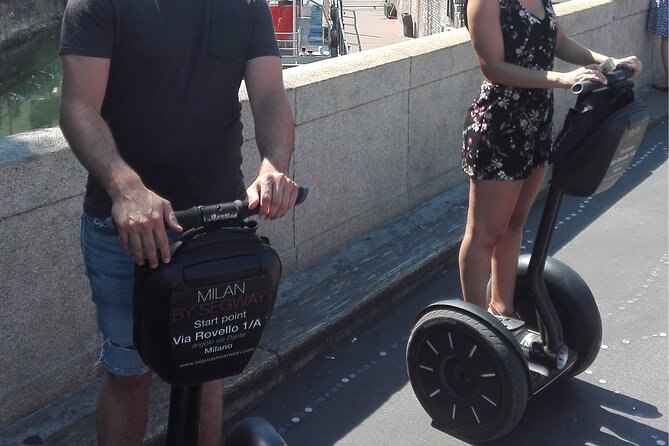
At the beginning, you should expect a learning curve. Even if you’re a confident rider, there’s a short moment where you’re figuring out how to balance, how to stop smoothly, and how to move as a group. That matters because you’ll be in central Milan traffic at least some of the time, and you want confidence before you start covering ground.
The good news is the guidance is patient. Reviews highlight that Emilio gives people time to get used to the Segways and makes sure the group is safe while riding in busy areas. That’s not just about rules—it’s also about pacing. If the group needs a little extra practice, the tour adjusts so no one is left feeling behind.
If you’re choosing this tour, go in with a calm mindset. You’re not just “transporting yourself.” You’re learning a small skill for the day, and then you get to enjoy the city from a higher, smoother perspective.
Brera District and the artist neighborhood’s big ideas
The first stop area is Brera District, where you get a quick introduction to the district and its artistic reputation. It’s a short pause (about 5 minutes) and there’s no admission ticket included here.
What I like about starting in Brera is that it sets the tone for the tour: Milan isn’t only marble squares and cathedrals. It’s also design, education, and the cultural machine behind the city’s creative identity. Even without going inside anywhere, a well-timed overview at the right street angle helps you understand why this area is so often linked with artists.
A practical note: because it’s outside-only at this stage and ticketed entry isn’t included, you’ll want to treat it like a neighborhood orientation—watch the streets, note the vibe, and get the context. If you’re expecting long indoor time, this may feel too “quick.” But as a Segway route, it’s the right length to keep the day flowing.
Arco della Pace and Parco Sempione views
Next comes Arco della Pace, the Peace Arch in front of Parco Sempione. This stop is brief (around 5 minutes), and admission is free.
This is the kind of moment that works well on a Segway: you arrive, you get the monument’s meaning in a short explanation, and then you move on. The arch gives you a sense of Milan’s ceremonial side and helps connect the city to its larger urban layout around the park.
Because you’re seeing it from the street level rather than through museum walls, you also get an easy photo check without committing to an indoor visit.
Castello Sforzesco: the biggest payoff stop
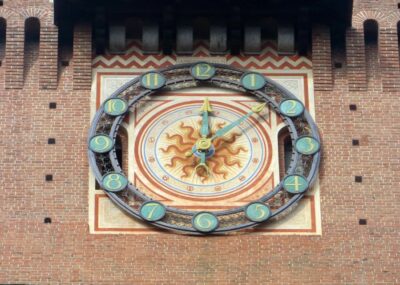
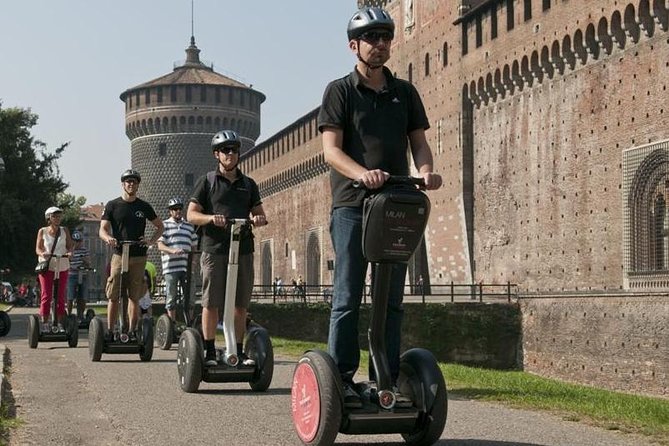
Then you hit Castello Sforzesco (Sforza Castle)—a signature Milan landmark and one of the largest castles in Europe. The stop is about 10 minutes and entry is free for this stop.
This is a major reason people like these Segway routes. When you arrive at a place like this, the exterior alone can overwhelm you with scale, and you’re tempted to wander until you lose time. Instead, you get a structured look with context about why the castle matters historically and how it functions now as a cultural hub.
The castle is also a great “reset point” in the route. After covering several streets, you get to slow down, absorb the surroundings, and take photos without worrying about the next turn. If you’re picking just one stop to remember from the day, this is often it.
You can also read our reviews of more tours and experiences in Milan




Basilica di Sant’Ambrogio: a calm religious pause
The tour continues to Basilica di Sant’Ambrogio, the patron saint Roman Lombard church. The stop is about 15 minutes, and admission is free.
This is one of the longer stops, and it shows. A church needs a different pace than an arch or a shopping arcade. You get enough time to stand, look, and actually process the building from outside. It’s a good break from the constant motion, especially if you start feeling that Segway-learning exertion in your legs and core.
One potential downside: if you were hoping for a deep, inside-style church visit, the information here points to an on-route stop rather than a full entry plan. Still, the outside experience can be powerful once the guide frames what you’re looking at.
Roman traces of the Imperial church: quick context, big time scale
There’s also a stop described as the Roman traces of the Imperial church. The details provided are minimal here, but the point is clear: the tour keeps connecting Milan’s present to its Roman-era layers.
On a Segway, this kind of stop is ideal. You’re not walking between distant points for hours, so you can afford these shorter “time machine” moments. Even if the physical traces are subtle, a guide can point out what makes them meaningful—especially when you’re trying to understand the city rather than just collecting photos.
If you’re the type who loves architecture dates and the logic of how cities evolved, this stop can land really well.
Darsena and the canal side of Milan
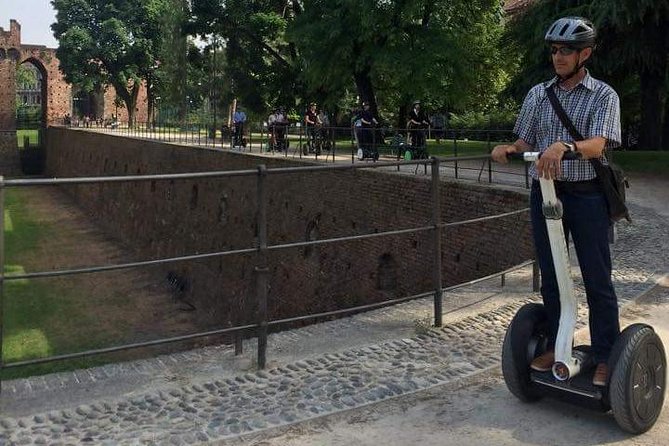
A highlight in the route is Darsena, described as the Navigli harbor of Milan’s canals. This stop is about 10 minutes and admission is free.
I love this part of the route because it changes the story. Milan is famous for the Duomo and for fashion, but canals explain trade, movement, and why the city grew the way it did. In the reviews, people specifically called out how interesting the canals were to learn about, and how only a few canal sections remain.
That’s a useful mindset for you going in: you’re seeing what’s left, but also learning why it’s still part of Milan’s identity. Darsena gives you atmosphere that feels different from the cathedral squares—more watery light, more local daily energy, and a sense of Milan’s practical past.
Piazza Mercanti: medieval administration in miniature
Then you roll into Piazza Mercanti, a medieval square that once served as the seat of the ancient municipal administration. The stop is about 5 minutes and admission is free.
This is a short stop, but it’s one of those places where you can feel the city’s governance era if you know what to look for. Since you’re briefed by the guide, the square stops being just a pretty street corner and becomes a clue to how Milan managed itself centuries ago.
If your goal is to understand Milan’s structure—who ran it, why it mattered—this quick pause helps connect the dots.
Duomo di Milano: see it outdoors, plan your photo time
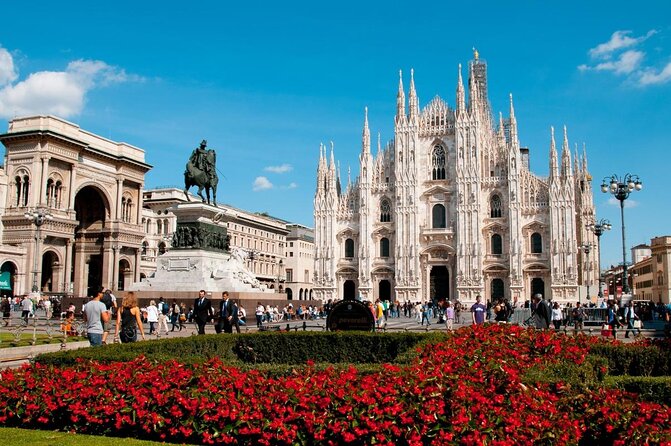
Next is Duomo di Milano, but keep expectations in line: it’s listed as an exterior view, and admission is not included for this stop. The time here is about 10 minutes.
In practical terms, this means you’ll see the cathedral’s impact from the surrounding piazza area, but you won’t be doing a full inside visit as part of the plan. That can be a good thing. The Duomo area is busy, and lines can eat up your day. If you already know you want a separate Duomo ticket later, this Segway stop can still give you the right first impression and the best photo angles.
You’ll also get context while you’re there, which helps the building feel more than just statues. The guide’s explanation turns the architecture into a story.
If you want to combine this Segway tour with a future Duomo visit, do it. After seeing it outdoors first, you’ll understand where to focus when you go inside.
Piazza della Scala: the theater you can appreciate without entering
After the Duomo area, the tour includes Piazza della Scala for an exterior view of La Scala theater and Palazzo Marino. It’s about 5 minutes, and admission is not included.
This is basically a “face the building” moment, not an inside detour. On a Segway, that’s exactly the right kind of stop because La Scala’s surroundings are the point—you’re absorbing Milan’s cultural prestige and civic setting in one quick glance.
If you’re short on time, this is a strong use of it. If you’re a hardcore opera fan who wants to see interiors, you’ll still need a separate ticket. But for a first-time overview, the outside view does the job.
Galleria Vittorio Emanuele II: finish with a 19th-century shopping arcade
The final stop is Galleria Vittorio Emanuele II, a luxury shopping arcade built at the end of the 19th century. It’s about 5 minutes and admission is free.
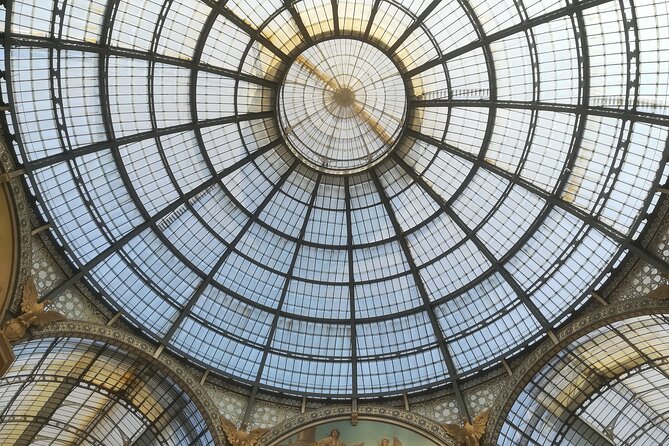
This is a fun way to end because it feels like a different mood than the cathedral and castle areas. The arcade is all about glass-and-stone spectacle, and it’s easier to enjoy when you’re not stuck walking for long distances. The Segway pace works well here because the sight is as much about the architecture and the space as it is about the shops.
It also gives you a natural finishing zone where you can keep exploring on foot afterward—if you want snacks, browsing, or a slower wander.
Price and value: what $90.11 buys you (and what it doesn’t)
At $90.11 per person for roughly 3 hours 30 minutes, the biggest value is time and logistics. This isn’t a long museum day. It’s a guided city circuit that saves you from walking between major points. You’re also paying for a trained guide plus the gear—helmet included—so you don’t have to worry about equipment.
What’s not included is also important:
- Food and drinks aren’t included.
- Hotel pickup/drop-off isn’t included, so you meet at Via Lecco, 18, 20124 Milano MI, Italy.
- Some stops are explicitly outside-only and Duomo and La Scala don’t include admission.
So how do you judge value? If you want a fast overview that still feels personal—especially if your time in Milan is tight—this is usually a solid buy. If you’re hoping for lots of indoor tickets bundled together, you’ll probably feel like you need separate add-ons anyway.
In reviews, people repeatedly emphasized that the tour felt short and efficient because Emilio kept things moving while still sharing a lot of information. That’s exactly what you’re paying for: momentum with explanation.
How the route works for your day: timing and pacing
The stops are relatively short on purpose, which keeps you from burning out. Typical pauses range from about 5 to 15 minutes, with the church and castle areas getting the most time.
You should think of it like a highlight reel with enough pauses to absorb what matters. You’re not sitting in one place for long. But you also aren’t constantly moving without context.
A smart approach is to go into Milan that day with a loose plan:
- Do this Segway tour early-ish if you can, so the route becomes your mental map.
- Then, after you’ve seen the major highlights, decide what you want to revisit on foot.
This tour’s real strength is that it helps you prioritize what to return to, instead of guessing blindly.
Who should book this Segway tour of Milan
This tour fits best if you want:
- A fast way to cover key Milan landmarks in central areas
- A guided explanation of what you’re seeing as you ride
- A small-group format (max 8 travelers), which helps with attention and safety
You might want a different style of tour if:
- You dislike riding in busy streets or feel uneasy learning new equipment
- You need lots of ticketed indoor time included in the same trip
- You expect every stop to include entry (some are outside-only)
Overall, Emilio’s approach—patient at the start, focused on safety, and willing to adjust timing based on comfort—makes this a good option for people who want structure without feeling trapped in a rigid schedule.
Should you book it?
If you want the best use of limited time in Milan, I’d book it. The mix of Sforza Castle, Sant’Ambrogio, the canal area at Darsena, and big-name exteriors like the Duomo and La Scala gives you a balanced first look. You’ll also appreciate the small-group feel and the clear safety focus that helps you enjoy the ride instead of worrying about it.
If you’re the type who already plans to pay for Duomo or museum interiors separately, this Segway tour works as the perfect warm-up—set your bearings, learn the context, then go deeper where you care most.
FAQ
How long is the Segway tour?
It runs for about 3 hours 30 minutes.
What does the tour cost?
The price is $90.11 per person.
Where do I meet the guide, and where does the tour end?
You start at Via Lecco, 18, 20124 Milano MI, Italy, and the activity ends back at the same meeting point.
What’s included, and what’s not?
Included: a local guide, a professional guide, and use of a helmet. Not included: food and drinks, hotel pickup, hotel drop-off, and transportation to/from attractions.
Is the tour offered in English?
Yes, it’s offered in English. It may also be operated by a multi-lingual guide.
Do I need tickets for the stops?
Some stops are free, and some are not included. For example, Duomo di Milano and Piazza della Scala are noted as admission not included, while places like Arco della Pace and Castello Sforzesco are free for the stop as listed.
What fitness level do I need?
The tour requires a moderate physical fitness level.
Is there a weather requirement?
Yes. It requires good weather. If it’s canceled due to poor weather, you’ll be offered a different date or a full refund.
What is the cancellation policy?
Free cancellation is available up to 24 hours in advance for a full refund. If you cancel less than 24 hours before the start time, the amount paid is not refunded.