REVIEW · MILAN
e-Scavenger hunt Milan: Explore the city at your own pace
Book on Viator →Bookable on Viator
Milan is more fun when you wander with a mission. This app-led e-Scavenger hunt turns the city’s famous stops into a family-friendly game, so you can move at your pace instead of matching a group. I like that it’s built for real walking days, hitting major landmarks like Galleria Vittorio Emanuele II and the Milan Cathedral. I also like that you get learning moments along the way, not just sightseeing photos. One possible drawback: it’s game-first, so if you want a live guide’s continuous explanations, the app approach may feel thin.
You start at Piazza Fontana and return there when you finish. The route is designed to take you through Milan’s core highlights, including the Castello Sforzesco area, the Duomo zone, Brera, and the UNESCO setting of Santa Maria delle Grazie and the Last Supper. Just plan for phone use: your smartphone and data are not included, which matters if you prefer to roam without connectivity.
In This Review
- Key Highlights to Expect
- How the App-Led Scavenger Hunt Actually Feels in Milan
- Starting at Piazza Fontana: Why This Pickup Works
- Galleria Vittorio Emanuele II and the Milan Cathedral: Iconic Stops, Built for Looking
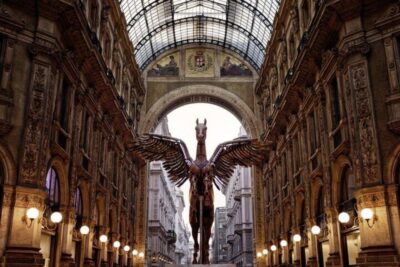
- Galleria Vittorio Emanuele II
- Milan Cathedral and Duomo Square
- Castello Sforzesco and Porta Sempione: Medieval Power Meets City Gate Energy
- Castello Sforzesco
- Porta Sempione
- Santa Maria delle Grazie and the Last Supper: UNESCO Weight Without the Rush
- San Fedele, Casa Panigarola, and Palazzo dei Notai: Church Stops That Reward Curiosity
- How to make these stops work for you
- San Lorenzo Maggiore, the Ring of Canals, and Giuseppe Bovara’s Fountain
- Basilica di Santa Tecla: False Apse, Trompe-l’œil, and Roof Statues
- Brera and Pinacoteca di Brera: Art District Energy Without Needing a Ticket Rush
- Palazzo Litta and the Baroque Thread Through Milan
- Time on Your Terms: How to Make 2 to 4 Hours Feel Like More
- Price and Value: Is $36.07 Per Group a Good Deal?
- Who This e-Scavenger Hunt Fits Best
- Should You Book This? My Practical Take
- FAQ
- How long does the e-Scavenger hunt take?
- Where does the tour start and end?
- Is this a guided tour with a group leader?
- What’s included in the price?
- Do I need a smartphone or data?
- Is there a mobile ticket?
- How big is the group?
- Is it family-friendly?
- Are service animals allowed?
- Is there free cancellation?
Key Highlights to Expect
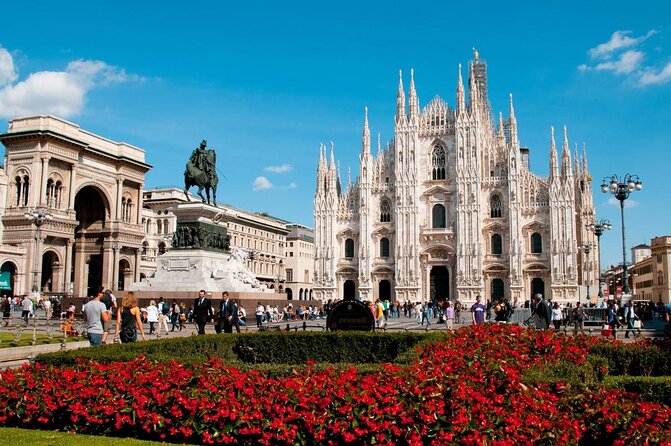
- App-led clues with flexible pacing: No need to keep up with anyone.
- A “learning while walking” format: Answer questions and research prompts on your phone.
- Big-name Milan stops in one outing: From Galleria Vittorio Emanuele II to Duomo Square.
- Works for multiple ages and group sizes: Great for both small and larger groups.
- A game that can stretch or quicken your time: Aim for 2 hours or make it 4.
- Private group experience: Only your group participates.
How the App-Led Scavenger Hunt Actually Feels in Milan
This is not a traditional guided tour. It’s an interactive city walk where the app acts like your trail guide. You download it, then play a mobile ticket game that nudges you from one landmark to the next with questions and mini research tasks.
That approach is exactly why it’s worth considering. You can pause for photos, detour for a coffee, or slow down in the places that catch your eye. For Milan, that flexibility is gold because the city rewards sideways exploring: shop windows in the Galleria, viewpoints near the Duomo area, and quiet church corners that people miss when they’re walking fast.
The tradeoff is also pretty clear. The “guide” here is the app. If you’re the type who wants a human to explain details in a smooth, story-like way, you might wish the app had more depth. Think of it as a guided walk shaped like a scavenger hunt, not a lecture.
You can also read our reviews of more city tours in Milan



Starting at Piazza Fontana: Why This Pickup Works

You meet at Piazza Fontana (20122 Milano MI) and the activity ends back at the same starting point. That loop matters more than it sounds. It makes it easier to plan your day around it. You don’t end your walk in some random neighborhood far from transit.
Piazza Fontana is also close enough to Milan’s central grid that you can treat this like a “core highlights” outing. Since the duration is about 2 to 4 hours, it fits neatly between meals and other plans. And because it runs daily over a wide window, you can usually pick a time that matches your energy level instead of hunting for a single departure slot.
One more practical note: this is family-friendly and described as user friendly for the hearing impaired. Since it’s app-based, you’ll rely on whatever the app communicates rather than live spoken narration.
Galleria Vittorio Emanuele II and the Milan Cathedral: Iconic Stops, Built for Looking
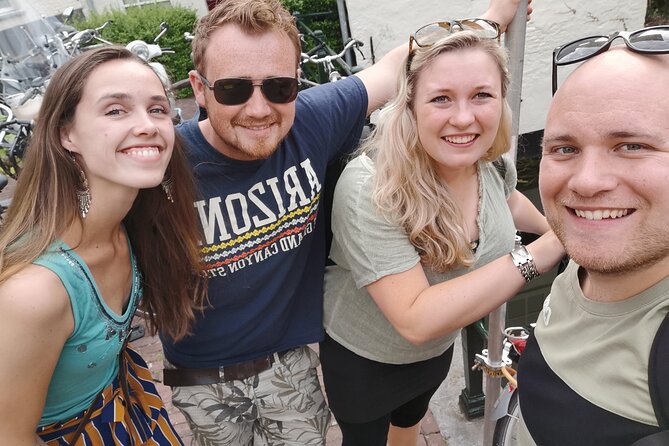
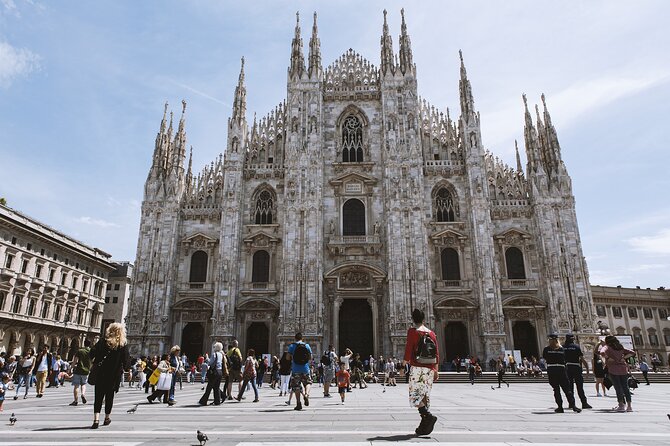
Two of Milan’s biggest visual magnets hit early: Galleria Vittorio Emanuele II and the Milan Cathedral (Metropolitan Cathedral-Basilica of the Nativity of Saint Mary). In a regular tour, these stops often feel rushed. In a game format, you naturally slow down because you’re searching for answers and noticing details.
Galleria Vittorio Emanuele II
This is Italy’s oldest active shopping gallery, and it’s a major landmark for a reason. The building’s glass-and-iron atmosphere is the kind of place you can walk through without meaning to, then realize you’ve spent way longer than planned. The app format makes that instinct useful. You can take your time reading clues, then wander the arcade in between tasks.
If you’re traveling with kids or a mixed group, the Galleria is one of the easiest places to keep everyone engaged. It’s visual, it’s central, and it’s filled with “what am I supposed to look for?” moments.
Milan Cathedral and Duomo Square
The Milan Cathedral is massive, and that scale can be overwhelming if you only think in terms of sightseeing. The app approach helps by giving you a reason to look closer. You’re not just staring at the whole façade. You’re checking for specific features connected to the challenge.
Then you reach Duomo Square, enclosed by the cathedral and the area that most people picture when they say Duomo. One practical detail: shopping is what draws many crowds here, so expect more foot traffic around the square. That’s another reason a self-paced format can help. You can do the practical sightseeing beats, then dip into side streets when it feels crowded.




Castello Sforzesco and Porta Sempione: Medieval Power Meets City Gate Energy
From the cathedral zone, the trail shifts toward the Sforza era and the city’s gate district. These stops are a good reminder that Milan isn’t only fashion and shopping. It also has defensive structures, old stone, and open-air space where you can take a breath.
Castello Sforzesco
Castello Sforzesco is a medieval fortification built in the 15th century. Even if you don’t step into every space, the castle gives you a sturdy sense of place. It’s a “turn your head and look up” landmark, and that works well with app clues because you’ll likely be scanning the surroundings for answers instead of walking straight through.
A consideration here: castles and fortress areas can feel big. If you want a shorter, punchy outing, you’ll probably spend less time lingering in the surroundings. If you like to linger, you can stretch your 2-to-4-hour window without feeling like you’re falling behind.
Porta Sempione
Porta Sempione is both a city gate and the name used for the surrounding district. That dual identity is useful to understand. You’re not only at a single monument; you’re walking through an area shaped around that gateway.
In a self-paced hunt, this stop is often where the walk begins to feel like a stroll. You can slow down and watch how the neighborhood shifts as you move away from the busiest tourist core.
Santa Maria delle Grazie and the Last Supper: UNESCO Weight Without the Rush
The trail includes Santa Maria delle Grazie, a church and Dominican convent and a UNESCO World Heritage Site. It also lists the Last Supper, a late 15th-century mural painting by Leonardo da Vinci housed in the refectory of that convent.
This is the part of the route where Milan’s story turns heavier. You’re heading to one of the most famous works of art connected with the city, and the app format gives you a way to slow down and absorb the setting rather than treating it like a quick photo stop.
What I like about including this in a scavenger hunt is that it can help you connect the mural to the place around it. UNESCO sites can feel like checklist items if you only look at nameplates. Here, the clues and assignments encourage you to notice context as you arrive.
A consideration: if you’re hoping for a fully guided art lecture, this format won’t replace that. But if you want a structured reason to spend focused time in the area, it fits.
San Fedele, Casa Panigarola, and Palazzo dei Notai: Church Stops That Reward Curiosity

The route reaches San Fedele, a Jesuit church dedicated to St. Fidelis of Como. Even if you’re not religiously inclined, the app-based structure makes church stops feel less like interruptions and more like mini checkpoints.
Then you come to Casa Panigarola, also known as Palazzo dei Notai, located in Piazza Mercanti—former city centre in the Middle Ages. That’s a great combination for a game format: you get a physical landmark tied to civic life, not only religious architecture.
How to make these stops work for you
Since the experience is question-driven, you’ll do better if you give yourself a few minutes without rushing the answers. Milan’s older buildings often reward slower looking: edges, layouts, and place names that hint at what the site used to be.
Also, because this is family-friendly, these are the kinds of stops where kids can feel like they’re “collecting” pieces of the city’s story, not just counting monuments.
San Lorenzo Maggiore, the Ring of Canals, and Giuseppe Bovara’s Fountain
Next up is the Basilica of San Lorenzo Maggiore, located within the city’s ring of canals and originally built in Roman times. This stop gives you an underrated angle on Milan: the deep layer before the medieval and Renaissance city that most visitors focus on.
Roman origins matter because they change how you look at the streets and structures around you. Even if you don’t go heavy on architectural study, the Roman timeframe gives you a sense of continuity.
Right in this stretch, the hunt includes a rectangular fountain designed by architect Giuseppe Bovara, with water that gushes out through three mouths—two lateral and one front. This is exactly the kind of detail that makes a scavenger hunt better than a standard walk. You’re not just at a pretty spot; you’re hunting for a feature you can clearly identify.
If you like “spot-it-fast” challenges, this fountain stop is the kind that keeps momentum.
Basilica di Santa Tecla: False Apse, Trompe-l’œil, and Roof Statues

Basilica di Santa Tecla is a former paleo-Christian basilica church. At this stop, the provided details point to two things that are especially visual: the roof’s statues (including gargoyle-like features) and the church’s false apse, an early example of trompe-l’œil attributed to Donato Bramante.
This is a standout kind of stop for a mobile hunt because it practically begs you to look twice. A false apse is the sort of feature you can miss if you’re only scanning for the “main façade.” With an app-driven clue, you’re more likely to notice the trick intended by the design.
Practical tip for your own pace: don’t answer every clue instantly. Take a moment to check the roofline and façade before you move on. This is one of those places where the fun is in the noticing.
Brera and Pinacoteca di Brera: Art District Energy Without Needing a Ticket Rush
Brera is part of the Centro Storico district and is home to the Pinacoteca di Brera gallery and its collection of Italian art spanning centuries, plus areas described as fresco-filled. The route includes both Brera and the Pinacoteca di Brera itself.
Brera works well in an app scavenger hunt because the district encourages wandering. You’re not trapped by a tight script. Even if you’re following clues, you’ll naturally find yourself walking at a “let’s see what’s here” pace.
Pinacoteca di Brera is described as the main public gallery for paintings in Milan, housing one of the foremost collections of Italian paintings. If you’re the kind of traveler who likes to pick one museum to focus on rather than trying to do everything, this stop sets you up for that mindset.
A caution that’s more about expectations than logistics: the hunt’s emphasis is on the city walk plus app prompts. If you want deep museum-time with long explanations, plan to spend extra time beyond the 2–4 hour window.
Palazzo Litta and the Baroque Thread Through Milan
The route also includes Palazzo Litta, also known as Palazzo Arese-Litta, described as a Baroque structure in Milan. Baroque can be dramatic, and when you’re moving through a day that also includes Roman-era sites and Renaissance-level art references, it helps to have a stop like this to balance the timeline.
In a game format, Palazzo Litta is likely one of the puzzle checkpoints that helps you “map” Milan rather than just watch it blur by.
Time on Your Terms: How to Make 2 to 4 Hours Feel Like More
This experience is estimated at about 2 to 4 hours, which is a sweet spot for self-paced city exploring. The key is using that time intelligently.
If you want a faster run:
- Prioritize the major exterior landmark moments and focus on answering the app questions quickly.
- Don’t get stuck in long detours unless the clue keeps you interested.
If you want a slower run:
- Spend extra time around the Duomo zone, the Galleria, and the Santa Maria delle Grazie area.
- Use the fountain and Santa Tecla stops as your “slow down and look” breaks.
Because you end back at the meeting point, you can also structure your day around meals and evening plans without the stress of “where do we finish?”
Price and Value: Is $36.07 Per Group a Good Deal?
The price is $36.07 per group (up to 6). That matters because Milan tours can get expensive fast once you’re paying per person. Here, you pay for the group experience, so a family of four or a small group of friends can feel like it costs less than a single person on a traditional guided tour.
Value here comes from two things:
- You’re getting a prepared route with landmark stops you’d likely want to hit anyway.
- You’re buying flexibility—no waiting around for a group and no constant need to follow along.
But it’s not a substitute for a full-service guide. If you want expert narration for every stop, you may not feel like the app gives enough explanation. One of the main reasons people feel disappointed with app-led tours is expecting a guide-like experience instead of a game-first format. Keep that in mind when you decide.
Who This e-Scavenger Hunt Fits Best
This tour fits best if you:
- Like walking and want a structure that keeps you moving.
- Enjoy puzzles or answering questions while you explore.
- Travel with kids or mixed-age groups and need variety.
- Want to cover major Milan sights without spending the day tied to a schedule.
It may not fit you as well if:
- You strongly prefer live, spoken interpretation over an app’s instructions.
- You hate relying on a smartphone and using data (since smartphone and data are not included).
- You want timed-entry museum pacing, because this is a walk-and-play format, not a ticketed museum day.
Should You Book This? My Practical Take
If your goal is to see Milan’s top landmarks while staying flexible, this is a smart, low-stress way to do it. The big names on the route—Galleria Vittorio Emanuele II, the Milan Cathedral, Castello Sforzesco, and the Santa Maria delle Grazie / Last Supper area—are exactly the kind of highlights you’d plan anyway.
Just go in with the right mindset: this is an app-led scavenger hunt, not a full guided lecture. If you’re excited by the idea of learning through questions and short research prompts, you’ll likely enjoy the structure. If you want a human guide to fill every minute with storytelling, you may want a different style of tour.
FAQ
How long does the e-Scavenger hunt take?
It’s estimated at about 2 to 4 hours.
Where does the tour start and end?
It starts at Piazza Fontana, 20122 Milano MI, Italy, and ends back at the same meeting point.
Is this a guided tour with a group leader?
No. It’s app-led, and you follow the game on your phone rather than walking with a live group leader.
What’s included in the price?
You get online app access to play the game on your phone.
Do I need a smartphone or data?
Yes. The use of a smartphone and data is not included, so you’ll need your own phone and plan for connectivity.
Is there a mobile ticket?
Yes. The tour uses a mobile ticket.
How big is the group?
It’s a private activity, and only your group participates. The price is per group, up to 6 people.
Is it family-friendly?
Yes, it’s described as family-friendly and suitable for all ages.
Are service animals allowed?
Yes, service animals are allowed.
Is there free cancellation?
Yes. Free cancellation is available up to 24 hours in advance for a full refund.
If you want, tell me your travel dates and who’s going (adults vs kids, and your comfort with apps). I can help you decide whether the 2-hour quick pace or the 4-hour linger mode fits your style.