REVIEW · MILAN
Ticket Pinacoteca Ambrosiana + Cripta San Sepolcro, Milan
Book on Viator →Operated by Veneranda Biblioteca Ambrosiana · Bookable on Viator
A few steps lead from art to underground Milan. This ticket ties together Pinacoteca Ambrosiana with one of the city’s most atmospheric medieval spaces, Cripta San Sepolcro—so you get both masterpieces above and history under your shoes. I love the way the museum puts famous names front and center, including Caravaggio and Raphael, and I also love the library experience, where you can see original Leonardo drawings tied to the Atlantic Codex in a 17th-century setting.
One consideration: this is mainly an admission ticket setup, and the listing says tour guides and audio guides are not included. If you want a guided, narrated walkthrough, plan for that extra layer yourself.
In This Review
- Key highlights to look for
- Pinacoteca Ambrosiana: Where you start with famous art and smart surprises
- What to notice in the main galleries (so it doesn’t feel like a checklist)
- The 17th-century reading room and Leonardo’s Atlantic Codex drawings
- Cripta San Sepolcro: medieval church under Milan, paved with Roman stones
- Timing: how to fit Pinacoteca + the crypt without rushing your best moments
- Mobile ticket and simple logistics that help you stay flexible
- Value check: what you’re paying for (and what you’re not)
- Who should book this Milan combo
- Should you book Pinacoteca Ambrosiana + Cripta San Sepolcro?
Key highlights to look for
- Caravaggio’s Basket of Fruit and other signature works that anchor the collection fast
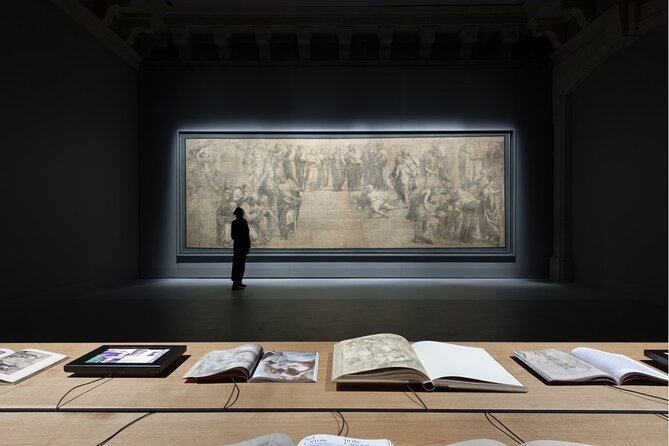
- Raphael-related cardboard tied to the School of Athens project
- Brueghel’s Vase of Flowers for a different kind of realism
- 17th-century reading room atmosphere and original Leonardo drawings connected to the Atlantic Codex
- Cripta San Sepolcro’s medieval hypogean church under the city
- Ancient Roman stones from Mediolanum reused in the crypt paving
Pinacoteca Ambrosiana: Where you start with famous art and smart surprises
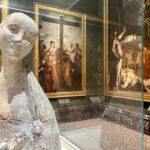
Your visit starts in Pinacoteca Ambrosiana, a place where Milan’s cultural story feels practical, not precious. The collection is known for major works, but what I like is how quickly you can orient yourself: within a short walk through the galleries, you meet big names and then start noticing smaller details. If you’re traveling with limited time, this is a good move because it hits high impact without dragging.
The museum’s “headline” moments are very clear. You can expect to see Caravaggio’s Basket of Fruit, Raphael’s cardboard for The School of Athens, and Brueghel’s Vase of Flowers. You’ll also find Leonardo da Vinci’s Portrait of the Musician, which is a great pivot from religious or mythic subjects into something more human and immediate.
There’s also a built-in reason to slow down: it’s not just paintings. The experience connects to the library world, where original manuscripts and drawings make the art feel more grounded in ideas and process.
You can also read our reviews of more tours and experiences in Milan
What to notice in the main galleries (so it doesn’t feel like a checklist)
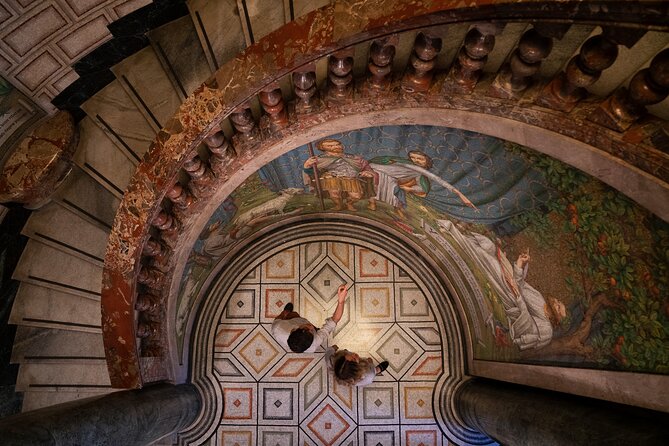
This museum is best when you let it be a little hands-on in your brain. With works like Caravaggio’s Basket of Fruit, I like to focus less on spotting fame and more on how the scene is built: light, texture, and the sense that the objects are staged to feel real. Caravaggio can be intense even when you’re rushing, so taking even a minute pays off.
Raphael’s School of Athens cardboard is a different kind of payoff. Instead of a finished painting, you get a glimpse of planning. That makes it easier to understand how artists worked—how composition and figures were laid out before paint and final decisions. If you enjoy art as engineering, this part tends to click.
Then comes Brueghel’s Vase of Flowers. This is where the mood shifts. Look for the careful observation in the arrangement and the way the work captures nature without turning it into chaos. It’s also a nice break if you’ve been museum-hopping and need something quieter.
And Leonardo’s Portrait of the Musician is your stop for craft. Try to watch for expression and the impression of presence—Leonardo’s figures often feel like they’re not just being shown, they’re being kept alive by the details.
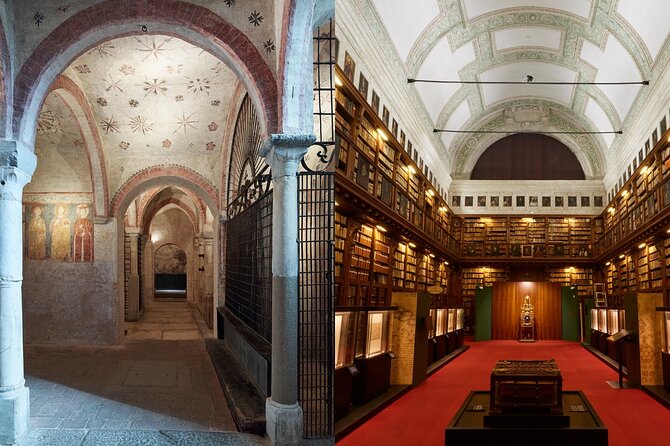
The 17th-century reading room and Leonardo’s Atlantic Codex drawings
The most memorable part for many people is the library space, not just the galleries. You’ll have the chance to visit the 17th-century reading room, and what makes it special is that you can see original drawings of Leonardo’s Atlantic Codex. That matters because it changes your role from viewer to witness. You’re not only looking at output; you’re seeing the raw materials of thought.
In a lot of places, Leonardo gets turned into a poster version of genius. Here, the drawings are the point. Even if you don’t read drawings like a scholar, you can still appreciate the seriousness of the work: lines, structure, and the sense that this was a mind always building, testing, and refining.
This is also a practical win. A library room gives you a natural pause in the schedule. You can reset your attention before you switch from artworks to the underground world.
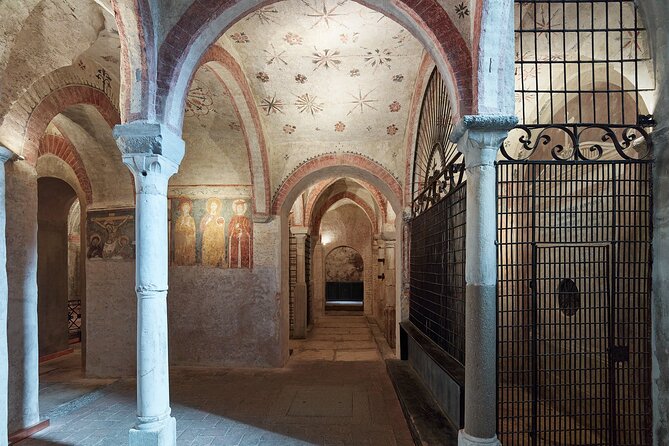
Cripta San Sepolcro: medieval church under Milan, paved with Roman stones
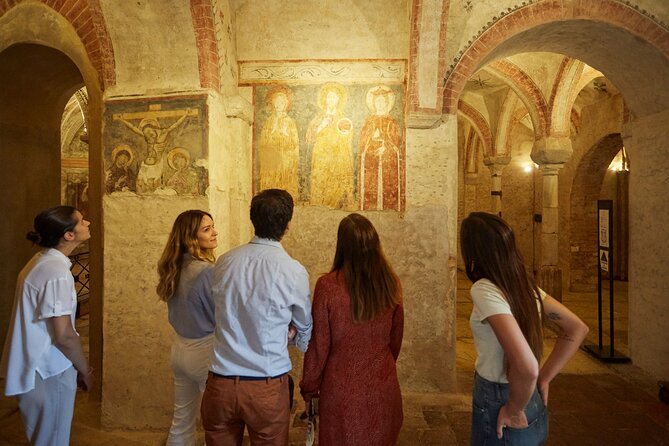
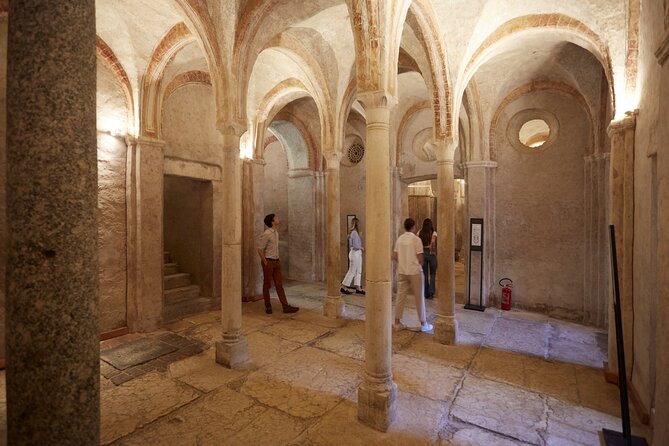
After the museum, you head underground to Cripta San Sepolcro, a medieval hypogean church—meaning it’s built below street level. It’s one of those places where the architecture does half the storytelling for you, because the setting is physical. You feel the shift: from polished display spaces to an older, darker kind of atmosphere.
What’s really striking is the paving. The crypt’s floor uses ancient stones taken from the Roman city of Mediolanum. That detail turns the crypt from a “site to see” into a time machine you can literally walk on. You’re not only visiting a medieval structure; you’re stepping across reused material that connects multiple layers of Milan’s past.
It also helps that the crypt is clearly defined in your time window. You’re not stuck wondering how long it will take; you can plan for a shorter visit—ideal if you’re packing Milan into a busy day.
Timing: how to fit Pinacoteca + the crypt without rushing your best moments
The whole experience runs about 1 hour 30 minutes to 2 hours. That’s long enough to enjoy both parts, but not long enough to treat this like an all-day museum marathon. I’d treat it like a focused “two-act show.”
Here’s how to make that time work:
- Spend your first chunk in Pinacoteca Ambrosiana on the big-name works (Caravaggio, Raphael, Brueghel, and Leonardo’s Portrait of the Musician), then adjust based on what you care about most.
- Save the library reading room for when you’re ready to slow down.
- Use your crypt time for atmosphere and the Roman-stone paving detail, not for overreading the walls.
If you’re the kind of traveler who likes breathing room, arrive with that mindset. It can be easy to speed through the crypt simply because it feels like a quick stop. But the whole point here is the feel underfoot and the shift in time.




Mobile ticket and simple logistics that help you stay flexible
You’ll use a mobile ticket, and that’s a big plus in a city like Milan where plans change fast. No paper ticket hunting. Just keep your phone charged, and take a moment to check the entry flow when you arrive.
The experience is also described as being near public transportation, which matters because this kind of site pairing works best when your day is connected by transit, not by taxis.
And for most people, participation is described as straightforward—service animals are allowed too, which is always good to know.
Value check: what you’re paying for (and what you’re not)
Based on what’s included, this is essentially an admission ticket experience: you’re getting entry to both Pinacoteca Ambrosiana and Cripta San Sepolcro. The listing also clearly says tour guides and audio guides are not included, so the value depends on how you like to travel.
If you enjoy reading placards, looking closely, and learning in your own style, this setup can feel like strong value. You’re in major spaces with major art and a medieval underground church, without paying for extra layers you may not need.
If you prefer guided interpretation, you may want to add something outside this ticket. I’ve seen how much comfort people take in a well-prepared guide—especially when the guide arrives a few minutes early and uses real expertise to point out what to look for.
Bottom line: you’ll get the sites. You’ll supply the narration unless you add it yourself.
Who should book this Milan combo
This works especially well if you:
- Want two very different Milan experiences in one short window: Renaissance art above ground and medieval Milan underground
- Love iconic artworks but also care about process and original drawings
- Like pairing a museum stop with something atmospheric and unusual
- Are building a focused cultural day without spending half your time in lines
It may be less satisfying if you’re expecting a fully guided tour experience included in the price. Because the listing indicates guides and audio guides are not included, you’ll want to plan how you’ll get context.
Should you book Pinacoteca Ambrosiana + Cripta San Sepolcro?
Yes, if you want a smart Milan package with big-name art and a genuinely different second stop. I’d book it when your goal is quality time with the collections and the library room, then a quick but memorable underground walk in Cripta San Sepolcro.
I wouldn’t book it if you’re hoping for a narrated, guided tour included with your ticket and you don’t want to read or self-interpret. In that case, either pair this entry with your own guide plan or choose a different format.
If you’re on a time budget but still want “real Milan,” this one-hour-and-a-half to two-hour combo is a strong bet.