REVIEW · MILAN
Milan: Private or Shared Essential Walking Tour
Book on GetYourGuide →Operated by MILAN IN TOUR · Bookable on GetYourGuide
Milan is a city you learn by walking. This 2-hour essential walk strings together the Duomo, the Galleria Vittorio Emanuele II, and the grand monuments around the center, with an expert guide keeping the story clear and practical. I love the focus on big landmarks with real context, and I like how the route hits both religion and daily life in one sweep; one drawback is that most major attractions are exterior only, so you’ll likely pay extra for interior visits.
The tour runs as a private-group experience for up to 6 (while the walking tour itself can accommodate up to 25), and it’s built for first-timers who want a fast orientation. Expect steady walking on sidewalks, plus optional add-ons you can request ahead of time, like extra museum stops. If you’re bringing someone with motion sickness or a pre-existing medical issue, this format may not be ideal.
In This Review
- Key reasons this Milan essential walking tour works
- Starting at the Duomo: the fastest way to understand Milan
- The royal and civic stops: what you’re really seeing around the Duomo area
- Galleria time: Victor Emmanuel II’s arcade as a living part of the city
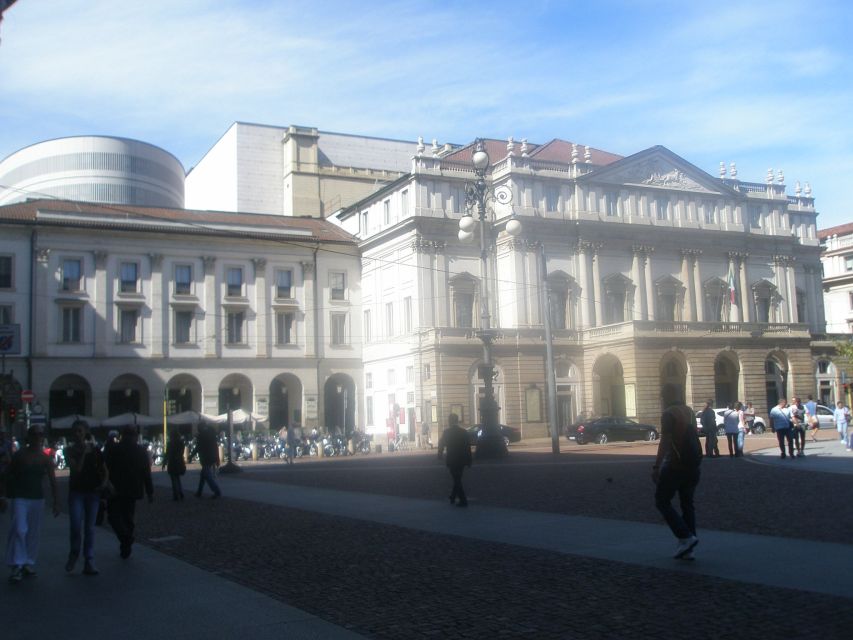
- La Scala and Sforza Castle: exterior highlights with separate ticket options
- Guides make the difference: Laura, Alexia, Cristina, and Fiamma
- Price and value: what you’re paying for in 2 hours
- Practical tips that make the walk smoother
- Who should book this essential walking tour?
- Should you book this Milan walk?
- FAQ
- How long is the Milan essential walking tour?
- Is this a private tour or a shared group tour?
- What’s included in the price?
- Which tickets or admissions are not included?
- Do I need headphones?
- What languages are the live guides available in?
- Is the tour wheelchair accessible?
Key reasons this Milan essential walking tour works
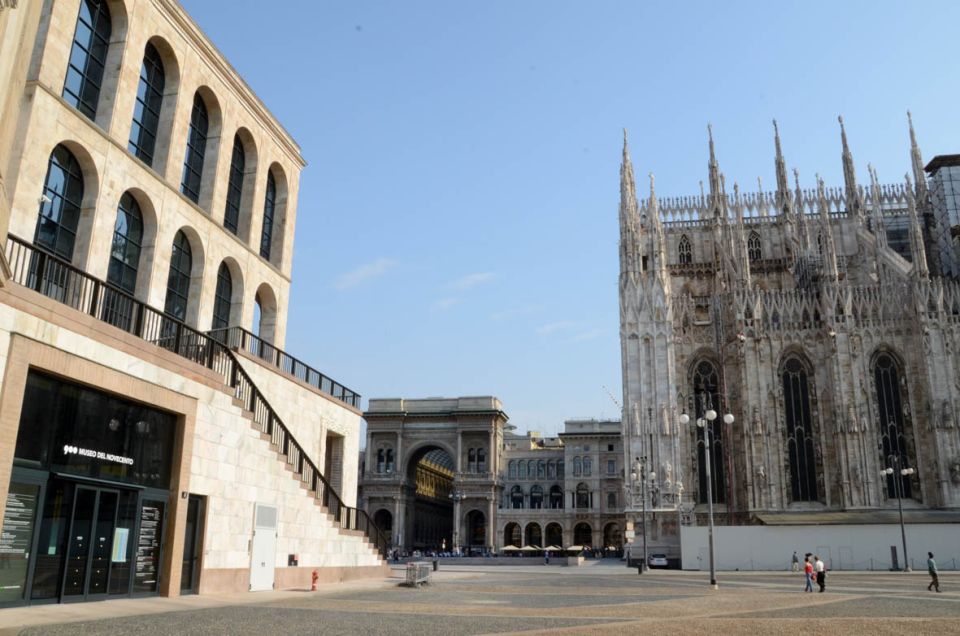
- Duomo di Milano context in 2 hours: the guide sets up the cathedral’s long building story right from the start
- Galleria Vittorio Emanuele II stop: you get the why behind Europe’s early covered mall while shopping-café life is still happening
- Royal Palace and palace-row area: you see the lineup of power sites without needing museum tickets
- La Scala and Sforza Castle exteriors: strong photo-and-understanding stops, with ticket costs kept separate
- Real flexibility from standout guides: some guides go out of their way to help with additional site plans
- Clear logistics for small groups: you’re not stuck with a huge crowd pacing you off rhythm
Starting at the Duomo: the fastest way to understand Milan
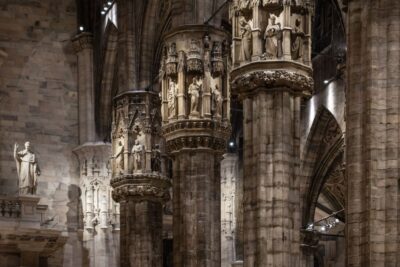
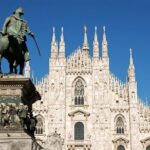
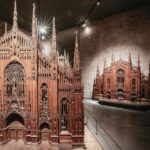
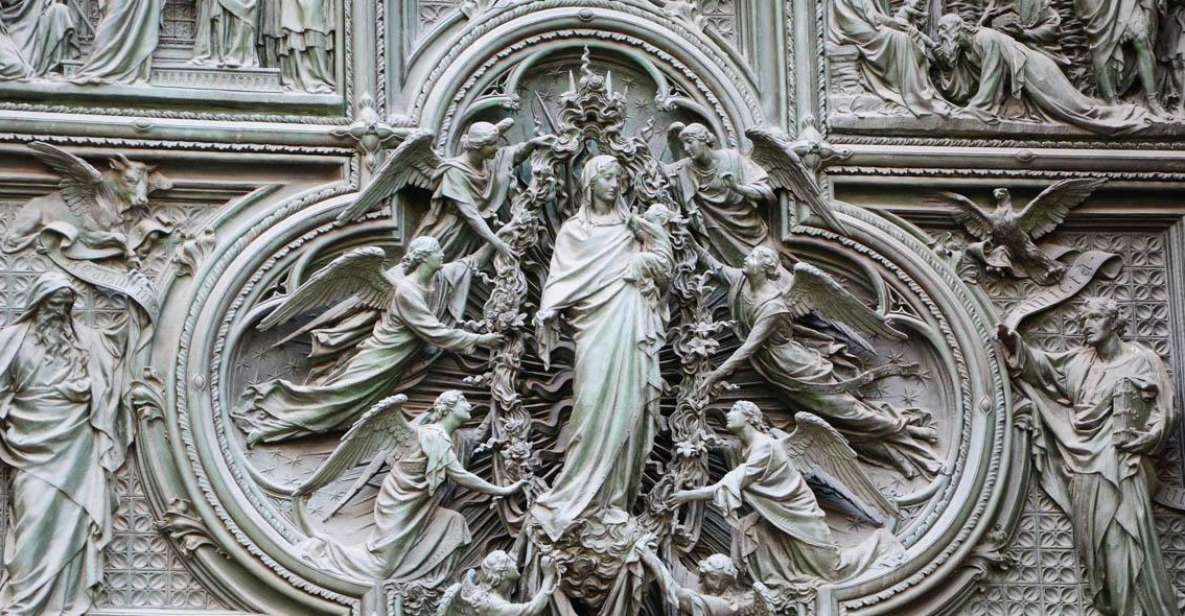
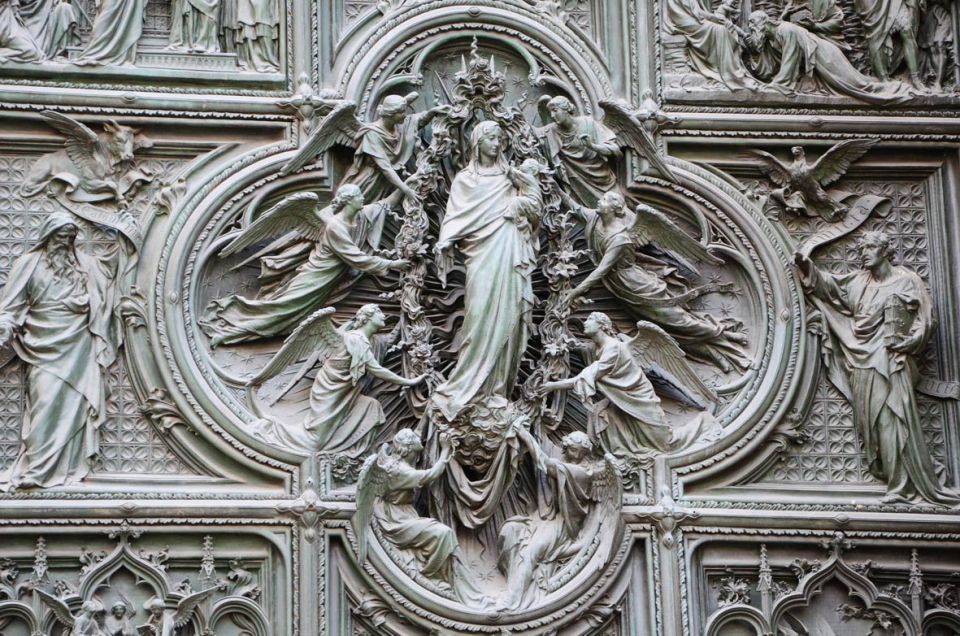
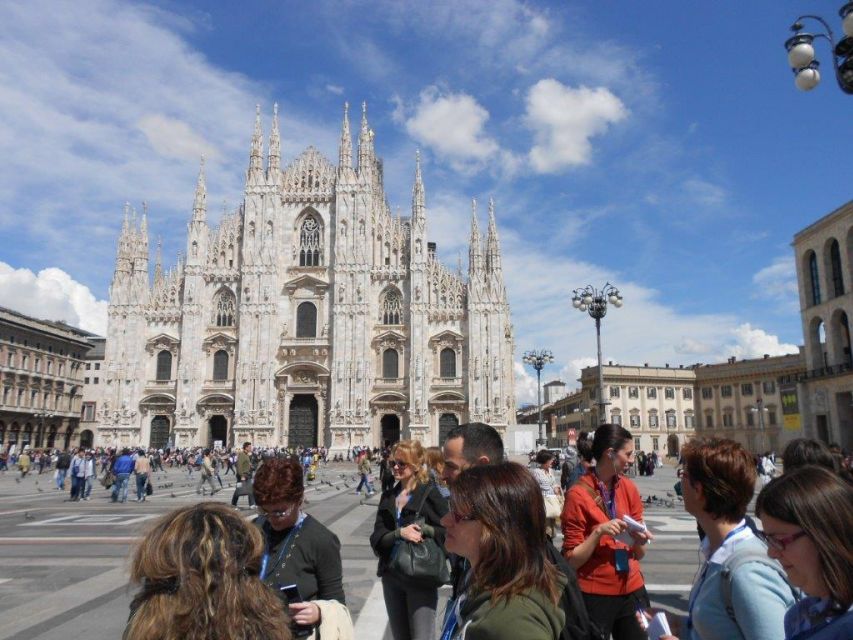
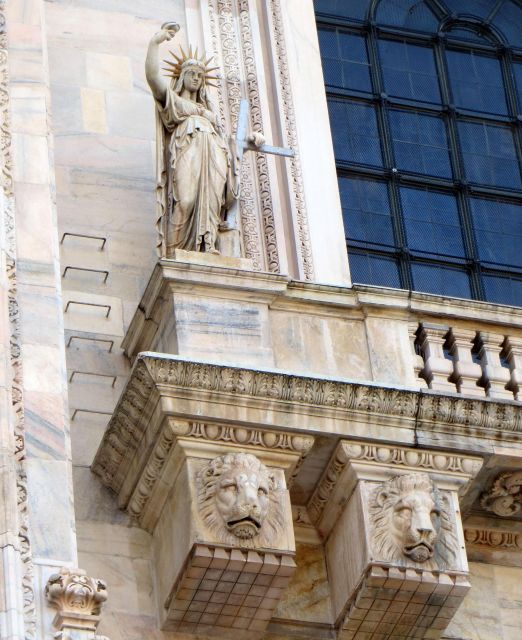
Most people think the Duomo is just a famous building with a lot of marble. This tour treats it like a city lesson. You start at Duomo di Milano, and the guide explains its five centuries of history so the details you see on the façade start to make sense instead of looking like random decoration.
That matters because the Duomo is enormous—your brain needs a map, not just a skyline photo. The guide’s job is to help you connect the dots: why this cathedral sits where it does, how it became a symbol, and how it shaped the area around it. Even if you don’t buy a Duomo ticket for interior access, the exterior story alone can make the building feel less confusing and more meaningful.
One practical note: basic Duomo admission is not included. If you want to go inside, budget an extra fee (the tour lists €5 per person for basic entry). If you’re on a tight schedule, the exterior orientation can still be a smart use of your limited time.
You can also read our reviews of more walking tours in Milan


The royal and civic stops: what you’re really seeing around the Duomo area
After the Duomo, the walk pulls you into the center’s power geography. You’ll pass by or view from outside several major sites tied to governance and church life, including the Royal Palace, the Archbishop’s Palace, and the Arengario Palace.
This part of the tour is valuable because it shows you Milan as a working city, not just an art postcard. You start to see the city’s “stack” of influences—religious authority, royal administration, and civic identity—layered into the streets you’ll walk every day. The guide helps you spot what’s important even when you’re only seeing buildings from the outside.
If you like architecture, you’ll appreciate that these stops are described as relationships, not isolated monuments. You’re not just ticking off names; you’re understanding why these places sit together and how Milan’s institutions evolved over time. It’s also one of those segments where comfortable shoes make the difference between enjoying the pace and rushing through it.
Galleria time: Victor Emmanuel II’s arcade as a living part of the city
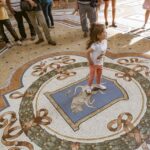
Next comes one of Milan’s most photogenic stretches: the Victor Emmanuel II Arcade, also known as the Galleria. This is the stop that often makes people grin, because it’s not a dead museum hallway. It’s still a luxury shopping area, so you see the arcade in its modern role, not just its past.
The tour includes this stop specifically because the Galleria is more than style. It’s recognized as the first covered shopping mall in Europe, which changes how you interpret what you’re seeing. Instead of thinking, wow, pretty ceiling, you start thinking, wow, Milan built a new kind of public-private street for commerce and social life.
If you enjoy people-watching, this is your moment. Take a slow look at the storefront rhythm, the bustle, and how the space channels movement. And if you want a quick café break, you’re in the right area for it—but don’t plan on a long sit-down unless you’re comfortable shaving time from later stops.
La Scala and Sforza Castle: exterior highlights with separate ticket options
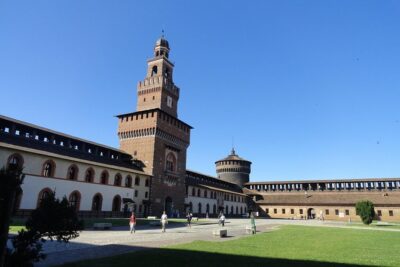
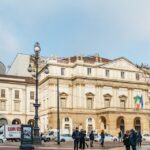
This tour doesn’t promise full museum-style visits. It’s designed as an overview walk, so La Scala and Sforza Castle are mainly exterior stops.
That’s not a flaw—it’s a strategy. With only 2 hours, you need a tour that prioritizes orientation. Seeing the exterior of these famous landmarks tells you how they fit into the city layout, and the guide fills in why they matter. You’ll get the story beats without getting bogged down in lines or wandering.
Still, tickets cost extra, and it’s smart to decide early whether you care about interiors:
- La Scala admission: listed at €9 per person
- Castle admission: listed at €5 per person
Also, watch the schedule: La Scala Museum is closed on Mondays. If your visit lands on a Monday and your priority is that museum experience, plan around it.
If you’re tempted to go inside everything, you’ll likely feel rushed on a 2-hour walk. The best approach is to treat this tour like a foundation. After you see the outside landmarks and understand the geography, you’ll know what to spend extra time on next.
Guides make the difference: Laura, Alexia, Cristina, and Fiamma
A big reason this tour scores high is guide quality. Names that have come up include Laura, Alexia, Cristina, and Fiamma—and the common thread is clarity plus energy.
Laura comes across as friendly and flexible, with strong attention to history. Alexia is described as personable and enthusiastic, with the kind of helpfulness that can go beyond the script—like arranging access to another important site when someone struggled to get tickets. Cristina is praised for a good balance of passion and structured explanation, plus a flexible approach when requests come up.
And Fiamma’s style is worth noting if you learn best by interacting: the tour experience is described as organized, with humor, questions encouraged, and a solid sense that the guide keeps you looking at what they’re describing.
One caution from real-world group dynamics: if you’re traveling with teenagers, you may prefer a more hands-on pacing. When a group is older and more restless, a shorter, more interactive approach (sketches, touchable-style learning, quick prompts) can work better than long, lecture-like segments. For mixed-age families, you can often solve this by asking the guide for small breaks or by stating up front what keeps your group engaged.
You can also read our reviews of more private tours in Milan




Price and value: what you’re paying for in 2 hours
The listed price is $317.20 per group up to 6. On paper, that can feel like a lot—until you compare it to what you’re getting: a guided walk across several of Milan’s top-name destinations, plus a guide who stays with your group throughout the route.
Here’s the value math that makes this easier to judge:
- You’re paying for time with a guide and an efficient route through central Milan
- Most major interiors are not included, so you’re not paying museum prices on day one
- The tour can be personalized if you ask ahead, which can reduce the stress of planning on your feet
If your group is 2–4 people, the per-person cost will feel reasonable because you’re effectively buying convenience: the route, the explanations, and the “where should we go next” guidance. If your group is 6, the cost per person drops further, and you also have more flexibility to split interests—shopping vs. architecture vs. quick ticket planning.
The only way this feels like poor value is if your priority is full inside visits with audio guides and long museum time. This tour is an overview. It’s excellent for first orientation, and then it turns into a launching pad for deeper ticketed stops.
Practical tips that make the walk smoother
A few details will save you hassle.
Wear comfortable shoes. The tour is walking-focused and runs 2 hours, so you’ll be on your feet for the bulk of it. Also, avoid large luggage or bags—the tour notes they aren’t allowed.
Bring a flexible mindset about tickets. Interior fees are listed separately for La Scala and the castle, plus basic Duomo entry. If you want to go inside, decide whether you’ll buy those tickets immediately or after you’ve finished the route.
Plan for headphones only when needed. Headphones are listed as available at €2.50 per person, and they become compulsory starting from the 5th person. If you’re booking with 5–6 people, budget that small add-on.
Expect a multi-language guide option. The tour offers live guiding in Spanish, English, French, German, Italian, Portuguese, Russian, and Japanese. The tour is conducted in English by default, with other languages available on advanced notice. If language matters to your group, request it early.
Finally, keep meeting-point expectations realistic. The start location may vary depending on the option booked, and the tour ends back at the start point. That makes it easy to continue exploring on your own afterward.
Who should book this essential walking tour?
This is a strong fit if you want:
- A quick orientation to Milan’s center in a short time window
- A guided explanation of Duomo history and the logic of the surrounding landmarks
- A route that mixes religious architecture, civic power sites, and modern city life
It’s also a good choice for groups that value structure. If you’re the type who likes knowing where to go next, this tour helps you build a map in your head without committing to a full day of ticketed admissions.
It may not be the best match if you:
- Need a very slow, minimal-walking pace
- Want mostly indoor time and long museum visits
- Have pre-existing medical conditions or motion sickness (the tour states it’s not suitable for these situations)
Should you book this Milan walk?
If this is your first trip to Milan and you want to understand what you’re looking at—fast—this tour makes sense. The Duomo + Galleria combo is exactly the kind of pairing that turns a quick visit into real understanding, and the guide quality can make the story click quickly.
Book it if you’re willing to treat interiors as optional add-ons. Pass or adjust your plan if your heart is set on spending most of your time inside La Scala and Sforza Castle.
FAQ
How long is the Milan essential walking tour?
It lasts 2 hours.
Is this a private tour or a shared group tour?
It’s sold as a private group experience (price listed per group up to 6). The overall walking tour capacity is listed as up to 25 people.
What’s included in the price?
The price includes the tour and a live guide.
Which tickets or admissions are not included?
Not included are La Scala admission (€9 per person), castle admission (€5 per person), and Duomo admission (€5 per person for basic entry).
Do I need headphones?
Headphones are available at €2.50 per person and are compulsory starting from the 5th person.
What languages are the live guides available in?
The guide can be live in Spanish, English, French, German, Italian, Portuguese, Russian, and Japanese.
Is the tour wheelchair accessible?
Yes, the tour is wheelchair accessible.