REVIEW · MILAN
Milan Highlights semi-Private Walking Tour
Book on Viator →Operated by Ways · Bookable on Viator
Milan makes sense fast on foot. This small-group walk strings together Navigli-area canal life and the historic center, so you get an organized feel for the city in just about two hours. I like that it’s built to help you spot what you’ll want to revisit later, not just march past famous stones.
I also like the stop-by-stop stories tied to what you can actually see, from the Needle, Thread and Knot sculpture near Piazzale Luigi Cadorna to the Duomo facade. One possible drawback: many major sights are viewed mainly from the outside, and several stops don’t include entry tickets—so you may want to budget for extra admission if you decide to go in.
In This Review
- Key highlights to notice before you go
- Why this 2-hour Milan walk is a smart first-day move
- The walk’s rhythm: from canals to power squares (and how to enjoy it)
- Piazzale Luigi Cadorna: meeting point and the city’s symbolism
- Castello Sforzesco and Parco Sempione: where Milan’s defenses meet green space
- Via Dante and Piazza Affari: the pedestrian street and Milan’s money square
- Piazza Mercanti and Palazzo della Ragione: stepping into medieval Milan
- Teatro alla Scala and the arts district: culture on the move
- Galleria Vittorio Emanuele II: the city’s grand shopping arcade
- Duomo di Milano: the gothic exterior finish (and what it means for your plans)
- Who this tour suits best (and who might want something else)
- Price and value: what you’re really paying for
- Tips so the tour works for your day
- Should you book this Milan Highlights semi-Private Walking Tour?
- FAQ
- How long is the Milan Highlights semi-Private Walking Tour?
- What time does the tour start?
- Where do I meet the guide?
- Where does the tour end?
- How big is the group?
- Is the tour ticket mobile?
- Are attraction tickets included?
- Do I need hotel pickup or drop-off?
- Is the tour accessible for people with reduced mobility?
- Can I cancel for a full refund?
Key highlights to notice before you go
- Max 10-person group feel with a listed maximum of 16 travelers, so you’ll get more guide attention than on big bus tours
- Fast orientation route from Piazzale Luigi Cadorna to the Duomo area, ideal for a first morning in Milan
- Big landmarks, clear context at places like Castello Sforzesco, La Scala area, Galleria Vittorio Emanuele II, and the exterior Duomo
- Roman-era talk potential as the tour moves through the central streets toward older archaeological sites and statues
- Practical local guidance—the better guides tend to share what to do next and where to eat while you’re still fresh in the city
Why this 2-hour Milan walk is a smart first-day move
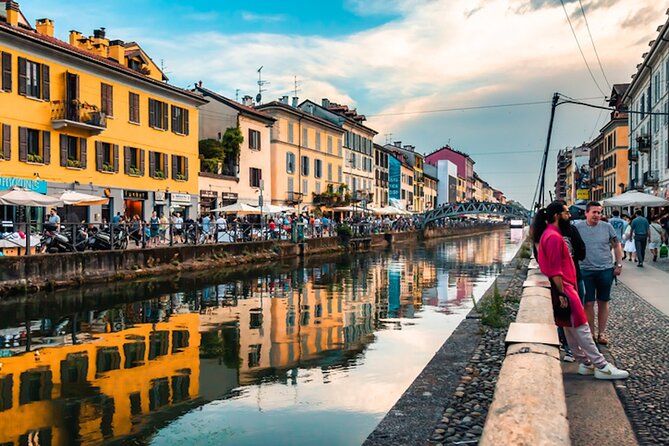
If Milan feels like a lot at once, this tour is a shortcut to clarity. You don’t just get landmarks in isolation. You walk a route that moves from the city’s canals and nightlife-style neighborhoods toward the political, financial, and religious center.
The biggest value is the guiding. The tour is led by a local licensed guide, and that matters because you’re not left to read plaques alone. You get the stories that connect different periods—Roman-era traces, medieval squares, and the architectural choices that shaped modern Milan.
It also finishes at the Duomo area, which is handy. Many people book this on their first day because they want an easy landing zone for the rest of their afternoon. Start near Piazzale Luigi Cadorna at 9:30 am, then end near Piazza del Duomo. That means you can keep walking, hop on public transit, or plan museum and church time without backtracking.
Price-wise, $44.71 per person for about 2 hours is usually fair when a guide is included and you’re keeping the group small. You’re paying for time with someone who can explain what you’re seeing while you’re seeing it.
You can also read our reviews of more walking tours in Milan


The walk’s rhythm: from canals to power squares (and how to enjoy it)
This route is designed like a storyline. It starts with an easy meeting spot, then it layers the city in a logical order: symbolism, fortifications, medieval lanes and squares, opera culture, shopping arcades, then the Duomo.
Expect short stops with quick takes on each location—around 10 to 20 minutes per stop. That’s good if you’re the type who hates standing around. But it also means you shouldn’t plan on long photo binges at every corner. Bring realistic expectations: you’ll get enough time to orient and snap the key views, then you’ll be ready to explore deeper on your own.
Along the way, you’ll cover a mix of textures:
- Pedestrian streets that show day-to-day Milanese life
- Medieval-looking plazas that make the city feel older than it looks
- A castle-and-park setting that helps you understand how power used to sit next to daily life
- The shift from “historic details” into “major-city icons,” especially around Teatro alla Scala, the Galleria, and the Duomo
A small group also changes how the tour feels. With fewer people, it’s easier for the guide to slow down when someone asks a question—and easier for you to hear the explanation without leaning in like you’re at a rock concert.
Piazzale Luigi Cadorna: meeting point and the city’s symbolism
You start at Piazzale Luigi Cadorna. It’s a practical choice: a clear meeting point near public transit, and a spot where you’re already in the urban flow before you even begin.
Right away, you’ll see the sculpture called Needle, Thread and Knot. It’s the kind of detail that’s easy to miss if you were just walking by. But it also sets the tone for how Milan works: art, industry, craft, and identity woven together. The guide’s short explanation here helps you read the rest of the city with a better lens.
This stop is brief (about 15 minutes), and that’s on purpose. The goal is to get you moving quickly and build momentum before you hit the bigger sights.
Castello Sforzesco and Parco Sempione: where Milan’s defenses meet green space
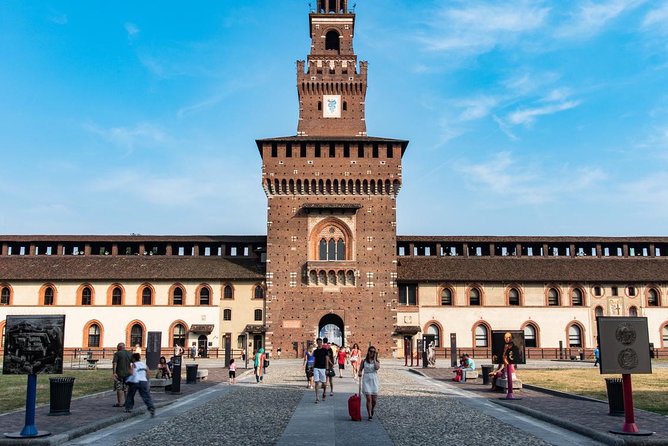
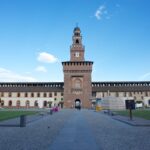
Next comes Castello Sforzesco, Milan’s Sforza-era castle. You’ll admire the castle itself (the tour indicates it’s well preserved) and get the context of its surroundings, especially Parco Sempione.
This is a good stop for two reasons:
- The castle sits in an environment that makes sense. You’re not just seeing a monument; you’re seeing how a fortress relates to the city’s layout and public space.
- The visuals are strong even without entering. If you’re not planning an inside visit, you’ll still get a satisfying sense of scale and stonework.
Admission isn’t included for this stop, so if you want to go inside the castle, you’d need tickets separately. If your main goal is orientation and outdoor views, you can still get a lot from the exterior.
Via Dante and Piazza Affari: the pedestrian street and Milan’s money square
Then you move to Via Dante, a pedestrian street. This is less about a single building and more about atmosphere. It’s a chance to see modern Milanese life while still feeling medieval traces in the surroundings.
After that, you’ll reach Piazza Affari, which you’ll know as the center of Milan’s financial district. The square has a statue in the middle, and the point here is the juxtaposition: civic history meets today’s business energy.
I like this part of the tour because it keeps the city from turning into a museum. You’re still walking real streets. You’re still seeing how people actually move through the city between iconic stops.
Both Via Dante and Piazza Affari are listed with free admission. That means you can enjoy the context without worrying about tickets.
You can also read our reviews of more private tours in Milan




Piazza Mercanti and Palazzo della Ragione: stepping into medieval Milan
Piazza Mercanti is where the tour time starts to feel like a time machine. This is a medieval square, and the difference shows up in the structures. You’ll be able to admire well-preserved medieval buildings, including Palazzo della Ragione.
This stop works best if you take a slow look at the facades. The guide will likely connect why this area mattered in Milan’s older civic life, and you’ll get that the “old Milan” wasn’t just churches and ruins—it was also administration and daily governance.
Admission is listed as free for this stop, so you’re paying for interpretation, not entry. If you like learning how a city functioned, you’ll probably enjoy this one the most.
Teatro alla Scala and the arts district: culture on the move
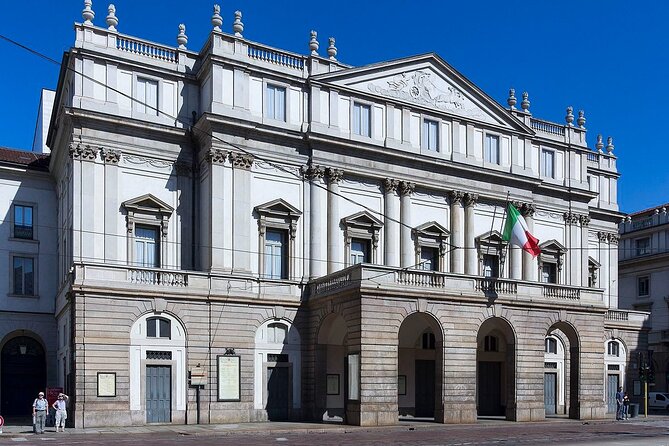
You’ll pass by Teatro alla Scala. Even if you don’t go in, you’ll feel why opera is such a big part of Milan’s identity. It’s also one of those places where the outside view is enough for the story—especially if your guide ties it to broader Italian culture and the kind of performers who take the stage.
The tour notes that admission is not included here. That doesn’t mean you’re locked out of everything—it just means entrance isn’t part of the tour fee. If your schedule lines up with a performance and you want to go deeper, this stop is a strong prompt to plan ahead.
Galleria Vittorio Emanuele II: the city’s grand shopping arcade
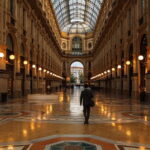
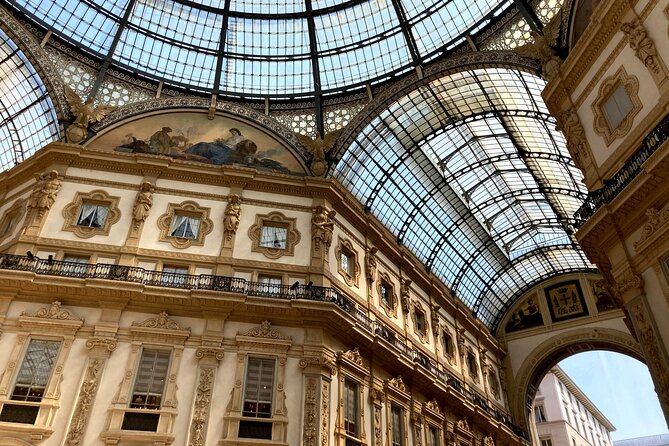
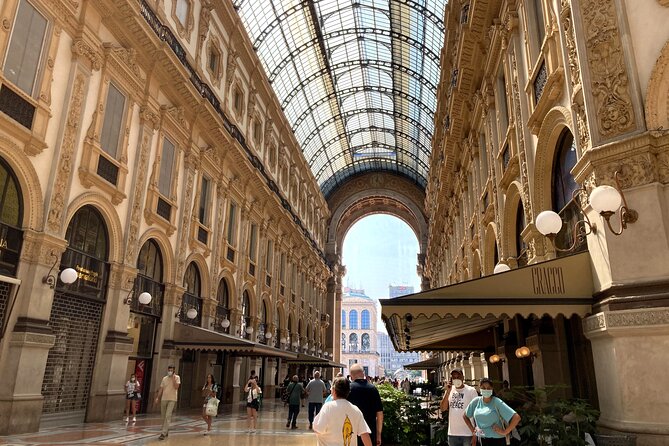
Next is Galleria Vittorio Emanuele II, one of Milan’s most famous interior-to-the-outside spaces. It’s an opulent shopping mall, topped with vaulted glass and iron arcades, and named after the first king of Italy.
This is one of my favorite “walk-while-you-see” stops because it’s designed for both people-watching and architecture spotting. You’ll appreciate how the space channels movement and light, and you get a sense of how Milan treats luxury and public space as close cousins.
Admission is listed as free for this stop. So you can enjoy the architecture without committing to ticketed attractions.
Duomo di Milano: the gothic exterior finish (and what it means for your plans)
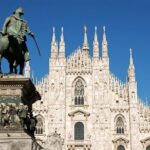
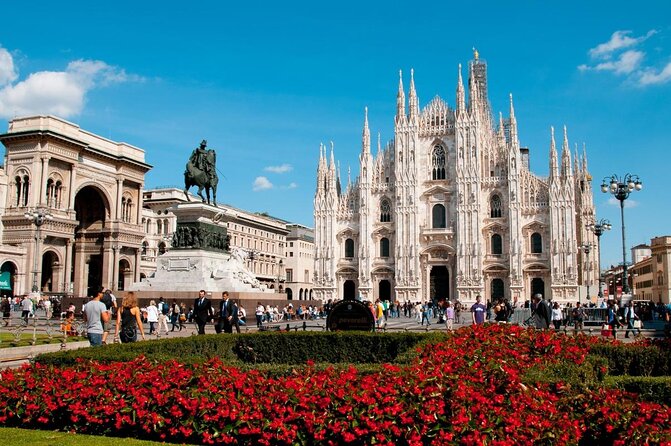
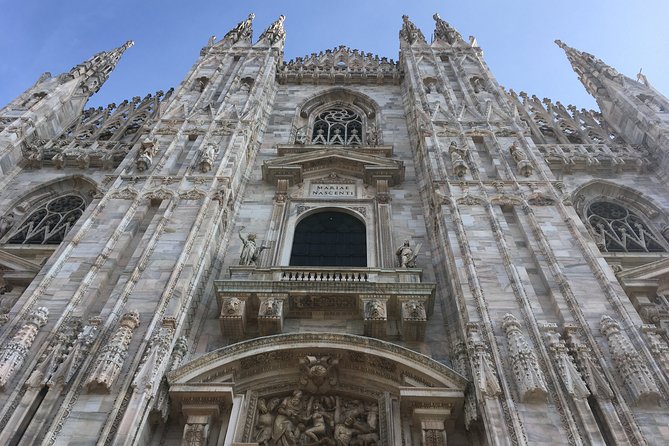
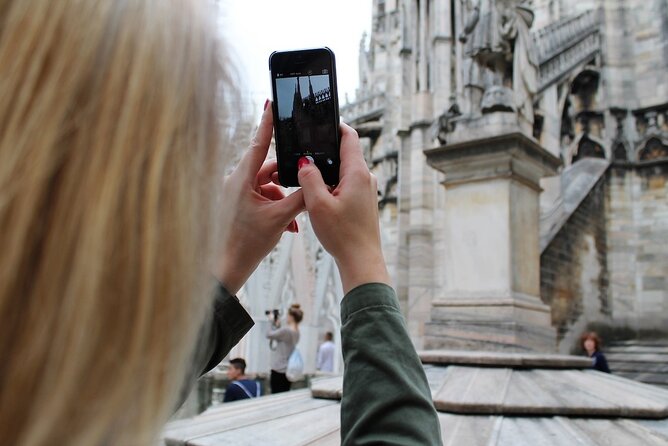
Finally, you reach Duomo di Milano. The tour focuses on admiring the cathedral from the outside. You’ll see it as a true architectural wonder and a massive church—described here as the third-largest Catholic church in the world.
Even from outside, the Duomo can be overwhelming in the best way. It’s one of those sights where having a guide’s context helps you stop “collecting photos” and start understanding what you’re looking at.
Admission isn’t included for this stop. That’s normal for an exterior-focused walk. If you want to enter, climb, or see interior spaces, you’ll need separate tickets and time.
The tour ends near Piazza del Duomo, so you’re perfectly set up to decide what to do next:
- If you’re exhausted, you can take a break and still feel like you did the key intro.
- If you’re energized, you can build a deeper Duomo plan right away without relocating.
Who this tour suits best (and who might want something else)
This is a great fit if you:
- Want a structured introduction to Milan without renting a car or figuring out a complicated route
- Like local context tied to what you’re seeing on the sidewalk
- Prefer small groups for better listening and questions
- Have limited time and want to cover a wide range of eras
You might skip or consider alternatives if you:
- Want lots of time inside major sites as part of the core experience
- Don’t want to think about extra admission for places that are listed as ticketed
- Need fully step-free access everywhere, since the tour notes some areas may not be easily accessible for reduced mobility
If your priority is “see it all in one go,” this is still a good start. Just know it’s oriented toward getting your bearings and getting the stories, not doing a full museum-day sprint.
Price and value: what you’re really paying for
At $44.71 per person for about two hours, you’re paying for three things:
- A local licensed guide who can connect streets and landmarks to bigger historical threads
- A time-efficient route from Cadorna to the Duomo zone that avoids dead ends
- A small-group format where your questions are more likely to get answered
The biggest “value add” isn’t any single monument. It’s the way the tour stitches together different parts of Milan into one coherent morning. You leave with a mental map of the city: where the medieval civic squares are, where the arts culture lives, where the financial district pulls its weight, and how the Duomo fits into the city’s center.
Also, many stops are listed as free admission. That means your spending can stay focused on any optional inside visits you choose, not a long list of required tickets.
Tips so the tour works for your day
A few practical habits make this run smoother:
- Wear comfortable walking shoes. The stops are short, so you’ll spend more time on your feet than you’d guess.
- Plan one flexible block after the tour. Since it ends near the Duomo, you’ll likely want time to decide what to do next.
- Keep an eye on the weather. The tour notes that full refunds aren’t guaranteed in cases like bad storms or unexpected closures. If your schedule is tight, consider traveling with a rain plan.
- Have a simple backup. Even though the tour is guaranteed with a minimum number of participants, public transit delays happen. Leaving yourself a little buffer makes everything easier.
Should you book this Milan Highlights semi-Private Walking Tour?
I’d book it if you’re in Milan for the first time or you want a fast, thoughtful overview without turning the day into a checklist. The small-group cap helps the guide’s explanations land, and the route covers enough ground to feel like you understood the city’s structure, not just its highlights.
I’d think twice if your main goal is paid interior visits and long time inside major sites. This tour is more about orientation and interpretation, with several “big name” stops listed as not including admission. In that case, you can still take the tour, but treat any inside tickets as a separate decision for later.
If you want a morning that helps you walk confidently the rest of your trip, this one makes a lot of sense.
FAQ
How long is the Milan Highlights semi-Private Walking Tour?
The tour lasts about 2 hours.
What time does the tour start?
The start time is 9:30 am.
Where do I meet the guide?
You meet at Piazzale Luigi Cadorna, 20123 Milano MI, Italy.
Where does the tour end?
The tour ends at Duomo di Milano, P.za del Duomo, 20122 Milano MI, Italy.
How big is the group?
It’s described as a small group capped at 10 people, and the maximum is listed as 16 travelers.
Is the tour ticket mobile?
Yes, you use a mobile ticket.
Are attraction tickets included?
Some stops list admission ticket free, while others are not included, including Castello Sforzesco, Teatro Alla Scala (passed by), and Duomo di Milano.
Do I need hotel pickup or drop-off?
No, hotel pickup and drop-off are not included.
Is the tour accessible for people with reduced mobility?
Some parts may not be easily accessible for people with reduced mobility or disabilities. If you have concerns, you can contact the operator for details.
Can I cancel for a full refund?
Yes. You can cancel up to 24 hours in advance for a full refund.