REVIEW · MILAN
Leonardo’s Last Supper Tour with Skip-the-Line Tickets
Book on GetYourGuide →Operated by Italy2be · Bookable on GetYourGuide
One painting, three big surprises in Milan. This guided stop at Leonardo da Vinci’s The Last Supper is timed to help you see more with less waiting, thanks to skip-the-line tickets. You also get the right context at Santa Maria delle Grazie, a UNESCO World Heritage site that turns a famous image into a real place you can stand inside.
What I like most is the guide-led focus: you’re not just looking at a wall-sized artwork, you’re getting explanations about da Vinci’s techniques, including the role of perspective, plus why the work matters in Renaissance history. Another win is the setting itself: Santa Maria delle Grazie blends Gothic and Renaissance styles, with Donato Bramante mentioned as part of the architectural story. The main drawback to plan for is that this is a short, structured visit, so you should come ready to be efficient rather than expect lots of free time wandering.
In This Review
- Key things to know before you go
- Getting to Leonardo’s Last Supper the smart way
- Santa Maria delle Grazie: more than a waiting room
- The refectory moment: what your guide helps you notice
- Timing and group size: the hidden value of “small”
- What you’re paying for: value at $84.96 per person
- Practical walkthrough: how the tour day usually feels
- Wheelchair access and who this tour suits best
- Tips to make the 70 minutes go farther
- Should you book Leonardo’s Last Supper with skip-the-line tickets?
Key things to know before you go
- Skip-the-line access helps you spend your time looking, not waiting
- A 70-minute guided visit at Santa Maria delle Grazie
- Leonardo’s techniques and symbolism are explained in plain terms by your guide
- Gothic + Renaissance architecture at the monastery, including Donato Bramante elements
- Small groups capped at 10 participants keep the experience focused
- English language guidance (and Italian is offered by the activity) during the tour
Getting to Leonardo’s Last Supper the smart way
Milan has a way of making you earn your art. Even when you’re excited, you can end up stuck in slow-moving lines just to get through the door. This tour fixes that with pre-arranged tickets that let you bypass the ticket line, so you can get to the good part faster.
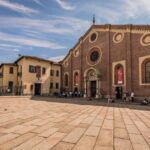
You’ll meet in Piazza di Santa Maria delle Grazie and connect with your guide outside the booking office. The guide will have a visible logo (Get your guide), which makes it easier to find each other and get moving without wasting time.
From there, you’re headed straight to one of the most famous Renaissance sites in Italy. Santa Maria delle Grazie isn’t just a backdrop; it’s the place where The Last Supper is housed, in the refectory (dining hall) of the convent.
You can also read our reviews of more tours and experiences in Milan
Santa Maria delle Grazie: more than a waiting room
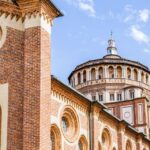
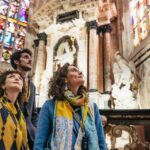
Arriving at Santa Maria delle Grazie feels like stepping into an art-and-architecture package deal. The monastery is a major draw on its own, and it carries UNESCO World Heritage status in Milan. That matters because it signals you’re not visiting a random attraction. You’re visiting a protected, historically significant complex.
The architecture is part of the story. You’ll hear about the mix of Gothic and Renaissance styles, and the information specifically points to works connected with architect Donato Bramante. Even if you’re not trying to study buildings like a student, this kind of framing helps you look at what you’re seeing with more accuracy.
And then there’s the emotional part: this monastery is where Leonardo’s painting lives. When you understand that you’re not just viewing a reproduction, the experience clicks. It becomes a direct encounter with where history unfolded, not just where history is displayed.
The refectory moment: what your guide helps you notice
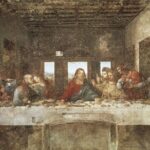
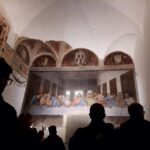
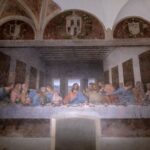
The whole point of your time here is the refectory and Leonardo da Vinci’s The Last Supper. The guided portion runs about 70 minutes, which is enough time to see it in a calm way rather than a quick snapshot-and-go routine.
This is where the guide earns their keep. Expect explanations focused on:
- da Vinci’s perspective and how it guides what your eye reads first
- the symbolism woven through the scene
- the historical context of the Renaissance, when and why this kind of work was made
- the preservation story, since the painting has faced real-world challenges over time
Those details change how you look. Without context, it’s easy to treat the work like a static image. With the guide’s pointers, you start noticing composition choices and how Leonardo used visual logic to organize the scene.
You also get a strong sense of why this painting has such a lasting impact on world art. The tour isn’t trying to hype it. It’s showing you what makes the technique and design so influential.
Timing and group size: the hidden value of “small”
This tour is designed for efficiency without feeling rushed. It lasts about an hour overall, and the guided visit at Santa Maria delle Grazie takes roughly 70 minutes. In practice, that schedule is ideal when you want meaningful art time without letting the day get swallowed by logistics.
The group size is capped at 10 participants. That detail sounds small on paper, but it matters once you’re in front of a famous artwork where everyone’s trying to get the same view. A smaller group means your guide can manage pacing better, and you’re less likely to feel like you’re in a packed hallway with no breathing room.
It also tends to make the explanations clearer. When the group is limited, the guide can spend more time on what you’re actually looking at, rather than speaking at full speed for a crowd.
What you’re paying for: value at $84.96 per person
At $84.96 per person, you’re not just paying for admission. You’re paying for the package that makes the visit practical:
- a live guide who provides art and architecture commentary
- skip-the-line tickets so you’re not stuck in queues
- a timed entry experience built around a short, guided window
You might be tempted to think, I could just go on my own. Maybe you can. But here’s the tradeoff: the Last Supper is popular for a reason, and the site runs on controlled scheduling. Paying for skip-the-line and a small group helps you avoid the stress of guessing your way through timing.
Also, the guide isn’t giving general facts only. The tour content specifically focuses on the painting’s techniques (including perspective), symbolism, preservation, and the Renaissance setting. If you care about understanding what you’re seeing, that guided layer is where the money gets justified fast.
If you’re traveling on a shoestring and you’re only in Milan for a day, you might feel the price tag. In that case, weigh whether you really want a guided explanation or if you’re happy with a quick self-guided pass. The good news is that this is structured as an educational experience, not just ticket handoff.
You can also read our reviews of more tours and experiences in Milan
Practical walkthrough: how the tour day usually feels
Here’s what your flow looks like, based on the on-site structure.
You start in Piazza di Santa Maria delle Grazie at the booking office area. You find your guide outside, then the group heads in together. The tour includes a guided stop at Santa Maria delle Grazie, with about 70 minutes of commentary and looking time.
After that, you return to the Piazza di Santa Maria delle Grazie meeting point where you began. That round-trip structure is helpful if you’re building the rest of your Milan day around something specific, like another museum, a church visit, or a meal with a reservation.
Because the experience is short, I recommend treating it like your anchor appointment. If you book something after it, keep a little buffer. You may want time afterward to process what you just saw, or simply to regroup before heading out.
Wheelchair access and who this tour suits best
This activity is listed as wheelchair accessible, which is a major plus for anyone navigating Milan with mobility needs. Since the tour is a guided, small-group format, you also tend to get more straightforward support than a chaotic self-guided scramble.
Who I think will enjoy it most:
- art lovers who want more than recognition
- history enthusiasts who like the Renaissance context
- travelers who value small groups and smoother logistics
- people who want to see The Last Supper without spending the first hour fighting lines
Who might hesitate:
- if you want a long, free-form visit where you can wander at your own pace
- if you’re the type who prefers reading solo and skipping guided explanation
The tour’s strength is focus. It’s built for a tight, guided window, not a slow afternoon drift.
Tips to make the 70 minutes go farther
Plan to be ready at the meeting point. When a tour is built around timed access, being early matters more than being late.
Bring your identity document. Tickets are nominal, which means you’ll need to provide names and carry your identity card or passport (or driving license). If you forget this step, it can throw a wrench into your entry.
Dress for comfort. You’ll be standing and looking for a while, and even though the tour is only about an hour, it’s concentrated time.
Finally, if you like learning while you look, this is the right kind of tour. The guide’s focus on perspective, symbolism, and preservation gives you a framework. Once your brain has the framework, the artwork becomes much easier to read.
Should you book Leonardo’s Last Supper with skip-the-line tickets?
If you want the highest chance of a smooth, meaningful visit, I’d lean yes. This is a small-group experience with skip-the-line tickets, a live expert guide, and a tightly planned visit centered on what makes The Last Supper unforgettable: Leonardo’s technique, the meaning behind the composition, and the historic place it occupies.
Book it if you:
- care about understanding the art, not just seeing it
- prefer a limited group experience
- want to reduce uncertainty around lines and timed entry
Skip or reconsider if you:
- strongly prefer unstructured time
- don’t want to pay for guided interpretation and pre-arranged entry
Overall, for the money, the best part is simple: you’re buying less waiting and more looking, with explanations that make the painting feel more alive than a photo ever could.