REVIEW · MILAN
Leonardo Da Vinci’s Last Supper Guided Tour
Book on GetYourGuide →Operated by Crown Tours · Bookable on GetYourGuide
One room. A whole Renaissance. A guided visit to The Last Supper in Milan’s Santa Maria delle Grazie turns the famous fresco into a story you can actually follow, with an included audio system that keeps the guide clear even in a hushed space. The main trade-off is time: you’re limited to 15 minutes inside the refectory.
I like how the experience is built around a tight schedule that still leaves room for the big questions—how Leonardo composed the scene, what the details may mean, and why this artwork survived so many changes. There’s also a real practical side to it: you meet at a clear spot near Piazza di Santa Maria delle Grazie and you come prepared for the site’s rules.
In This Review
- Key highlights
- First steps at Piazza di Santa Maria delle Grazie
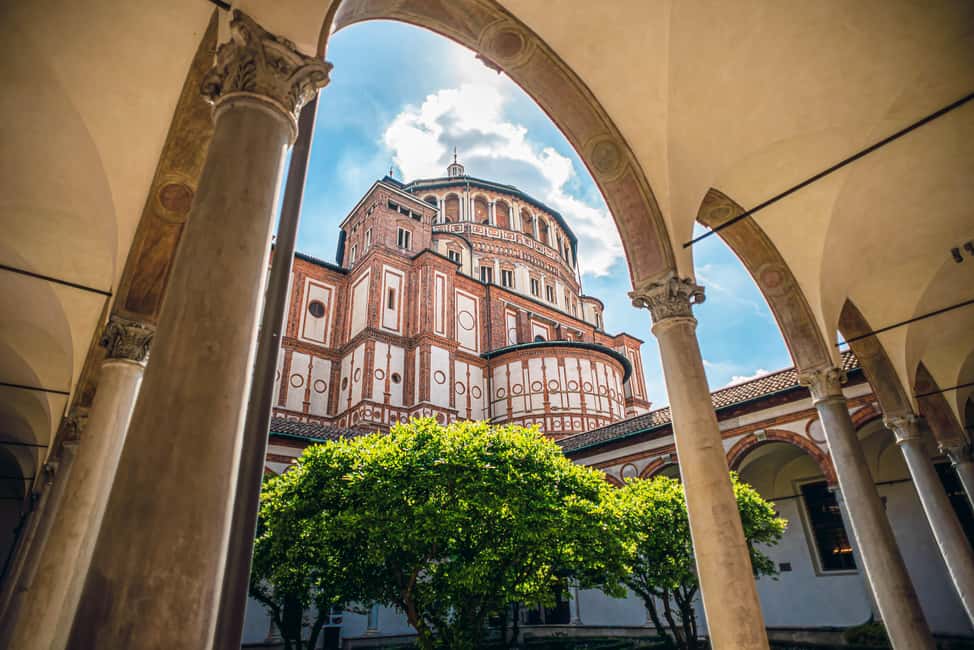
- Santa Maria delle Grazie: the architecture you shouldn’t ignore
- The refectory visit: how to get the most from 15 minutes
- Leonardo’s techniques and the disciples’ stories
- Conservation, restorations, and why the painting looks the way it does
- Price and value: is $81 fair for a 1-hour tour?
- Practical rules: what to wear, bring, and avoid
- Timing, groups, and how to avoid stress
- Who this tour suits best
- Should you book this Last Supper guided tour?
- FAQ
- How long is the Leonardo Da Vinci’s Last Supper guided tour?
- What does the tour cost?
- Where do I meet the guide?
- What languages are the tours offered in?
- How long can I spend inside the refectory?
- Can I take photos with flash?
- What should I bring for entry?
- What items are not allowed during the visit?
- Will I be able to visit the church?
- Is free cancellation available?
Key highlights
- Reserved, guided entry to see The Last Supper without wrestling for access on the day
- Audio system included, so the guide’s pacing and explanations stay easy to follow
- Santa Maria delle Grazie context before you look at the painting, not after
- 15th-century Milan setting explained through Ludovico Sforza’s era
- Symbolism and disciple-by-disciple breakdown that makes the composition feel less mysterious
- Restoration and conservation perspective that helps you understand what you’re seeing now
First steps at Piazza di Santa Maria delle Grazie
This tour is designed for a timed experience, so your best move is to arrive with a little buffer and find your guide without stress. You’ll meet at Piazza di Santa Maria delle Grazie—specifically at the corner between Piazza di Santa Maria delle Grazie and Corso Magenta—where a Crown Tours guide holds a flag with the Crown Tours logo. It’s straightforward, but it only works if you’re actually on time.
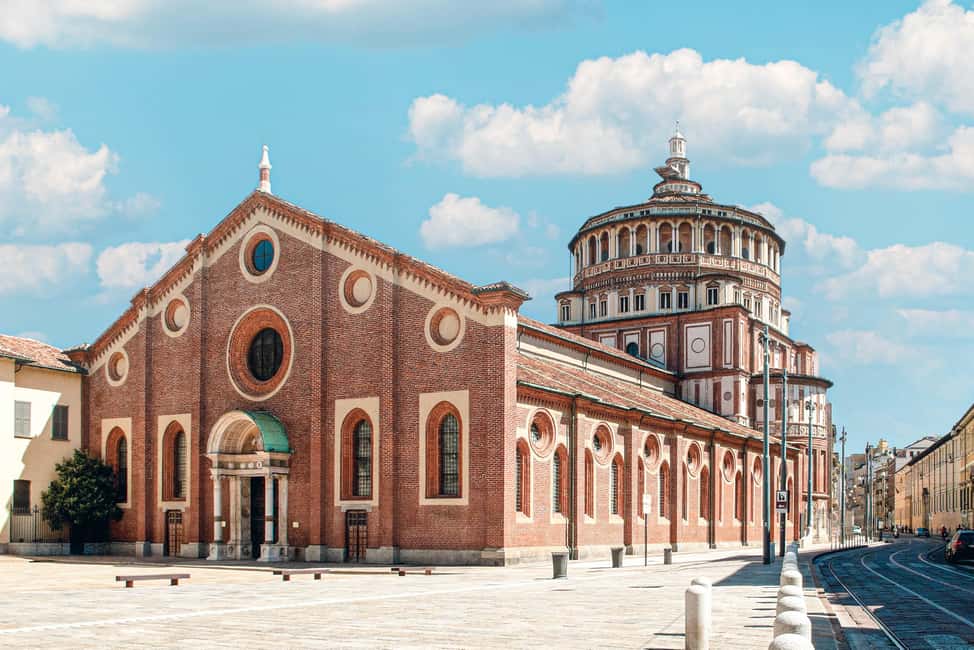
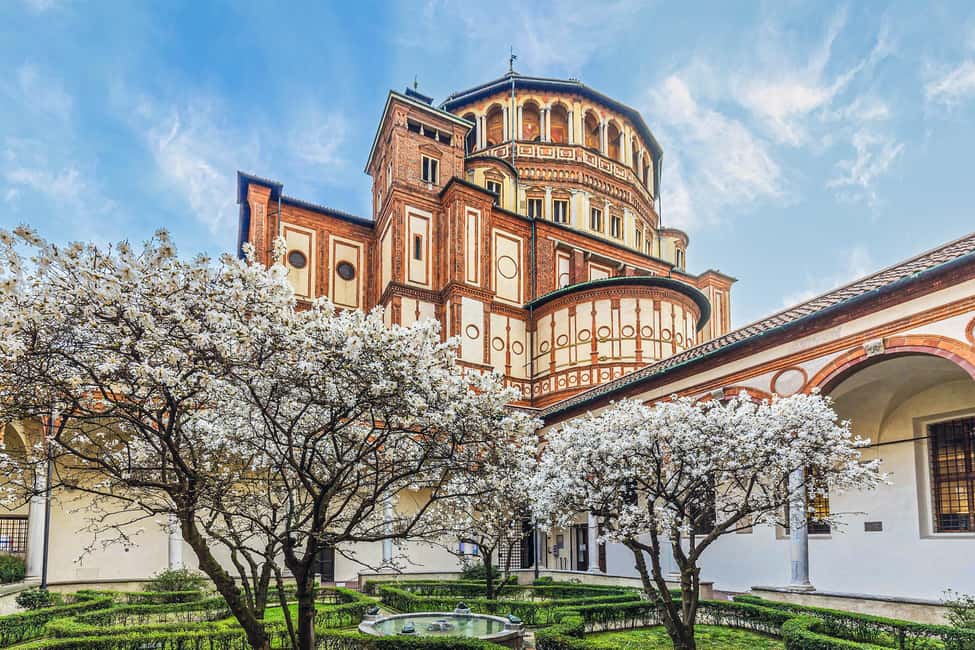
From there, the group walks together to Santa Maria delle Grazie. This matters because the building sets the tone fast. You’re not just heading to a museum wall—you’re entering a convent setting where the painting has always lived inside a larger religious and architectural world.
If you’re the type who likes to orient quickly, you’ll probably appreciate the way this tour front-loads the basics: who commissioned art in that period, why Milan mattered politically, and why Leonardo’s work landed where it did.
You can also read our reviews of more guided tours in Milan
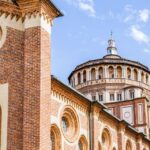
Santa Maria delle Grazie: the architecture you shouldn’t ignore
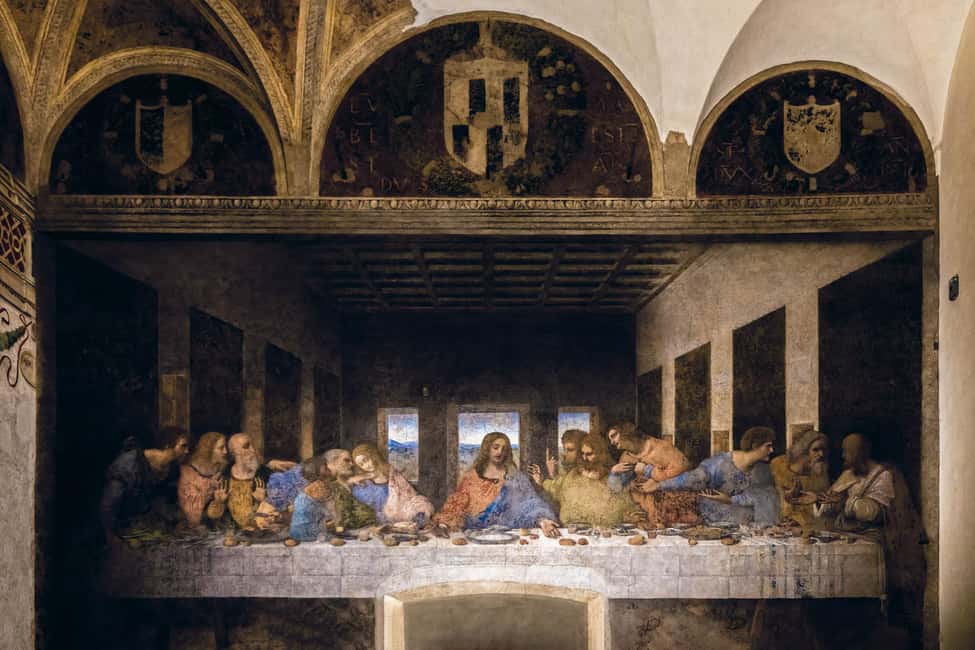
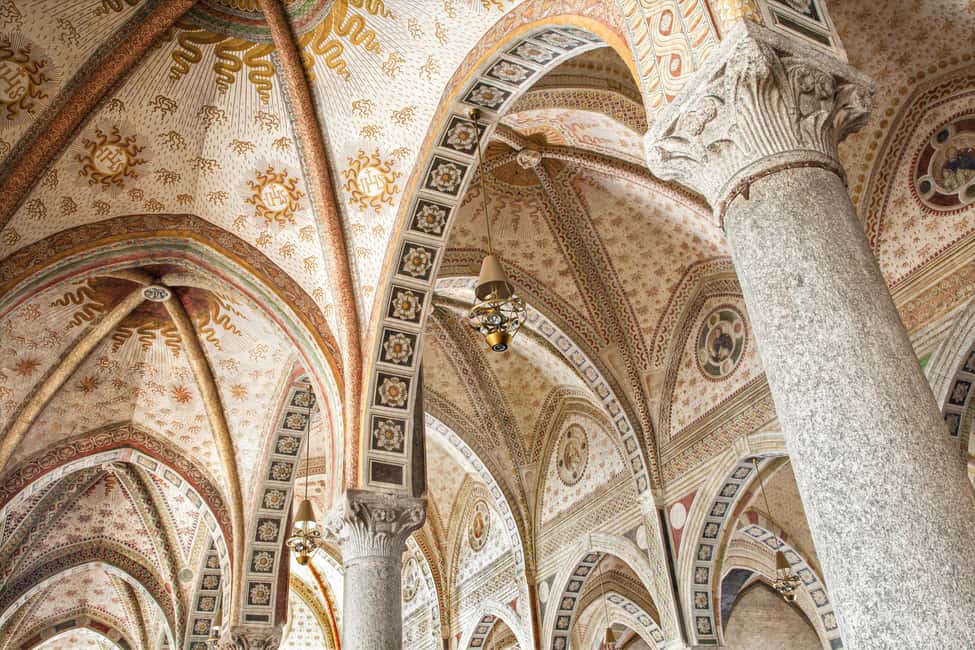
Before you stare at Leonardo’s faces, I’d put your attention on the space itself. Santa Maria delle Grazie is not an empty container. The convent environment and the way the refectory works as a dining space help explain the painting’s impact. Leonardo’s composition is meant for a fixed viewpoint, and the room encourages that focused look.
A guide brings you back to 15th-century Milan, including the atmosphere of prosperity under Ludovico Sforza. That context isn’t trivia. It helps you understand why this kind of High Renaissance artistic ambition mattered to rulers and patrons—not just to art lovers.
You’ll also learn what to pay attention to when you finally step into the viewing area. Guides often talk about the setting, the layout, and how Leonardo guided sightlines through perspective and arrangement. That’s useful because it changes how you see the painting in your first few minutes.
One more small but real benefit: this tour includes an audio system. In a room where sound doesn’t travel like it does outdoors, it can be the difference between missing details and hearing everything the guide explains.
The refectory visit: how to get the most from 15 minutes
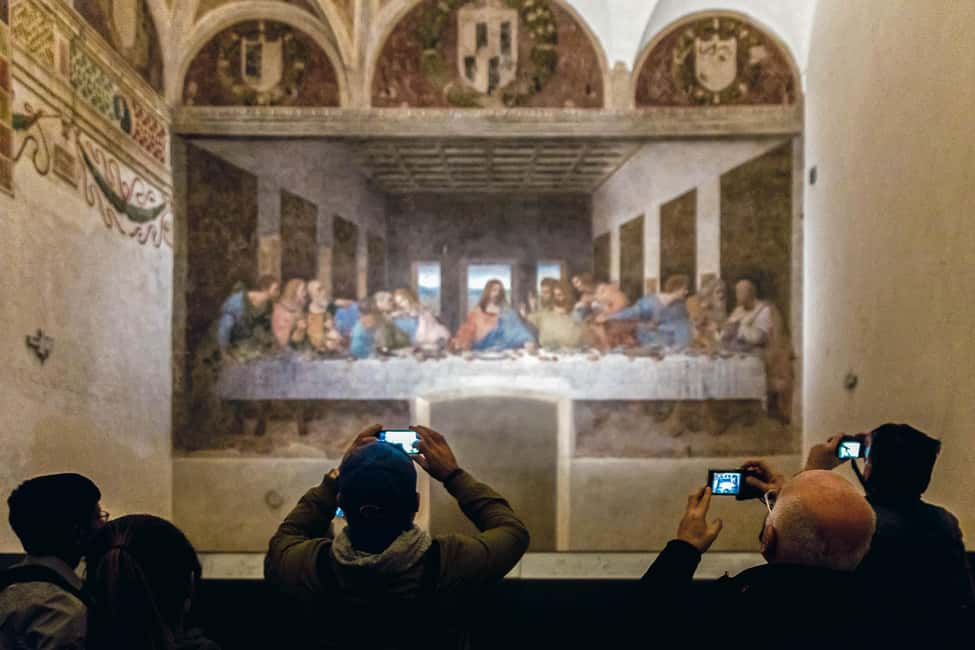
Here’s the scheduling truth: you get a maximum of 15 minutes inside the refectory. That’s short. The good news is that it’s also the reason a guided tour helps. If you go in cold, you might spend your time just searching—who’s who, where to look, what’s happening.
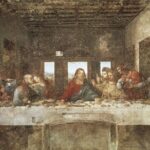
With a guide, those 15 minutes can feel productive. You’ll follow the scene as it’s explained: how the disciples react, how gestures and expressions contribute to the drama, and why the overall composition feels balanced even when emotions run high.
This is also where the practical timing pays off. You’re not stuck in a long pre-visit wait. The experience is orchestrated to keep the viewing window moving while still giving the guide enough time to talk through the essentials.
If you like structure, look for that approach: the guide tends to lead you through the painting in a way that builds understanding in layers, not random facts. One reason I’m enthusiastic about this setup is that it respects how visitors actually experience the artwork—fast at first, then clearer once someone points out the right elements.
Leonardo’s techniques and the disciples’ stories
The heart of the tour is the explanation of the fresco and the choices Leonardo made. You’ll get help understanding the art as more than a famous image. The guide connects what you see to Leonardo’s artistic techniques and the historical moment around the work.
One of the most praised parts of these tours is how guides treat the disciples as real people rather than just figures in a scene. Guides like Anton (who’s often described as passionate and quick to answer questions) and Valentina (known for engaging, clear storytelling) are cited for breaking down individual personalities—how they react, and what that reaction might suggest in the composition.
Another guide style you may encounter: some guides use visual aids. A couple of accounts mention a guide with a tablet to show details. That’s handy if you want to understand expression, position, and compositional choices without squinting in a dimmer space.
Also, don’t be surprised if you hear about how other artists later responded to the Last Supper’s ideas. There’s mention of comparisons that include how Michelangelo used ideas connected to the scene. Even if you don’t go deep into Michelangelo’s work on this tour, you’ll likely leave with a clearer sense of why the Last Supper became such a reference point for Renaissance art.
And yes, you might also catch sight of another fresco in the same hall. One account describes a lesser-known fresco across from the Last Supper, which is exactly the kind of bonus that makes a guided visit feel more than just ticket access.
Conservation, restorations, and why the painting looks the way it does
It’s easy to assume you’re seeing Leonardo’s final, unchanged work. You’re not. This is a fresco with a complicated survival story, and a strong guide will explain why conservation history matters to what you see.
A recurring theme in the experience: guides talk about the fresco’s evolution over time and its many restorations. That’s not meant to ruin the magic—it actually protects it. When you understand that layers, repairs, and preservation choices can affect the look of color and detail, you’re less likely to treat every visible change as an error and more likely to treat it as part of the artwork’s long life.
This matters for value. If you come in thinking you’ll only get a quick look at a famous painting, you may feel disappointed by the short time in the refectory. But when conservation is explained clearly, the painting stops being a static photo in your head and becomes a living object with a timeline.
Price and value: is $81 fair for a 1-hour tour?
At $81 per person and about 1 hour total, this isn’t a bargain. It’s a premium ticket + guided interpretation package. The key question is not just price—it’s what you get that you can’t easily replicate on your own.
Here’s where value shows up:
- Entry ticket included: accessing the Last Supper is famously time-sensitive, and guided options often help you lock in a slot when general access is hard.
- Guided context: the difference between seeing the painting as a postcard and understanding it as an engineered composition is huge.
- Audio system: small detail, big impact in a room where sound can be tricky.
- Expert pacing: with only 15 minutes inside, you need someone to help you prioritize what to look at.
That said, I wouldn’t pretend it’s inexpensive. A couple of accounts expressed feeling it’s pricey compared to other activities, and there’s also a sense that official ticket pricing can look very different from what bundled guided tours charge. If you’re on a tight budget, you may decide to weigh the certainty of reserved access against the extra cost.
My practical take: if you’re in Milan for a short time and you really want the Last Supper experience to be more than a photo, this price can make sense. If you have days to spare and don’t mind optionality, you might feel differently.
Practical rules: what to wear, bring, and avoid
This is a working religious site with museum-style controls. That means you should treat the rules as part of your experience, not an afterthought.
Bring: a passport or ID card. You’ll need it for entry.
Not allowed:
- Weapons or sharp objects
- Food and drinks
- Luggage or large bags
- Short skirts
- Sleeveless shirts
- Flash photography
- Backpacks
There are small lockers available in the ticket office for storing items, which helps if you’re carrying a day bag.
Dress code matters more than people expect. If you’re wearing something that reads too casual (like very short skirts or sleeveless tops), plan to cover up. You don’t want your tour start to turn into a clothing scramble.
Timing, groups, and how to avoid stress
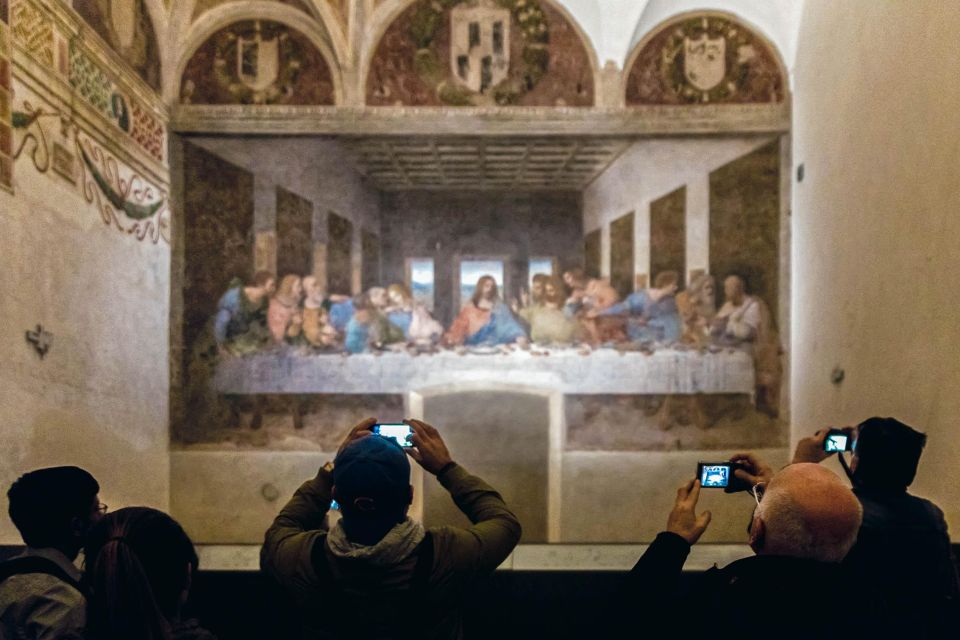
The tour runs for 1 hour, but your real viewing time is capped at 15 minutes inside the refectory. That’s why the experience can feel efficient. It’s built to get you in, provide context quickly, and still help you focus.
Group size is another factor. The operator offers private or small groups available, which is useful if you want more chance to ask questions and stay flexible in pace.
Also, since this is timed entry, your behavior matters. Keep your belongings controlled, get to the meeting point early enough to locate the guide holding the Crown Tours flag, and don’t plan to test the limits with late arrivals. It’s not a “wait and see” kind of ticket.
Accessibility is covered too. The tour is wheelchair accessible, which is important for planning a viewing trip in a historic site.
Who this tour suits best
This tour is a strong match for:
- You want the Last Supper with a guided explanation, not just a fast stop
- You like art that has a story behind every face, gesture, and placement
- You’re visiting Milan with limited time and want the best odds of smooth entry
- You appreciate a guide who can answer questions and connect the painting to the period
It may be less ideal if:
- You dislike tight time windows and prefer long, quiet viewing
- You’re the kind of visitor who wants to arrive, wander, and absorb at your own rhythm without structured prompts
- You’re extremely sensitive to hearing clarity and prefer to travel with a guaranteed quiet listening setup (the audio system helps, but group environments still have limits)
Should you book this Last Supper guided tour?
If your goal is to leave the refectory understanding what you just saw, I’d book it. The biggest reason is simple: with only 15 minutes inside, you’re paying for guidance that helps you look well, not just look long. Add in the included entry ticket and the audio system, and it becomes a practical way to manage a famous, tightly scheduled sight.
If you’re trying to stretch your budget, consider your priorities. You’re paying for certainty and interpretation. If you can accept a more do-it-yourself experience, you might compare costs and access options once you’re in Milan. But if you want a smoother path to the painting and a clearer grasp of why it became so influential, this tour is built for exactly that.
FAQ
How long is the Leonardo Da Vinci’s Last Supper guided tour?
The tour lasts 1 hour.
What does the tour cost?
It costs $81 per person.
Where do I meet the guide?
Meet at Piazza di Santa Maria delle Grazie, at the corner between Piazza di Santa Maria delle Grazie and Corso Magenta. The guide will be holding a flag with the Crown Tours logo.
What languages are the tours offered in?
The live tour guide offers English and Spanish.
How long can I spend inside the refectory?
All visitors are granted a maximum of 15 minutes inside the refectory with the Last Supper.
Can I take photos with flash?
No. Flash photography of the Last Supper is not permitted.
What should I bring for entry?
Bring a passport or ID card.
What items are not allowed during the visit?
Weapons or sharp objects, food and drinks, luggage or large bags, short skirts, sleeveless shirts, flash photography, and backpacks are not allowed.
Will I be able to visit the church?
Due to religious events, the visit to the church cannot always be guaranteed.
Is free cancellation available?
Yes. You can cancel up to 24 hours in advance for a full refund.