Four Milan stops in three hours can be magic. This classical tour is built to get you oriented quickly, moving from the Duomo to Galleria Vittorio Emanuele II, then on to La Scala and Castello Sforzesco with local guidance from guides like Valentina, Stefania, and Silvia. I especially like how the tour teaches you what you’re looking at while you’re right in front of it, and I also like the private, flexible feel since it’s only your group.
The one catch is planning for add-ons: entry tickets aren’t included for the Duomo and La Scala museum, and inside the cathedral a whispering system may be required for groups over 4 (plus a mandatory face mask).
In This Review
- Key highlights worth your attention
- A 3-hour Milan hit list: Duomo to Sforza Castle without the guesswork
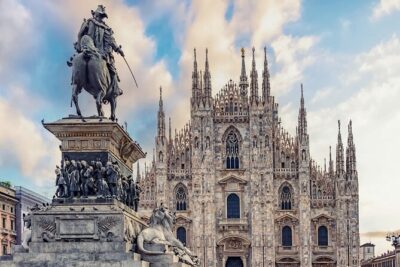
- Duomo di Milano: making the cathedral legible fast
- Galleria Vittorio Emanuele II: a 15-minute Milan pause (with the bull spin)
- Piazza della Scala: the museum visit and a potential theater-box look
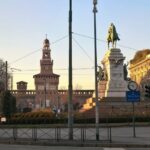
- Castello Sforzesco: courtyards, park views, and the Arch of Peace
- Timing, pace, and group style: how this tour avoids the usual travel hassle
- Price and tickets: is €14–€17 of entry fee really the big cost?
- The local guide effect: language choices and on-the-ground clarity
- Practical tips so your tour day runs smoothly
- Should you book this Classical Milan tour?
- FAQ
- How long is the classical Milan tour?
- Is the tour offered in the morning and afternoon?
- Where does the tour meet?
- Where does the tour end?
- What’s included in the price?
- Are entrance tickets included for the Duomo and La Scala?
- Is there an extra cost for the Duomo whispering system?
- What is the Galleria Vittorio Emanuele II stop like?
- Can the group see inside La Scala’s theater boxes?
- Is this a private tour?
Key highlights worth your attention
- Duomo first, with a guided start at the main door so you don’t wander for context
- Galleria Vittorio Emanuele II break for the classic bull-spin moment
- La Scala museum access, with a chance to view the theater from inside boxes if no rehearsal blocks it
- Castello Sforzesco courtyards and Arch of Peace without extra ticket fees
- Morning or afternoon timing, so you can build the rest of your day around it
A 3-hour Milan hit list: Duomo to Sforza Castle without the guesswork
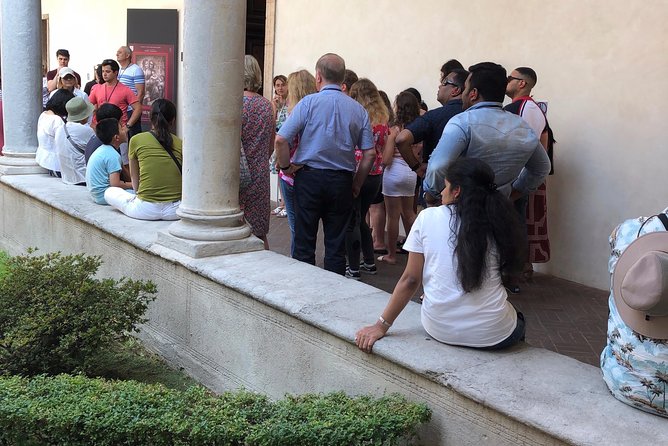
Milan can feel like a lot: big streets, beautiful facades, and enough churches and museums to keep you busy for days. This is the antidote. In about 3 hours, you cover four of the city’s most important stops on foot, in an order that makes sense. You start at the Duomo area, then move into the Galleria, then head to La Scala, and finish at Sforza Castle in the main courtyard.
The real value isn’t only the checklist. It’s that you get to place each sight in the larger Milan story. I like tours that help you read a city, and this one does that by keeping you focused on a few key locations while your guide explains what matters.
This setup is also practical. If you only have one half-day (or you’re trying to fit Milan into a longer trip), you’ll still leave with strong visual anchors: the cathedral, the glass-and-iron shopping gallery, the opera world, and the castle. Choose a morning or afternoon slot, and then build the rest of your day without stress.
You can also read our reviews of more tours and experiences in Milan.
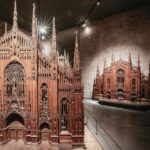
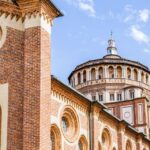
Duomo di Milano: making the cathedral legible fast
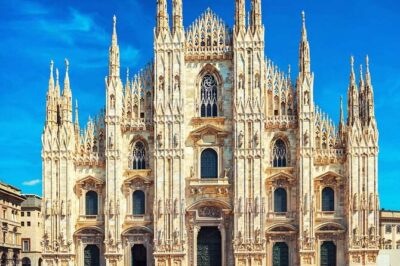
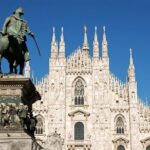
The tour meets at P.za del Duomo, 6 and begins right in front of the Duomo’s main door. That first moment matters. A lot of first-time visitors arrive, take photos, and then spend the next hour trying to understand what they’re actually seeing. Starting at the main entrance with a guide helps you get your bearings fast.
You’ll spend about 45 minutes at the cathedral. Admission is not included (expect an extra €5 per person for the Duomo). That’s a small add-on, but it’s still important to plan for it so you don’t get held up when everyone else is ready to enter.
One more practical note inside: a whispering system may be mandatory for groups of more than 4 people (the cost is €2.50 per person). If you’re in a larger group, factor that into your total. Also, a face mask is required. Milan rules can shift, but the tour data here clearly states masks are obligatory, so come prepared.
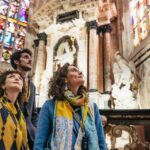
What you’ll enjoy most at the Duomo is the guided framing: the guide helps you see why this place isn’t only about size or marble beauty. It’s also about symbolism and craftsmanship. Even if you’re not a cathedral specialist, a good guide turns a long building into something understandable.
Possible drawback to know up front: cathedral time is limited. 45 minutes sounds like a lot until you’re inside and standing in the exact spot you want to be. If you’re the type who likes to linger, you might want to pair this with extra time later on your own.
Galleria Vittorio Emanuele II: a 15-minute Milan pause (with the bull spin)
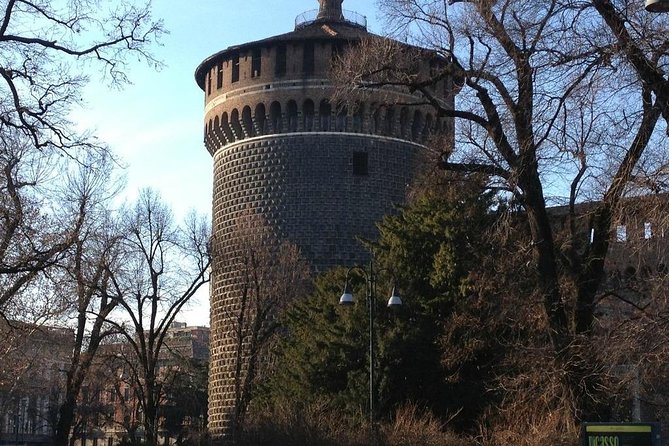
After the Duomo, you walk to Galleria Vittorio Emanuele II, usually for about 15 minutes. This stop is short on purpose: it keeps the pace moving without losing one of Milan’s most famous interiors.
The Galleria is elegant in a very specific way—glass roof, iron structure, and a hallway that feels like a grand room instead of a typical street. It’s also a perfect “breather” stop. You’ll have a moment to slow down, look up, and snap photos without the museum-time commitment.
And yes, there’s the famous ritual: you’ll get to spin on the bull’s “family jewels.” It’s silly, it’s quick, and it’s exactly the kind of Milan tradition that makes a tour feel fun rather than only educational. If you hate awkward rituals, you can always keep it light and just watch others do it.
No ticket needed here. The stop is free, so it’s all upside: atmosphere and a genuine local icon in a very short window.
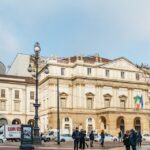
Piazza della Scala: the museum visit and a potential theater-box look
Next comes Piazza della Scala, and with it, the most dramatic shift in mood. You’re moving from shopping-gallery sparkle to opera-world intensity.
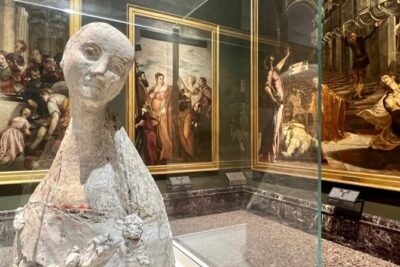
You’ll spend about 45 minutes visiting the La Scala museum, and the tour includes access to the theater boxes to see the inside if there’s no rehearsal at that time. That conditional part is important. Some days the theater schedule affects what you can view. Your guide will be working with the reality of what’s happening that day.
Admission is not included for this stop either. Plan for about €9 per person for the La Scala museum.
How to get the most out of it: go in expecting a mix of museum storytelling and theater immersion. Even if you don’t know every detail of opera history, the guide helps you understand what you’re seeing in the context of Milan as a city that treats performance as serious culture, not background entertainment.
Possible drawback: if you arrive on a day when rehearsals limit access, you might miss the box-view moment. Still, the museum visit is usually worth it if you want a clearer picture of La Scala beyond just its famous facade.
Castello Sforzesco: courtyards, park views, and the Arch of Peace
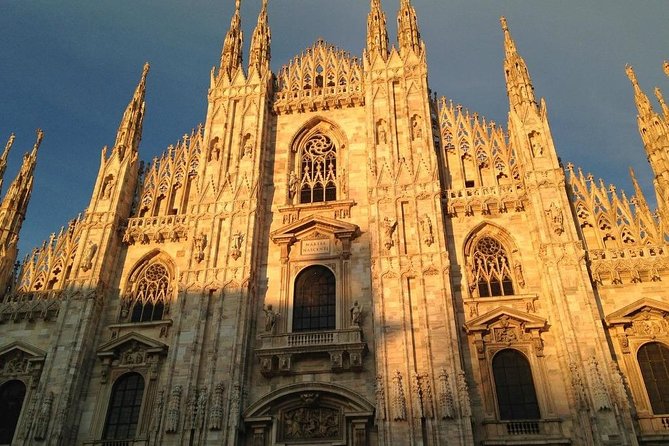
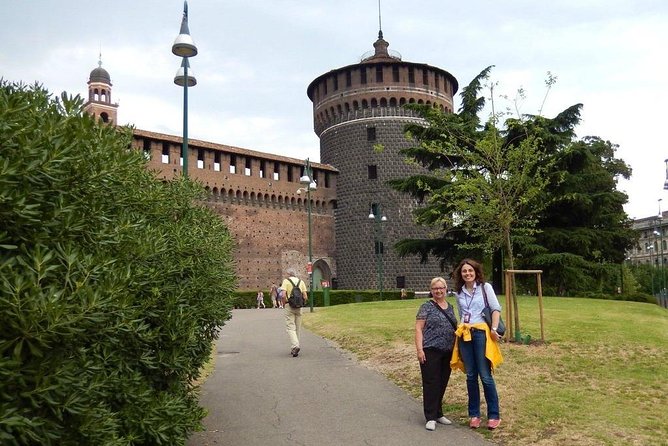
You finish at Castello Sforzesco, with time for 45 minutes. This is a strong ending point because the castle grounds feel like an open-air reset after the cathedral and theater.
Unlike the Duomo and La Scala museum, this part is free. You’ll see the inside courtyards and spend time in the park, including a look at the Arch of Peace.
This stop gives you something different from the other three: a sense of Milan as a power center, with layers of history you can actually see. Courtyards create easy lines of sight, and the park area helps you cool off—especially if you booked an afternoon tour and the light is changing.
It’s also a practical finish. The tour ends inside the main courtyard of the castle, so you’re already at a major landmark that’s easy to continue exploring from. In other words, you don’t end the walk in a random spot.
Timing, pace, and group style: how this tour avoids the usual travel hassle
This experience is designed for people who want a guided flow but not a rushed feeling. It’s offered in either a morning or afternoon time slot, so you can choose based on the rest of your itinerary. In Milan, that matters because museums, light, and crowds can shift fast across the day.
Also, this is described as a private tour/activity, meaning only your group participates. That tends to make the pacing feel more natural. Guides often adjust to weather, and you’ll likely get more flexibility with questions since you’re not managing a huge mixed crowd.
Still, be realistic about timing. The tour is compact. If you join expecting time for long photo sessions at every stop, you may feel the pinch at the 15-minute Galleria or the 45-minute museum/cathedral blocks. The upside is that you won’t spend half your day relocating between attractions.
If you’re traveling with kids, this length can work well. The stops are varied—religious architecture, a historic shopping gallery, opera museum culture, then open grounds in a castle. That rhythm keeps attention from flagging, especially when a guide adds anecdotes and answers questions.
Price and tickets: is €14–€17 of entry fee really the big cost?
The listed price is $301.03 per person for an approximately 3-hour guided experience. That’s not a cheap snack. So you have to look at what you’re really buying.
You’re buying:
- A guide who connects four landmark sights in one route
- Time saved vs. self-guided wandering
- The benefit of someone helping you interpret what you see, not just pointing at it
- A private feel for your group (only your group participates)
Then you have the extras:
- Duomo entry: about €5 per person
- La Scala museum entry: about €9 per person
- Whispering system inside the cathedral may apply for groups over 4: €2.50 per person
- Tickets are not included, so you’ll pay them separately
Add those up and you’re roughly in the neighborhood of €14–€16 (plus possible whisper system) in direct entry costs. That portion is manageable. The bigger cost is the guided experience itself.
So who does this tour make sense for?
- If you value guided orientation and want fewer decisions
- If you’d rather pay for convenience than spend time planning how to sequence entries
- If your travel style is to hit the big highlights in one go and save deeper exploration for later
Who might hesitate?
- If you’re comfortable reading guide signs and mapping your own route, you may find the per-person price steep.
- If you hate structured time limits, the “essentials” format may feel too tight for your pace.
The local guide effect: language choices and on-the-ground clarity
The tour is offered in English, and the guided tour is available in the language chosen by participants. That matters a lot in Milan because architecture and museum context can get lost without language support.
From the guide names you might encounter—Valentina, Stefania, and Silvia—there’s a consistent pattern: guides are praised for clarity and for making the story feel connected to real Milan, not a textbook lecture. A strong guide also keeps moving at a pace that still allows you to ask questions.
You’ll also feel the benefit at the transitions. Milan attractions can be spaced just far enough that DIY routes take time. A guided route helps you spend your energy on what you came for.
Practical tips so your tour day runs smoothly
Here are the bits that help in real life, based on the tour details and how these sights typically work:
- Bring your mask. The tour data states it’s mandatory.
- Plan for separate tickets for the Duomo and La Scala museum. Budget a bit of extra cash or card readiness.
- If your group might be larger than 4, ask ahead whether the whispering system applies so you don’t get surprised at the cathedral.
- Use the mobile ticket that comes with the booking, and keep your phone handy at the meeting point.
- Arrive a few minutes early at P.za del Duomo, 6. It’s a busy area and your tour starts at a specific door location.
- Wear walking-friendly shoes. You’ll be moving between four major areas across a compact route.
- Expect that the theater-box view at La Scala depends on whether there’s rehearsal. If it doesn’t happen, the museum visit still covers a lot.
Should you book this Classical Milan tour?
Book it if you want a focused, guided sweep of Milan’s biggest icons in a single afternoon or morning. It’s a smart move for first-timers who want to understand what they’re looking at, and for repeat visitors who want a clean route with an expert guiding the story.
Skip it or look for an alternative if you have plenty of time to wander, you prefer self-paced exploration, or you strongly dislike time-boxed stops. Also consider whether you want to pay the premium for a guided flow, given that the main entry fees are relatively small compared to the tour price.
If your goal is simple—get the essentials, learn enough to connect the dots, and end in a landmark area you can easily continue from—this one is a solid pick.
FAQ
How long is the classical Milan tour?
It lasts about 3 hours.
Is the tour offered in the morning and afternoon?
Yes. You can choose either a morning or afternoon tour time.
Where does the tour meet?
The meeting point is P.za del Duomo, 6, 20122 Milano MI.
Where does the tour end?
The tour ends in the main courtyard of Castello Sforzesco (Palestra all’aperto / unnamed road, 20124 Milano MI).
What’s included in the price?
You get a guided tour in the language chosen by the participants.
Are entrance tickets included for the Duomo and La Scala?
No. Duomo cathedral entry costs €5 per person, and La Scala opera house museum costs €9 per person.
Is there an extra cost for the Duomo whispering system?
Inside the cathedral, a whispering system may be mandatory for groups of more than 4 people, costing €2.50 per person.
What is the Galleria Vittorio Emanuele II stop like?
It’s a short walk through the famous Galleria, about 15 minutes, including time to do the bull-spin ritual.
Can the group see inside La Scala’s theater boxes?
You’ll have access to the boxes to see the inside if no rehearsal is taking place.
Is this a private tour?
Yes. It’s listed as a private activity, and only your group will participate.