REVIEW · MILAN
Private Tour from Milan: Venice Full Day Trip by Train
Book on Viator →Operated by Rental and Tour · Bookable on Viator
Venice in one day can feel like a sprint. This trip is built around train convenience and private guiding, so you spend less time figuring out logistics and more time seeing real Venetian spots. I like the early start and efficient pacing, and I also like that the plan includes a mix of big-hitters like Rialto and St Mark’s, plus lower-key stops along the way. One thing to consider: Venice can be crowded, and the lagoon smell is part of the deal, so if you’re super sensitive, bring patience and good shoes.
You’ll ride 2nd class train from Milan and get a guided walking route that threads together canals, churches, bridges, and even a gondola workshop stop. In past groups, guides such as Sneh, Elshad, Mehmet, Dothan, and Dogan have been praised for clear English and for history that actually helps you read what you’re seeing. The biggest drawback I’d flag is timing: if the train is delayed, your on-foot time in Venice can feel tighter.
In This Review
- Key highlights I’d circle
- Price and logistics for a Milan to Venice train day
- Starting at Milano Centrale: how to set yourself up for a smooth day
- Grand Canal to Rialto: the fastest way to understand Venice’s layout
- St Mark’s Square and St Mark’s Basilica mosaics in a single flow
- Bridges and churches: Bridge of Sighs, San Zaccaria, and quieter angles
- Squero di San Trovaso and Banksy at Campo San Pantalon
- Ending at Piazzale Roma and catching the train back
- Price value: what you’re paying for (and what you should bring your own budget for)
- Weather and crowd reality: the main things to expect
- Should you book this Milan-to-Venice private train tour?
- FAQ
- What is the tour duration?
- What time does the tour start and where do I meet?
- Is this a private tour or a group tour?
- How do you travel between Milan and Venice?
- Are train tickets included, and when are they arranged?
- Is food included?
- Are there admission fees for the stops?
- Can I cancel for a full refund?
Key highlights I’d circle
- Private guide, not a pack walk: you can move at your group’s pace and ask questions.
- Grand Canal focus: bridges and canal viewpoints are built right into the day.
- St Mark’s Square + mosaics: you get the visual context for why the basilica glitters.
- Rialto at the right moment: old commercial Venice in a short, walkable stop.
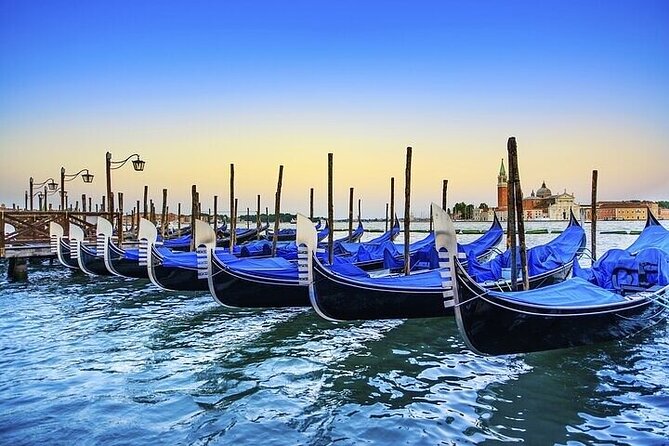
- Squero di San Trovaso: a practical look at gondola repair, not just postcard scenes.
- Local-feeling ends to the day: squares like Campo Santa Margherita help balance all the monuments.
Price and logistics for a Milan to Venice train day
At $391.34 per person, this is not a bargain-basement excursion. But the price makes more sense when you break down what’s included: a private guided tour, round-trip train transport in 2nd class, and the Venice visitor fee. You also get a mobile ticket setup, and the day is structured so you’re not burning hours on planning.
Where the value shows up is in the “decision fatigue” you avoid. Venice sounds simple until you’re standing at stations, translating signage, and trying to sync waterbus routes with a tight itinerary. This plan gives you a set meeting point, a fixed starting time, and a guide to keep you moving.
Food isn’t included, so you’re free to choose what fits your tastes and budget. That’s a plus if you want a quick cicchetti snack, a sit-down pizza, or something near the places you’re actually walking through.
You can also read our reviews of more private tours in Milan

Starting at Milano Centrale: how to set yourself up for a smooth day
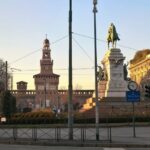
You meet at Milano Centrale (Piazza Duca d’Aosta, 1, 20124 Milano) at 7:30 am. That early departure matters. Venice is most manageable when you’re already on the streets before the day’s peak crowds fully land.
The train ride is listed at about 2.5 hours each way, and the total duration is roughly 11 hours including travel time. Translation: you’ll be busy all day, so plan to travel light. Pack a small day bag with water, a rain layer, and comfy shoes—Venice involves plenty of walking across bridges and uneven surfaces.
One practical detail: the train ticket is purchased 48 hours in advance, and you get the ticket and info the day before via email and WhatsApp. That reduces the usual anxiety of last-minute booking, but it also means you should double-check you can access your messages and email the night before.
Grand Canal to Rialto: the fastest way to understand Venice’s layout
Your first stretch centers on water and the city’s “street system.” Venice canals aren’t side attractions—they’re the main roads. The day starts at Canal Grande, Venice’s largest canal, about 4 kilometers long, dividing the city in two.
This is where a good guide pays off. You’re not just looking at pretty facades. You’re learning how the city grew its power and style through maritime trade. The Venetian-Gothic look along the canal helps explain why the buildings feel ornate even from street level.
From here, you move to a church stop tied to the Greek community: Chiesa di San Giorgio dei Greci. The standout is the campanile—the leaning clocktower that started tilting early. Even if you only catch it briefly, it’s a great “what am I looking at?” moment, because the design and the community it served (sailors and merchants) connect architecture to real life.
Then the walk keeps widening out. Strada Nova is one of the widest streets in Venice, built in the 19th century to connect Rialto and the railway station with faster pedestrian movement. It’s a reminder that Venice changed to meet modern travel—without giving up its canal-and-bridge identity.
Finally, you reach Ponte di Rialto, the oldest of Venice’s Grand Canal bridges. For a short stop, this is a high-impact place: you’re standing at the old commercial hub, so the bridge feels like infrastructure with centuries of stories behind it, not just a photo spot. If you want pictures, go for side angles and shorter bursts rather than waiting for one perfect viewpoint while the crowd thickens.
St Mark’s Square and St Mark’s Basilica mosaics in a single flow
Next comes the big one: Piazza San Marco. The square is famously described as Europe’s grand living room—and the scale is what you feel first. It’s open, dramatic, and designed to make you slow down. With a guide, you don’t just recognize it as iconic—you understand why it became the emotional center of Venice.
Near the square is St Mark’s Basilica, and the interior description matters here: gold-ground mosaics covering domes, vaults, and upper walls with saints, prophets, and biblical scenes. Even if you don’t go deep into every detail, the key is pattern recognition. The mosaics were built to create a visual language of power and belief, and they look different as the light shifts across the day.
This part of the route is also a reality check. St Mark’s is popular for a reason, but it can be busy. Your best strategy is to keep moving in the direction your guide sets, rather than trying to linger in the most crowded photo angle. A private group helps here because you can take small detours through less packed lanes.
Bridges and churches: Bridge of Sighs, San Zaccaria, and quieter angles
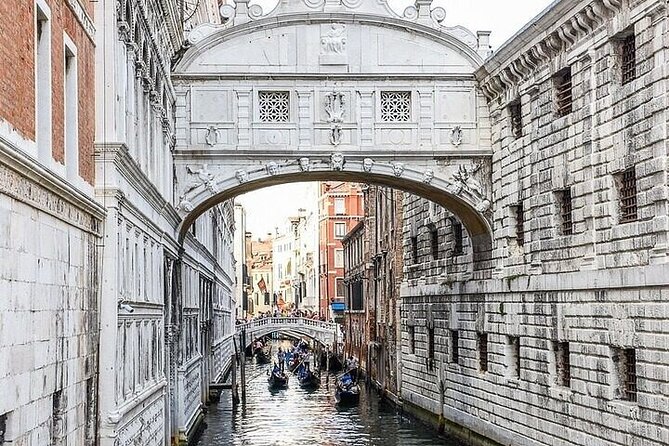
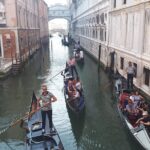
From the square area, you continue to Ponte dei Sospiri, the Bridge of Sighs. It connects the Doge’s Palace area to the historic prison across the canal. The nickname comes from tradition: prisoners supposedly sighed when crossing and realizing they’d never see the outside world again.
It’s an eerie stop, and that’s the point. Venice often blends beauty with the machinery of power. Even a quick look helps you read what you’re seeing later, especially around the Doge’s Palace complex and the nearby corridors where the city’s political era played out.
Then you move to Chiesa di San Zaccaria, a 15th-century former monastic church. The façade is described as a mix of late-Gothic and Renaissance styles, which is a neat contrast to the more uniform “maximum spectacle” you might expect from Venice’s headline sites. If you want a calmer moment to reset between landmarks, this stop does that.
You also get one of the Grand Canal’s bridges that isn’t only about tourism: Ponte dell’Accademia. It crosses near the southern end of the canal and is named for the Accademia di Belle Arti di Venezia. The value here is perspective. You’re viewing the canal from a different section, so the city feels less like a single postcard and more like a living network.
You can also read our reviews of more tours and experiences in Milan
Squero di San Trovaso and Banksy at Campo San Pantalon
This is the part I love for balance. After churches and squares, you shift to something practical and Venetian: Squero di San Trovaso. A squero is a classic shipyard where small boats—like gondolas—are repaired. You get a chance to peek at how these gondolas are worked on, and that’s the mental switch you need if all you’ve seen so far are monuments.
It also helps you understand Venice as a working city, not just a museum. The gondola isn’t only a tourist symbol; it’s connected to craft and maintenance.
Then you hit a different kind of Venice: street art. At Campo San Pantalon, you can admire a painting by Banksy referred to as the shipwrecked/migrant child. This stop is short, but it’s a useful reminder that Venice isn’t stuck in the past. Modern voices show up right in the city’s everyday spaces.
Next is a social square that doesn’t demand your attention like a major monument. Campo Santa Margherita is in the Dorsoduro area and sits near university buildings. It’s described as a gathering place for students at day’s end. Even if you only spend about half an hour, it gives you that “people actually live here” feeling.
Ending at Piazzale Roma and catching the train back
At the end of the day, you reach Piazzale Roma, the entrance square of Venice at the end of the Ponte della Libertà. This is one of the key practical facts you should know before you go: it’s one of the places in Venice’s core where ground vehicles can reach, along with nearby Tronchetto.
It’s a good ending point because it’s functional. You’ve walked a lot, seen canals and bridges up close, and now you’re ready to board the train back to Milan, again about 2.5 hours.
One more note about the overall pacing: this is an 11-hour day, so you’re not going to add long detours unless your guide can adjust. That said, private guiding is the reason this route can feel flexible. In past groups, guides have been praised for staying patient during shopping and even helping people adjust parts of the day based on what they wanted to see.
Price value: what you’re paying for (and what you should bring your own budget for)
If you’re comparing this to a cheap group tour, here’s the math that matters. The core value is time control. You’re paying for the guide to keep you moving logically across the city, explain context as you go, and reduce the “lost in Venice” factor. You’re also paying for the comfort of a round-trip train plan that includes the visitor fee.
What you need to pay separately is simple: food and drink. Since meals aren’t included, I recommend you decide in advance what kind of lunch you want—quick and casual, or a sit-down break. The tour duration is long enough that a thoughtful lunch can make the afternoon feel less rushed.
If you care about shopping, you might get extra value from your guide. In prior experiences, one named guide (Elshad) was praised for steering people toward reputable shops with reasonable pricing in the area and even helping carry purchases. Since that sort of service depends on your specific guide, don’t assume it—but it’s a nice upside.
Weather and crowd reality: the main things to expect
This tour runs in all weather conditions, which means you should treat rain like a normal possibility, not a surprise. Bring a small umbrella or a hooded rain layer so you don’t spend the day thinking about discomfort instead of Venice.
Crowds are another reality. One of the downsides in the feedback you’ll hear about Venice is that it can feel very packed, and the lagoon air can be strong enough to affect photos. I can’t change that. What I’d do: aim for early starts, accept that you can’t photograph every bridge perfectly, and focus on a few key angles rather than trying to “win” the crowd.
Also, trains can be delayed. One experience noted a train delay that shortened time in Venice and made the visit feel more rushed. That’s rare, but it’s real. If you’re the kind of person who hates schedule changes, build buffer into your mental plan.
Should you book this Milan-to-Venice private train tour?
Book it if you want a guided, efficient day without wrestling with transit stress. The private format makes a huge difference in Venice because it lets you keep your pace and ask questions, especially around major sites like St Mark’s Square, Rialto, and the Bridge of Sighs.
Skip it or choose something different if you hate crowds and smells, or if you need a slow, unstructured Venice day with lots of free time. This route is designed to cover a lot, and it moves. It’s a smart “first look” to help you understand the city’s geometry fast—then you can come back later for the slower wander.
FAQ
What is the tour duration?
The tour lasts about 11 hours total, including train travel time to and from Venice.
What time does the tour start and where do I meet?
It starts at 7:30 am at Milano Centrale, Piazza Duca d’Aosta, 1, 20124 Milano MI, Italy.
Is this a private tour or a group tour?
It’s a private guided tour. Only your group participates.
How do you travel between Milan and Venice?
You travel by train in 2nd class. The travel time is included in the total duration.
Are train tickets included, and when are they arranged?
Train tickets are included in the experience setup, and they are purchased 48 hours in advance. You’ll receive the tickets by email and WhatsApp the day before.
Is food included?
No. Food and drink are not included.
Are there admission fees for the stops?
The plan lists admission tickets as free for the stops along the route, and the Venice visitor fee is included.
Can I cancel for a full refund?
Yes. You can cancel for a full refund if you cancel at least 24 hours before the experience’s start time.