REVIEW · MILAN
Milan Skyscrapers Guided Tour: Porta Nuova, Unicredit tower & Vertical Forest
Book on Viator →Operated by Raphael Tours & Events · Bookable on Viator
Milan’s newest skyline is surprisingly human. This 3-hour guided architecture tour connects the Porta Nuova rebuild to the 2015 World Expo and walks you through how modern design changed the city’s look. I love the way the guide keeps the story clear, from eco-sustainability ambitions to what you can actually see street by street.
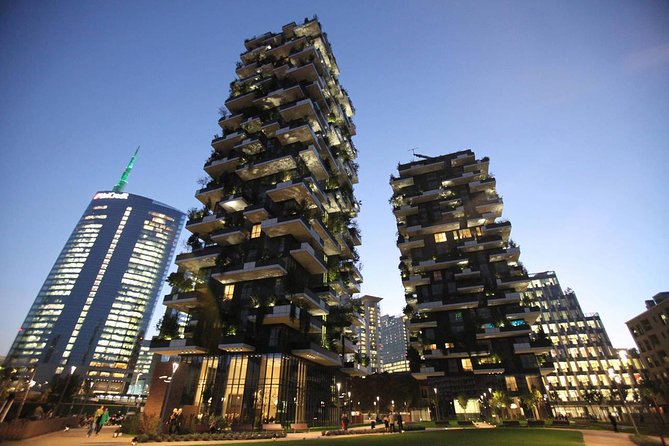
My second favorite part is the “wow, look closer” feeling you get at the Vertical Forest towers in Isola. You’ll hear how the project turns dense planting into part of the architecture, with trees and thousands of plants built into the buildings themselves. The one drawback to plan for: you’re on foot for about 3 hours, and the tour calls for moderate physical fitness, so it’s not the best pick if you want a mostly sit-down experience.
In This Review
- Key highlights at a glance
- Porta Nuova, the 2015 Expo plan, and why this skyline matters
- Starting at Eataly Milano Smeraldo: a practical meeting point with good energy
- Stop 1: Porta Nuova and the Expo renewal story, plus scenic terrace views
- Stop 2: Corso Como to Piazza Gae Aulenti and the Unicredit Tower focal point
- Stop 3: Isola’s Vertical Forest towers, biodiversity built into the skyline
- Stop 4 (finish): Eataly Milano Smeraldo for regional Italian sampling
- Price and value: is $265.09 for 3 hours worth it?
- What you’ll walk, how to pace yourself, and what to bring
- Who this tour suits best (and who should skip it)
- Should you book the Milan Skyscrapers guided tour?
- FAQ
- How long is the Milan skyscrapers guided tour?
- Where does the tour start and end?
- What’s included in the tour price?
- Is hotel pickup included?
- Is this tour good for people with limited mobility?
- Is it a private tour?
- Can I get a refund if my plans change?
- What do I do at Eataly during the tour?
Key highlights at a glance
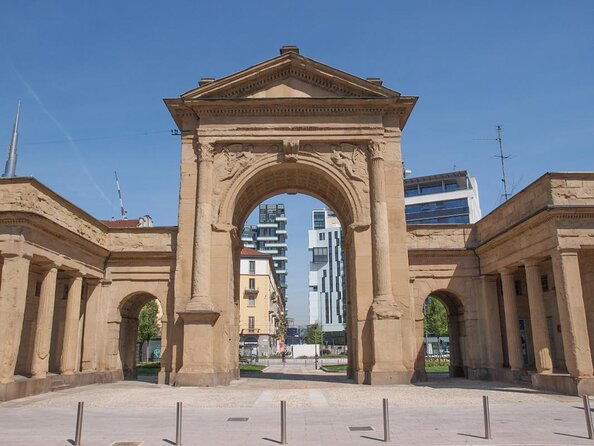
- World Expo–era renewal: see how the 2015 project reshaped Milan’s skyline
- Porta Nuova terraces: get a high-angle view from scenic terraces
- Corso Como + Gae Aulenti Square: major Milan landmarks, tied to modern urban design
- Unicredit Tower: one of Europe’s tallest skyscrapers as a real visual anchor
- Isola’s Vertical Forest: trees and 20,000+ plants integrated into towers
- Eataly finish: walk out into a food stop with regional tastes from Valle d’Aosta to Sicily
Porta Nuova, the 2015 Expo plan, and why this skyline matters
The big theme here is renewal, not just new buildings. Milan hosted the 2015 World Expo, and that event kicked off a broader city project focused on eco-sustainability. What I like about this tour is that it doesn’t treat architecture like a postcard. It explains why the city changed, then you walk through the areas where you can literally compare old and new.
Porta Nuova is the centerpiece. It’s described as fully renovated, with major architects shaping the district into something visually different from what most people expect when they picture Milan. The result is a skyline that feels current, planned, and intentionally mixed with livable public space.
Even if you’re not an architecture nerd, you’ll likely notice something: the buildings feel like they were designed with the street in mind. That’s a key value of this tour. You don’t just see height. You see urban logic—how blocks, squares, and pedestrian routes are meant to work.
You can also read our reviews of more guided tours in Milan

Starting at Eataly Milano Smeraldo: a practical meeting point with good energy
The tour meets at Eataly Milano Smeraldo, in Piazza XXV Aprile (20121 Milano). That’s convenient for two reasons. First, it’s easy to find compared with hidden back streets. Second, it puts you near a built-in decompression point at the end.
You should also know the rhythm of the day: this is a walking tour with stops, not a bus tour. It’s designed to be about pacing—get moving, stop, look, learn, walk again. So meeting at Eataly makes sense. You can grab a quick drink before you head out, then you’re ready for the architecture portion without feeling rushed.
The tour ends back at the meeting point, so you don’t have to figure out transit at the finish line with tired feet and a growling stomach. (Milan is great, but good planning helps.)
Stop 1: Porta Nuova and the Expo renewal story, plus scenic terrace views
Your first major focus is Porta Nuova and the expo-driven redevelopment logic behind it. This isn’t framed as vague “modernization.” The tour highlights the idea that the district was rebuilt with leading architects, changing Milan’s skyline in a way you can see clearly from the ground and from above.
A big moment is the mention of climbing to the top of one of the dozen scenic terraces. That matters because terraces are where you finally understand the scale. From street level, tall buildings can feel intimidating but also confusing. From a terrace, you start to see how blocks relate, where open areas sit, and what the designers were trying to shape.
What I’d keep in mind: terrace time often means stairs or steps and standing around for sightlines. The tour does require moderate physical fitness, so plan for that reality. Bring comfortable shoes you don’t mind walking in for a few hours.
If you want a “modern Milan” introduction that doesn’t require museum tickets or specialist knowledge, this first stop gives you the frame. You learn what the project aimed to do, then you step into the place where that aim becomes visible.
Stop 2: Corso Como to Piazza Gae Aulenti and the Unicredit Tower focal point
Next you walk along Corso Como, described as a Milan landmark by night. Even if your tour time is daylight, the street is still one of those places that makes sense as a signature Milan experience. It’s where the city’s modern energy shows up fast—shops, movement, and the kind of urban vibe that pairs naturally with the architecture theme of this tour.
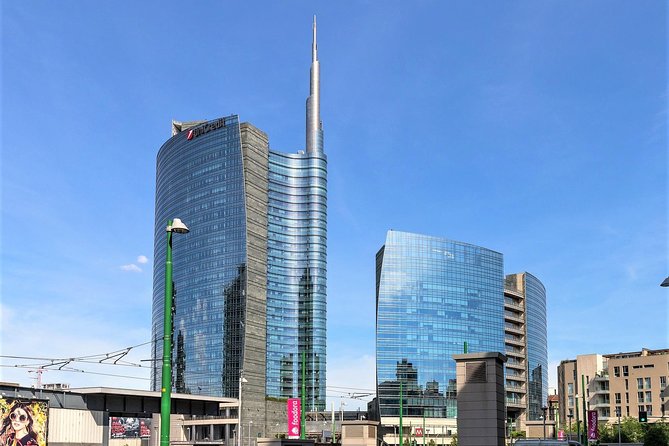
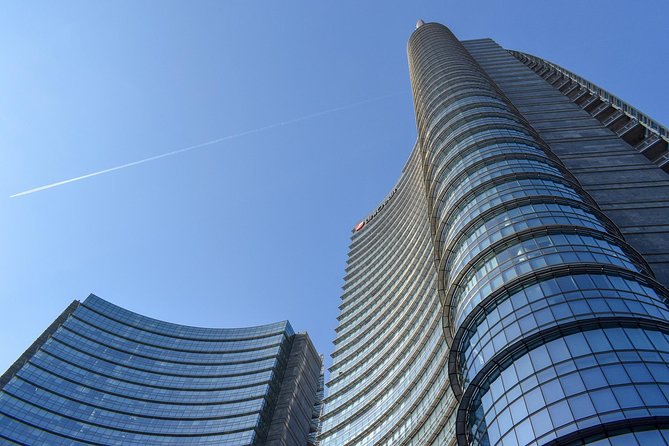
You then reach Gae Aulenti square, and this is where Unicredit Tower takes center stage. The tour positions the tower as one of Europe’s highest skyscrapers, anchored right in the public realm rather than hidden behind perimeter fences. That location is part of the point. The architecture isn’t meant to be distant. It’s meant to be part of everyday city life.
What I like here is the guided interpretation. Tall buildings can be hard to “get” unless someone gives you a story. The guide’s job is to connect the visual impression—massive scale, clear modern lines—to the broader idea of Milan’s transformation.
A practical note: skyscraper views can be weather-dependent. On clear days, you’ll get better sightlines from open public spaces around Gae Aulenti square. If it’s windy or rainy, plan to focus more on details like materials and spacing rather than distant panoramas.
Stop 3: Isola’s Vertical Forest towers, biodiversity built into the skyline
Then you shift to Isola, a historical district known for its unique “railing houses” with common galleries and courtyards. This is a smart contrast, because it’s a reminder that Milan’s neighborhoods aren’t just new versus old. They can be both: historic patterns living alongside new construction.
From there, the tour brings you to the Vertical Forest towers—highlighted as an award-winning urban project and described as a model of urban reforestation. The most memorable part is the scale of what’s planted into the buildings: the towers include 900 trees and more than 20,000 plants. That’s not decorative greenery. It’s a built-in ecosystem approach meant to regenerate the environment without expanding the city’s territory.
Even if you don’t care about environmental engineering, the Vertical Forest concept is visual. The building skin becomes part of the landscape. It changes how you read the skyline: instead of towers as pure concrete or glass, you start seeing a living surface.
One thing to consider: this stop is visually impressive, but it still depends on you taking a few minutes to look closely. Don’t just snap photos and move on. Spend time checking how the plants appear at different heights and how the tower integrates into the surrounding Isola area.
This is also where the tour’s guide really helps. An art historian–style approach makes the design feel more human. You get the “why,” not just the “what.”
Stop 4 (finish): Eataly Milano Smeraldo for regional Italian sampling
The tour ends at Eataly, which the experience describes as an Italian food brand found around the world. Here’s what you should expect: the guide takes you to Eataly so you can sample a number of regional typical foods from across Italy, from Valle d’Aosta to Sicily.
I like ending with food because it completes the “Milan story” in a very real way. Architecture tells you how a city designs itself. Food tells you what a city feeds itself. And Eataly is designed for quick comparisons—different regions, different flavors, all under one roof.
Because the provided information frames this as sampling, not as a fixed menu, go in with a flexible mindset. Choose a few bites you’re curious about rather than trying to eat like it’s dinner. That keeps the experience fun instead of turning it into a rushed shopping marathon.
If you’re a foodie, this stop is a major value add. If you’re not, it’s still a relaxing way to close a walking tour without worrying about where your next sit-down meal will be.
Price and value: is $265.09 for 3 hours worth it?
At $265.09 per person for about 3 hours, this is not a bargain-basement tour. But it’s also not priced like a random “see sights” walk. You’re paying for a professional art historian guide and a private setup where your group participates.
So the value question is simple: do you want interpretation, not just locations? If you’re the type of traveler who likes hearing what changed, why it changed, and what you’re looking at, this tour makes sense. The Porta Nuova-to-Isola-to-Eataly sequence is built to give you a framework—especially around the 2015 Expo renewal and the environmental concept behind the Vertical Forest.
Also keep timing in mind. It’s noted that the tour is usually booked about 45 days in advance on average. If you have a specific date in mind, waiting too long could shrink your options.
I’d consider the price a good fit if:
- you like modern architecture and want an expert explanation
- you’d rather pay for guidance than try to piece it together alone
- you want a tight 3-hour loop that ends right where you started
It may feel less worth it if you only want a quick photo circuit and you’re perfectly happy wandering these districts on your own.
What you’ll walk, how to pace yourself, and what to bring
This is a walking tour that lasts around 3 hours, and the info calls for moderate physical fitness. That’s your main “consideration” item. It doesn’t sound like a hike, but you’re still covering ground, standing at viewpoints, and moving between stops.
So I suggest you treat it like a city walking day:
- wear comfortable shoes
- bring water (especially if you’re traveling in warm months)
- plan for some standing time around terraces and viewpoints
Because the tour ends back at Eataly, you’ll likely be finishing in a comfortable, indoor-friendly environment. That’s a nice practical perk if weather turns.
Another small planning win: it’s a mobile ticket and the meeting point is near public transportation. That makes it easier to work into your day without overthinking where you’ll lock in transit.
Who this tour suits best (and who should skip it)
This tour is best for people who like design, city planning, and the stories that connect buildings to real life. If you’re curious about how Milan balances historic neighborhoods like Isola with big modern projects, you’ll probably enjoy how the itinerary builds contrast.
It’s also a good option if you want:
- a structured walk with a professional art historian guide
- a modern Milan focus (Porta Nuova, Unicredit Tower, Vertical Forest)
- a destination finish at Eataly, especially if you like regional Italian food
I’d skip it if:
- you want mostly classic landmark sightseeing (Duomo-type priorities)
- you dislike walking for long stretches
- you’re looking for a museum-heavy day rather than an architecture-focused stroll
Should you book the Milan Skyscrapers guided tour?
I’d book it if modern Milan is your thing and you want a guided lens that turns the skyline into a meaningful story. The strongest reason is the combo: Porta Nuova’s expo renewal frame, the Unicredit Tower moment at Gae Aulenti square, and the Vertical Forest’s biodiversity concept. Add the practical finish at Eataly, and you get a tour that’s not only scenic but also satisfying.
If you want a self-guided option, you can certainly explore these areas independently. But if you care about understanding what you’re seeing—especially the eco-sustainability angle and how these districts were rebuilt—this guided format is where the value lives.
FAQ
How long is the Milan skyscrapers guided tour?
It runs for about 3 hours.
Where does the tour start and end?
It starts at Eataly Milano Smeraldo in Piazza XXV Aprile, 10, 20121 Milano, and it ends back at the same meeting point.
What’s included in the tour price?
It includes a professional art historian guide and a private tour for your group.
Is hotel pickup included?
No, hotel pickup and drop-off are not included.
Is this tour good for people with limited mobility?
The tour requires moderate physical fitness, so it’s best for people who are comfortable walking and standing for part of the route.
Is it a private tour?
Yes. It’s a private tour/activity, and only your group participates.
Can I get a refund if my plans change?
Yes. You can cancel for a full refund up to 24 hours in advance of the start time.
What do I do at Eataly during the tour?
The guide takes you to Eataly, where you can sample regional typical foods from across Italy, from Valle d’Aosta to Sicily.