REVIEW · MILAN
Jewish Guided Tour in Milan
Book on Viator →Operated by Milano Mia · Bookable on Viator
Three hours, and Milan tells a different story. This Jewish guided tour connects Jewish history in Milan with the city’s major landmarks, then guides you toward the Holocaust Memorial for a thoughtful ending. It’s a compact route, but the themes keep moving: royals, fascism, law, faith, and symbols on the Duomo.
I like the format: a licensed, in-person guide keeps things clear and chronological, and the group stays small (max 8), so you’re not swallowed by a crowd. I also like that you get a mobile ticket and free admission for most stops, so the itinerary feels built for actually seeing the city rather than waiting in lines.
One possible snag: the synagogue visit at Sinagoga Centrale requires an advance- coordinated entrance and a donation of at least 10 euros per person. In August, opening hours can be limited, so you’ll want to coordinate ahead of time to avoid disappointment.
In This Review
- Key highlights at a glance
- Three Hours of Jewish Milan, From San Babila to the Duomo
- Price and What You Actually Get for $120.48
- Meeting Point to Metro Transfer: How the Route Flows
- San Babila and Corso Vittorio Emanuele II: Getting Your Bearings
- Piazza del Liberty: World War II and Mussolini in Street-Level Reality
- Monumento a Cesare Beccaria: Law That Still Travels Across Borders
- Sinagoga Centrale: Jewish Religion, History in Milan, and the 10€ Donation
- Piazza del Duomo: Judaism and Christianity Through Architecture and Symbols
- Rinascente Milano: High-Rise Milan and the View From Above
- Escort to the Holocaust Memorial: Guidance to the Museum Entrance
- What the Guides Add (and Why Galit and Nuki Are Mentioned)
- Who This Tour Suits Best
- Should You Book This Jewish History Tour of Milan?
- FAQ
- FAQ
- How long is the Jewish guided tour in Milan?
- What is the starting meeting point?
- Where does the tour end?
- What language is the tour offered in?
- What is the maximum group size?
- Is the synagogue entrance included in the price?
- Do I get a tour of the Holocaust Museum?
- How does the tour handle August visits to the synagogue?
- Do I need a physical ticket?
Key highlights at a glance
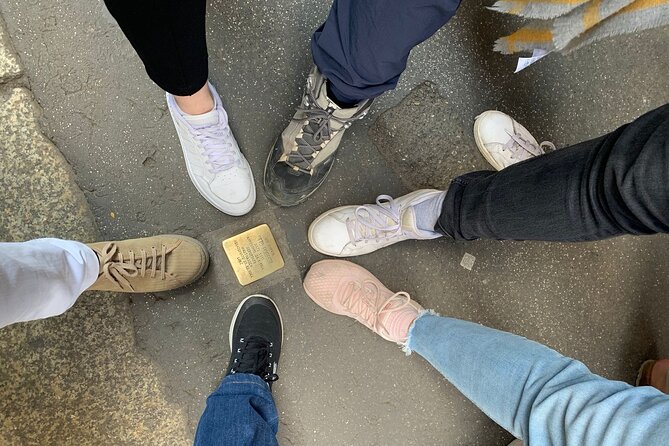
- Small group size (max 8) for a more human pace through central Milan
- Sinagoga Centrale visit focused on Jewish religion and Italy/Milan history
- Duomo stop with Judaism–Christianity comparison plus Jewish symbols on the cathedral exterior
- WWII and Mussolini context from Piazza del Liberty, set right in the street-level reality of Milan
- Rinascente Milano viewpoint to connect architecture and tall-building ambitions
- Escort to the Holocaust Memorial (with metro) even though the Holocaust Museum itself isn’t included
Three Hours of Jewish Milan, From San Babila to the Duomo
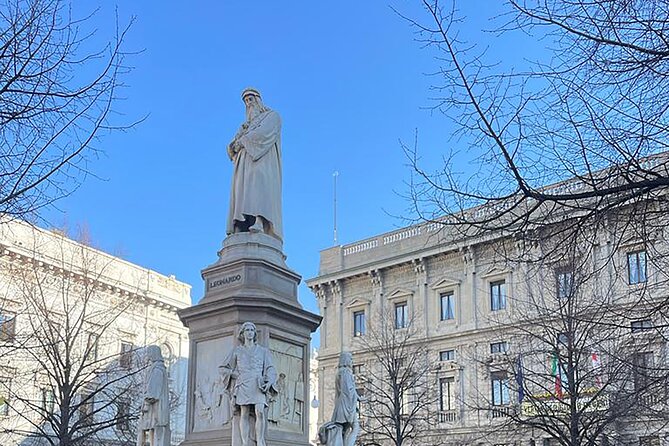
If you’ve ever wandered Milan and thought it’s mostly about fashion and marble, this tour corrects that story—politely, with facts. The route moves through central spots where you can still feel how history got written into the city. You’ll hear about Milan’s past and present in the same breath, linking politics, law, religion, and public symbols.
What I like most is that it doesn’t send you looking for a single “Jewish quarter.” Milan didn’t build one obvious neighborhood bubble the way some other cities did. So the guide instead tracks Jewish life through the heart of the city—using the same streets locals use. That gives you a sharper sense of place, fast.
The best part is how the stops connect. You don’t just learn names; you learn why those names matter where you stand.
You can also read our reviews of more guided tours in Milan


Price and What You Actually Get for $120.48
At $120.48 per person for about 3 hours, this isn’t a bargain-style walking tour. But it’s not priced like a museum ticket either. You’re paying for a licensed guide, all fees and taxes, and an organized flow through multiple key viewpoints.
Here’s the value breakdown that matters for real planning:
- Most stops are free to enter, which keeps the itinerary moving.
- You get a synagogue entrance via donation (not included in the price).
- The tour includes escort and guidance to the Holocaust Memorial site, with travel together on the metro to the museum entrance area.
- The Holocaust Museum tour is not included, so you should plan to treat that final part as guidance to the site, not a full museum explanation.
If you want Jewish history tied to visible Milan landmarks, and you also want help reaching the Holocaust Memorial area without figuring it out mid-trip, the price starts to make sense. If you’re mainly chasing museums, you may feel the 3-hour cap.
Meeting Point to Metro Transfer: How the Route Flows
The tour starts at Corso Monforte, 2, 20122 Milano. That matters because it places you in an easy-to-reach central start area, near public transportation. You also end in a different area: the tour finishes at Via Dante, near the Holocaust Memorial site.
A key detail: the tour includes escort and guidance to the Holocaust Memorial. You travel together on the metro and arrive at the entrance to the Holocaust Museum. This is practical if you’re short on time or if you want someone to point you in the right direction at the end.
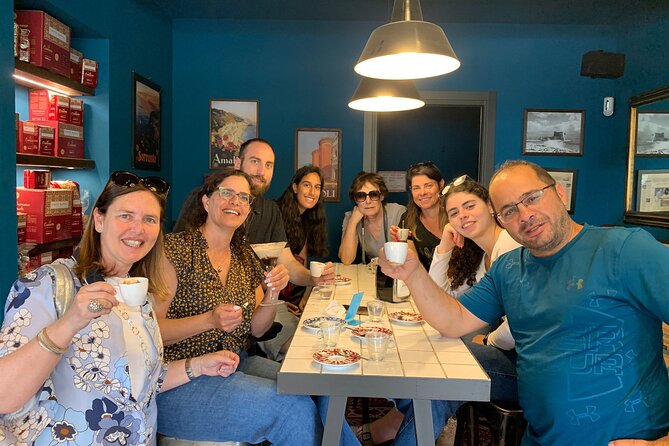
Also note the group size: the max is 8 travelers. With a small group, you can usually hear the guide’s explanations at street corners without craning your neck or competing for attention.
San Babila and Corso Vittorio Emanuele II: Getting Your Bearings
The opening stop at San Babila is the “Milan setup.” You’ll get a quick sense of Milan’s past, present, and future—enough context to make later stops click. This is a smart way to start, because the rest of the tour relies on you knowing what kind of city Milan is, and how it changed.
Then comes Corso Vittorio Emanuele II, where the guide talks about the dynasty of royal houses and how the city was built. This isn’t just royal trivia. It’s about urban power—who shaped the streets and institutions, and why their choices still show up in the modern city.
If you like tours that help you understand the “why” behind the scenery, these first two stops do that job without bogging you down.
Piazza del Liberty: World War II and Mussolini in Street-Level Reality
At Piazza del Liberty, the tour shifts into the heavy stuff: World War II and Mussolini. Doing this in a public square makes it feel grounded. You’re not sealed inside an exhibit; you’re learning how ideology and power played out in everyday spaces.
This segment is also a reminder of why the tour’s structure matters. The earlier stops about city building and rulers help you understand the larger system. Then the WWII/Mussolini part shows how that system turned dangerous.
One thing to consider: this tour is historical and interpretive, not a documentary. The time here is about 20 minutes, so you’ll hear the core ideas, not every detail you might want if you’re doing a deep research trip.

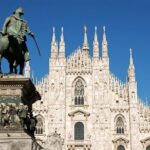
Monumento a Cesare Beccaria: Law That Still Travels Across Borders
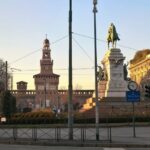
Next you’ll stop at the Monumento a Cesare Beccaria, where the guide explains Beccaria’s contribution to the world of law in Italy. It’s a fascinating pairing with the rest of the route because it reframes history as something more than political dates and war narratives.
Law links closely to how societies treat people—who gets rights, how punishment is imagined, and what values a system is built on. In the context of a Jewish history tour, it adds another layer: the tour isn’t only telling a story of persecution and survival. It’s also highlighting intellectual currents connected to Italy and to ideas about justice.
The stop is short (about 20 minutes), but the point is clear: you’re learning how Milan connects to broader European thought.
Sinagoga Centrale: Jewish Religion, History in Milan, and the 10€ Donation
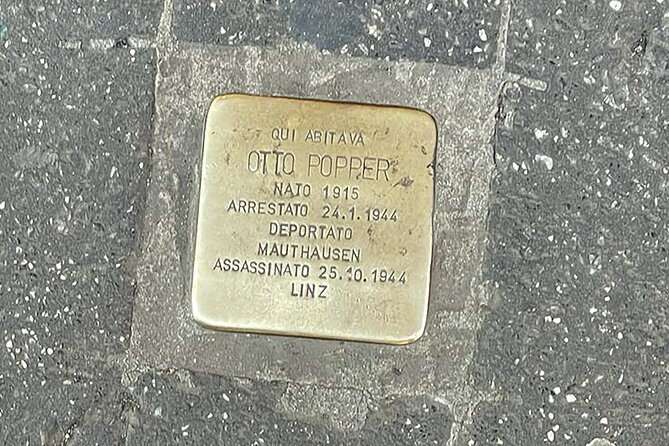
This is the core moment for many people. You’ll arrive at the synagogue—Sinagoga Centrale—where the guide talks about Jewish religion and Jewish history in Italy and Milan. The time on-site is about 20 minutes, which is tight enough to keep the tour moving, but long enough to make the stop meaningful.
Two practical details you must plan for:
- Synagogue entrance isn’t included in the tour price. You need an entrance with a donation of at least 10 euros per person.
- You need to coordinate the entrance with the tour team in advance.
In August, visiting the synagogue requires prior arrangement because opening hours can be limited. If you’re traveling then, don’t wait until the day-of.
This stop is also where the guide’s delivery matters. In one review, the guide Galit was praised for pointing out details people would otherwise miss. Another review mentions Nuki’s warmth and clear information. Either way, expect an interpretive explanation: symbols, beliefs, and historical context—not just a quick look and move on.
Piazza del Duomo: Judaism and Christianity Through Architecture and Symbols
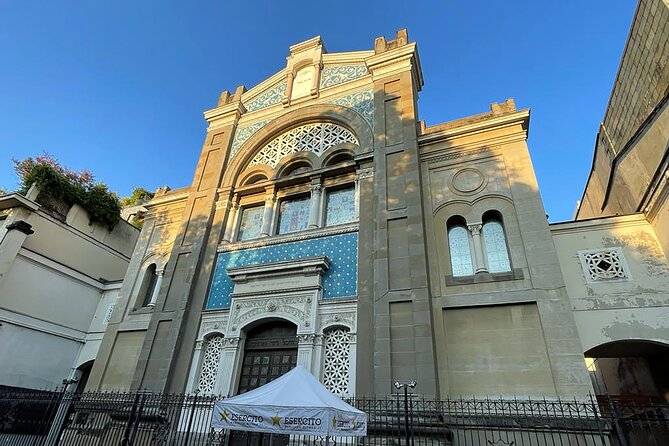
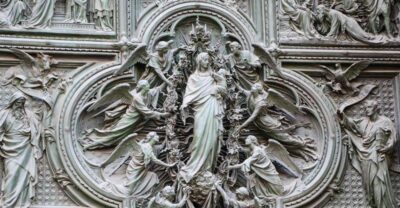
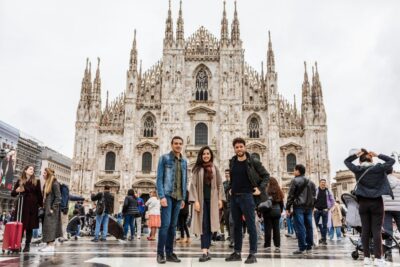
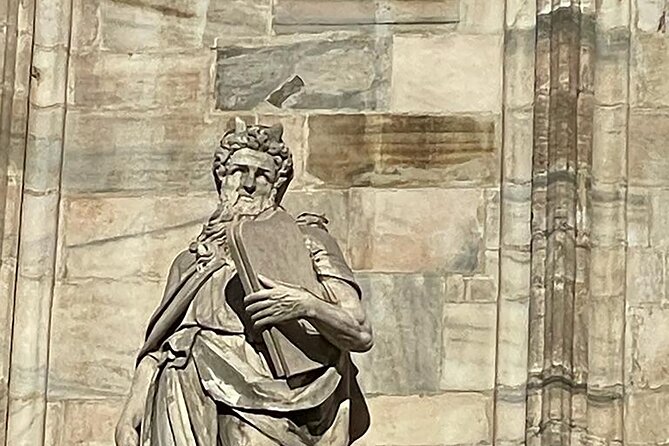
From the synagogue, the tour heads to Piazza del Duomo, one of Milan’s most photogenic squares. Here the guide compares Judaism and Christianity, focusing on similarities and differences. You also get a visual angle: architecture of churches and synagogues, plus Jewish symbols on the Duomo.
This is a great stop if you like to look, then learn what you’re looking at. The Duomo can be a “see it, photograph it, done” experience for some people. With this tour, you’ll have a reason to slow down and read the stonework.
A consideration: because the Duomo is busy and the tour is time-limited, you won’t get a long, sit-and-study session. You’ll get the main interpretations the guide wants you to notice, and then you’re on to the next viewpoint.
Rinascente Milano: High-Rise Milan and the View From Above
Next you’ll head to Rinascente Milano. The purpose here is both visual and thematic: you’ll see Milan from above and talk about high-rise buildings in Milan and Italy. It’s a quick 15-minute segment, but it changes your mental map of the city.
Why it works: the tour started with street-level history—squares, monuments, and religious sites. Then it gives you the vertical angle. That helps you connect the old city with the kind of modernization Milan has been shaping in the modern era.
If you hate rushing through “viewpoint” spots, keep your expectations aligned with the short timing. This isn’t a long observation deck session. It’s a fast architectural perspective.
Escort to the Holocaust Memorial: Guidance to the Museum Entrance
The tour ends at Via Dante, with the escort and guidance to the Holocaust Memorial Site in Milan—also known as the Holocaust Museum area. You’ll travel together on the metro and arrive at the entrance to the museum.
Important nuance: the tour includes guidance to the site and the entrance area, but it does not include a tour of the Holocaust Museum. That means you should plan your own pace once you arrive inside (or decide how much you want to do at the museum itself).
This structure is practical. It saves you from getting lost near the site, and you still get to decide how you want to proceed with the museum content.
What the Guides Add (and Why Galit and Nuki Are Mentioned)
Two guide names come up in the feedback: Galit and Nuki. What people praised wasn’t only that they knew facts. It was how they made you notice details you’d otherwise walk past.
That matters on a tour like this because the route is built from short segments. If the guide doesn’t guide your attention, you can lose the meaning between stops. The strong reviews suggest these guides did the opposite—kept the story coherent and tied each location to an idea you can remember later.
Also, one theme that comes up strongly: Milan doesn’t have one simple, obvious Jewish quarter to point to. Good guides compensate for that by explaining where the community lived relative to the city center and why you’re seeing Jewish history in the middle of Milan rather than in one single “zone.”
Who This Tour Suits Best
This tour is a strong fit if you:
- Want Jewish history tied directly to Milan landmarks, not just museum halls.
- Like tours that connect themes—politics, law, religion, and symbolism—into one walking storyline.
- Prefer a small group format (max 8) and an English-speaking licensed guide.
- Appreciate a practical ending that helps you reach the Holocaust Memorial area without extra figuring out.
It’s less ideal if you want:
- A long, fully guided museum experience (the Holocaust Museum tour isn’t included).
- A large, wide-ranging day with many stops and lots of free time built in.
Should You Book This Jewish History Tour of Milan?
I’d book it if you want a focused, organized way to understand Milan through Jewish history, including a synagogue visit and a guided arrival at the Holocaust Memorial area. The best value shows up when you match the tour’s strengths with your goals: landmarks, interpretation, and getting to the right places in a short window.
I’d pause before booking if you’re going in August and you don’t want to coordinate synagogue access ahead of time, since Sinagoga Centrale requires prior arrangement during limited opening periods. Also, if you’re hoping for a full Holocaust Museum guided tour, you’ll need to plan that separately.
If your priority is smart context over endless hours, this is a solid choice for a first (or second) pass through Milan with history that actually connects to what you see.
FAQ
FAQ
How long is the Jewish guided tour in Milan?
The tour lasts about 3 hours.
What is the starting meeting point?
The meeting point is Corso Monforte, 2, 20122 Milano.
Where does the tour end?
The tour ends in Via Dante, Milano, in front of the Holocaust Memorial Site area, with guidance to the Holocaust Museum entrance.
What language is the tour offered in?
The tour is offered in English.
What is the maximum group size?
The tour has a maximum of 8 travelers.
Is the synagogue entrance included in the price?
No. Entry to Sinagoga Centrale requires a donation of at least 10 euros per person, and you need to coordinate the entrance with the team in advance.
Do I get a tour of the Holocaust Museum?
You get escort and guidance to the Holocaust Memorial site and arriving at the entrance to the Holocaust Museum, but the tour does not include a tour of the Holocaust Museum itself.
How does the tour handle August visits to the synagogue?
During August, visiting the synagogue requires prior arrangement due to limited opening hours. You should contact the team to coordinate your visit.
Do I need a physical ticket?
The tour uses a mobile ticket.