REVIEW · MILAN
Milano: Degustazione caffè di qualità dalla moka al filtro
Book on GetYourGuide →Operated by Il Cafetero Specialty Coffee · Bookable on GetYourGuide
Coffee finally stops being a guessing game. At Il Cafetero in Milano, you taste three single-origin coffees through three brew methods, learning what changes in the cup from pot to pour-over.
I love how this is a small group setup, limited to 6, so questions feel easy. I also love the side-by-side format of Moka, V60, and Chemex, because you can actually compare extraction styles instead of just reading about them.
The only real catch is that you’ll get more out of it if you’re willing to taste coffee black (not only with milk). Since the instructor works in English, Italian, and Spanish, having at least one of those helps you follow the finer points.
In This Review
- Key highlights to know before you go
- A Milan coffee tasting that teaches the why, not just the taste
- Three single origins, and why that matters for your brain
- Moka: traditional Italian coffee, explained like it’s meant to be used
- V60: where filter coffee starts to make sense
- Chemex: design points, but the aromatics are the real story
- The reset trick: water between cups (and why it matters)
- Tips you can use at home, plus a reason to buy beans
- Dessert pairing, including vegan and gluten-free
- Small-group feel with Ivone e Federico
- Price and value: $35 for three methods, sweets, and coached tasting
- Who should book this Milano coffee experience
- Should you book Il Cafetero’s moka-to-filter tasting
- FAQ
- How long is the coffee tasting?
- How much does it cost?
- What will I taste during the experience?
- Is the group small?
- Are vegan and gluten-free options available?
- What languages are the instructors?
- Is there cancellation flexibility and a pay-later option?
Key highlights to know before you go
- Season-selected single origins from Africa, South America, and Asia, based on what’s available
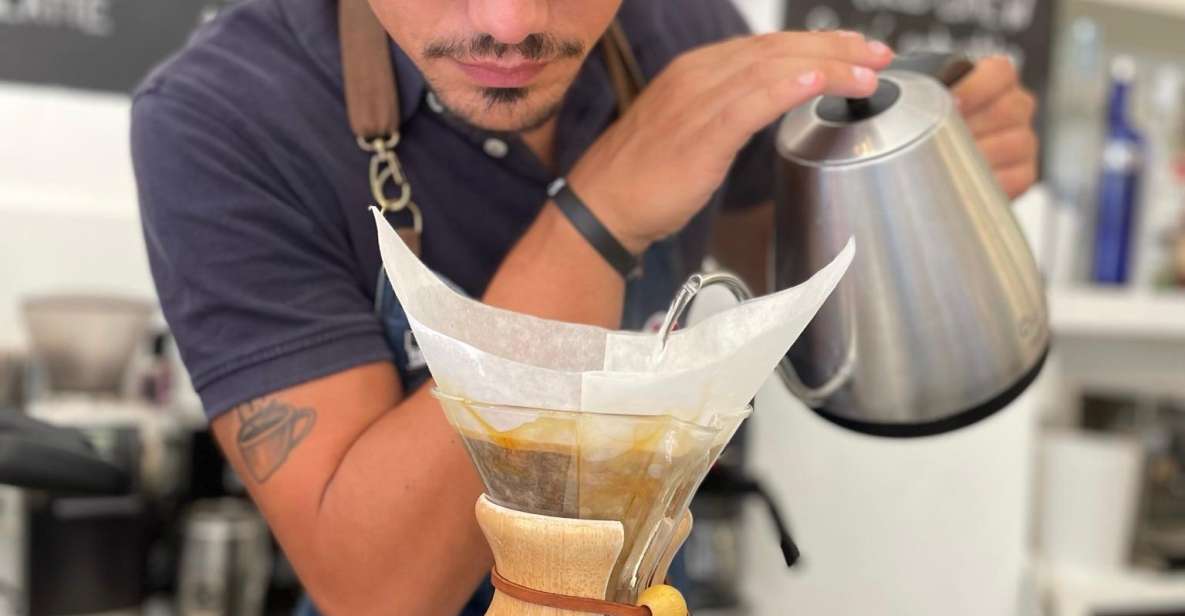
- Three extractions you can compare: Moka, V60, and Chemex, each with its own flavor behavior
- A guided tasting flow with plenty of water between coffees so you can reset your palate
- Home-brewing tips that go beyond “try this” and explain what each method is doing
- Dessert included, with vegan and gluten-free options among the sweets/biscuits
A Milan coffee tasting that teaches the why, not just the taste
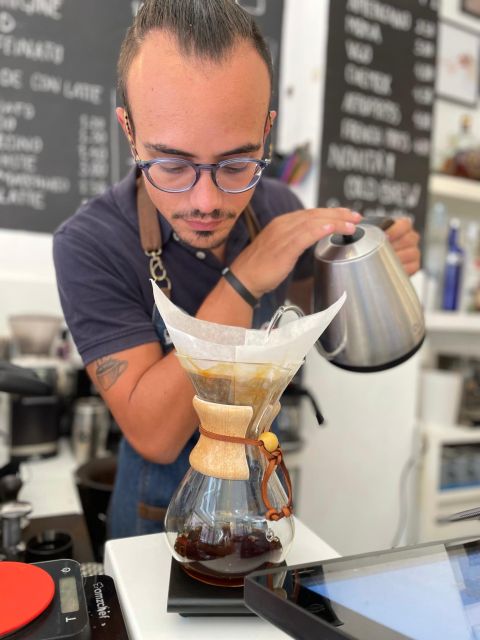
Milano does coffee well, but most people only experience it in one lane: espresso, cappuccino, maybe a latte. This experience widens the lane fast. You’ll be pushed to notice aroma, flavor direction, and how brewing choices shape what ends up in your cup.
The vibe is practical. The goal isn’t to turn you into a barista in two hours. It’s to help you stop guessing and start understanding. And the tastings are built around a simple idea: if you change the extraction method while keeping the coffee concept similar, you’ll learn what’s method-driven versus coffee-driven.
You can also read our reviews of more tours and experiences in Milan.


Three single origins, and why that matters for your brain
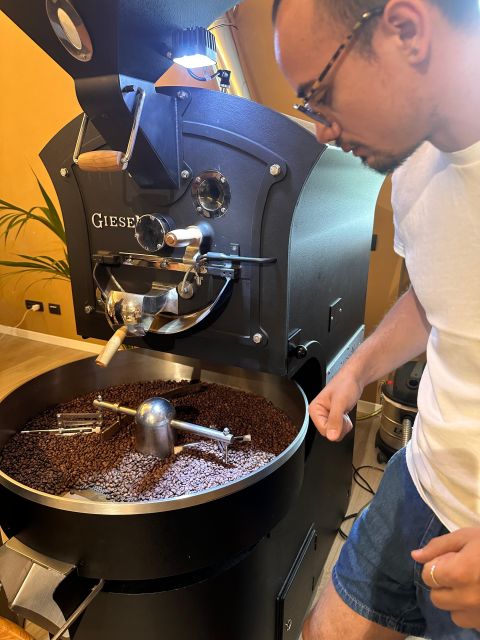
You’ll taste three single-origin coffees, meaning each one comes from a single plantation or single producer. The exact coffees are chosen based on seasonality and availability, so you should expect a little variation depending on the date you book.
That “single origin” choice is the secret sauce for learning. When coffees are separated by producer rather than mixed together, differences show up more clearly. You’re not just tasting “coffee,” you’re tasting specific beans and then watching how the same general coffee idea reacts to different brews.
You’ll also learn why origin matters beyond bragging rights. Different growing regions often bring different natural tendencies: aroma character, perceived sweetness, and how the coffee “reads” when extracted through heat and flow. Even without getting technical, you’ll start forming your own map of what you like.
Moka: traditional Italian coffee, explained like it’s meant to be used
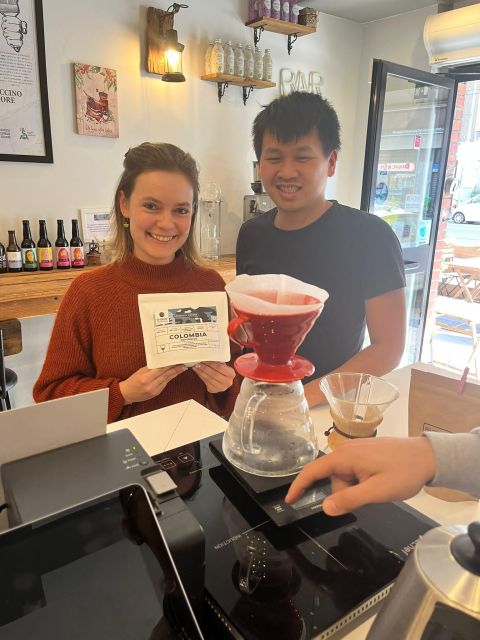
The first extraction is Moka, the symbol of traditional Italian coffee culture. This isn’t treated like a museum piece. You’ll be shown how it has changed over time and, more importantly, how to use it to bring out the coffee’s aromatic and natural properties.
What you’re really tasting here is how a Moka approach tends to influence body and intensity. It can feel more “present” than lighter pour-over styles, and that makes it a great starting point. If you’re used to milk-based drinks, Moka is often the bridge back to tasting coffee as its own flavor.
The best way to get value from this segment is to pay attention to what changes as the coffee hits your palate:
- Does it feel heavier or lighter?
- Does the aroma come forward in the first sip?
- Does the finish feel more rounded or more sharp?
You’ll get guidance during the session, but your job is simple: notice. That’s how the next two methods become obvious.
V60: where filter coffee starts to make sense
Next up is the V60, one of the most widely loved pour-over methods among baristas, and increasingly common in Italian coffee shops too. The focus here is comparison. You’ll learn the differences in preparation between American-style coffee and filter coffee, so your mental categories stop being fuzzy.
V60 helps because it’s more about clarity and control than brute strength. In practice, that means the coffee’s character often feels more separated and “layered.” If Moka can feel like a strong handshake, V60 can feel like a more detailed conversation.
During this part of the tasting, the instructors also talk through techniques and what to remember when you try it at home. Even if you don’t copy every step perfectly, the big win is understanding what the method is designed to do: guide extraction so you taste the coffee rather than just the brew.
A small caution: if your only experience is espresso drinks, you might initially find filter coffee more subtle. Don’t write that off as weak. Give it two or three sips and notice aroma and aftertaste. That’s usually where the payoff hides.
Chemex: design points, but the aromatics are the real story
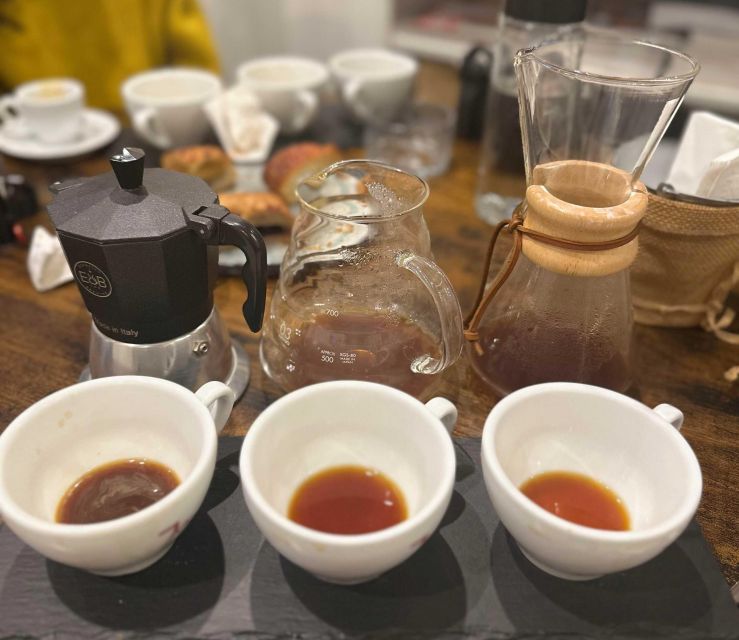
Last is the Chemex, recognizable by its design. The promise here is straightforward: this method lets you taste a coffee with very noticeable aromatics.
Chemex often feels like it “cleans up” the cup. That can make origin character easier to pick out. When aromatics stand out, your brain has more hooks to latch onto—floral notes, fruitiness, or deeper roasted flavors—depending on the coffee you’re served.
If you love the smell of good coffee more than the speed of drinking it, Chemex is likely to be your favorite part. It’s also a strong closing act because you can compare the same tasting framework you used for Moka and V60. After three methods, you’ll start noticing patterns, like which coffees taste more layered under one approach versus another.


The reset trick: water between cups (and why it matters)
One detail that quietly raises the quality here: there’s a lot of water between one coffee and another. This is not a random add-on. It keeps you from tasting coffee flavors on top of coffee flavors.
In a tasting like this, your palate is the instrument. Water helps you recalibrate so you can compare fairly. Without it, the last coffee often wins by default, because your mouth is already full.
You’ll also have sweets or biscuits during the experience, including vegan options and gluten-free options. That matters too, as long as you approach it like a pairing tool rather than a distraction. Notice if a sweet changes perceived sweetness or smoothness in the coffee. You’re building a better sense of what you actually like.
Tips you can use at home, plus a reason to buy beans
The tour doesn’t end at tasting. You’ll also get tips for implementing each method at home. The goal is to help you stop “winging it” and start repeating results.
What you should look for while learning is the logic behind each brew method:
- What each method is trying to highlight
- How preparation choices affect extraction
- What to keep consistent when you’re practicing
Even if you don’t nail every variable on day one, understanding the method’s purpose makes it easier to troubleshoot. If your V60 tastes off, you’ll know what kind of change to try next, not just that it needs to taste better.
There’s also a special discount on the coffee beans, which is a nice practical touch. You can take what you tasted and make it real at home without hunting down the same origin blind.
Dessert pairing, including vegan and gluten-free
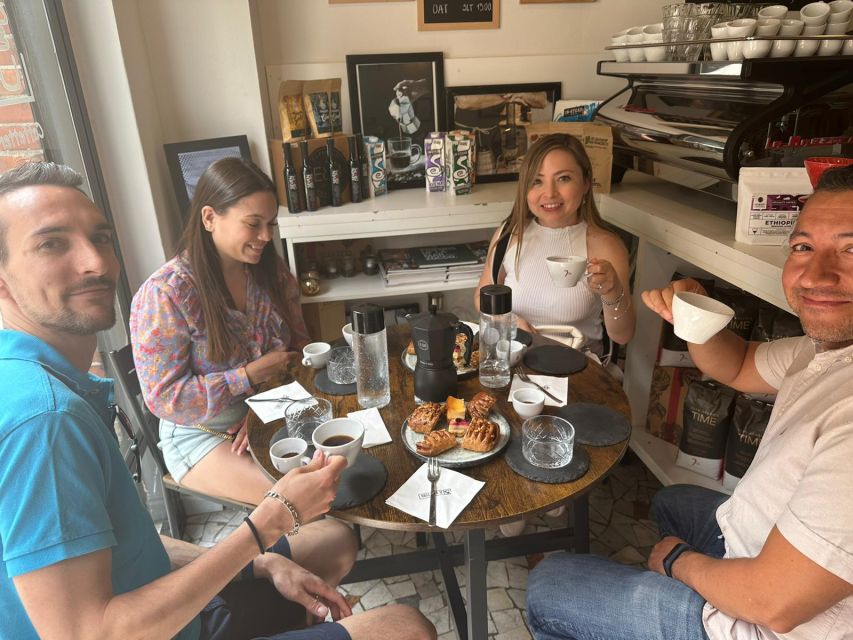
You’ll have dessert of your choice with an included vegan option. Sweets or biscuits (also vegan or gluten-free) are part of what you’ll snack on during the tasting.
This is a good design choice for a 2-hour experience. You get a break for your palate, and dessert makes the session feel more like a hosted evening than a rigid class. Just keep an eye on how it affects your tasting notes. If you want to learn, treat dessert as a companion, not a replacement for paying attention to the coffee.
Small-group feel with Ivone e Federico
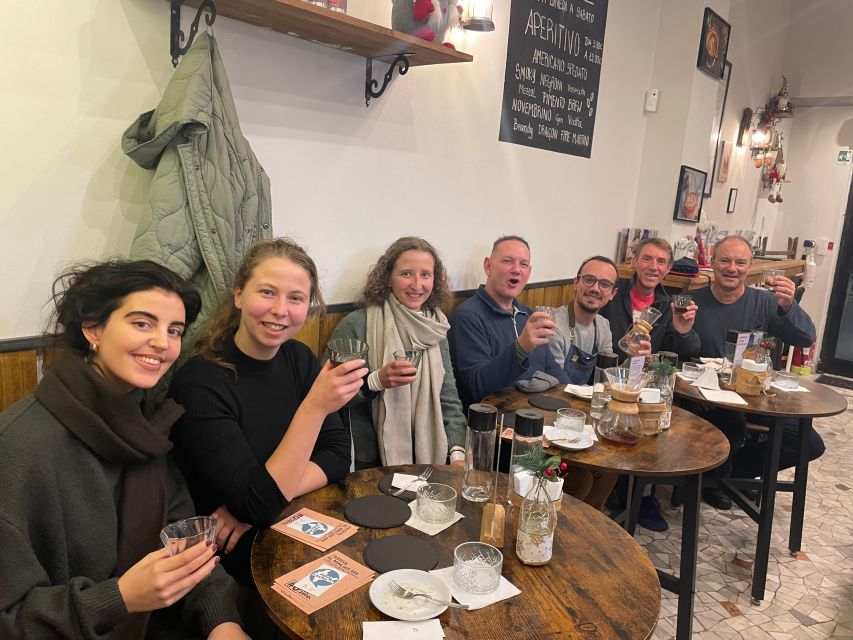
This is a small group experience limited to 6 participants. That size matters more than it sounds. In coffee, small differences are where the learning happens, and with fewer people you get better interaction.
The hosts named in the experience feedback include Ivone and Federico. The tone people describe is friendly and calm, not stiff or showy. That matches what you want for a tasting: ask questions, get answers, and feel comfortable tasting things that might be new to you.
The instructor supports English, Italian, and Spanish, which is helpful if you’re visiting Milano from abroad. You’re more likely to catch the “why” behind each step when you can follow instructions without translating in your head.
Price and value: $35 for three methods, sweets, and coached tasting
At $35 per person for 2 hours, you’re not just paying for coffee. You’re paying for structure:
- Three single-origin coffees
- Three extractions (Moka, V60, Chemex)
- Plenty of water between cups
- Sweets or biscuits, including vegan and gluten-free options
- Tips you can use at home
- A discount on beans
If you’re the type who likes coffee but mainly drinks it with milk, this class can be a great reframe. You’ll taste coffee straight and learn what you’re missing. If you’re already a pour-over fan, it’s still useful because it forces comparison across three distinct methods in one sitting.
One consideration: because the coffees are selected by season and availability, you can’t guarantee a specific origin. That’s normal for a live tasting. The upside is that you’re still learning the method differences, which is the transferable part.
Who should book this Milano coffee experience
This fits best if you fall into one of these buckets:
- You want to understand how brewing methods change flavor, not just drink coffee
- You enjoy hands-on learning and want practical tips for home
- You’re curious about coffee origins and like tasting them as single producers
- You’re traveling with someone who loves coffee and you want a shared experience that goes beyond sightseeing
If you’re only interested in a quick caffeine fix, this might feel like overkill. But if you want to leave with real knowledge about what you like and how to make it, it’s the right length and format.
Should you book Il Cafetero’s moka-to-filter tasting
I’d book it if you want a structured, friendly coffee education in Milano without needing to be a coffee nerd first. The three-method comparison is the big reason: Moka, V60, and Chemex are different enough that you’ll notice patterns quickly. Add the water reset and included dessert and you get a tasting that feels both focused and relaxed.
I’d skip it if you strongly dislike tasting coffee without milk, because the experience is built around tasting the coffee itself. Also, since the origin selections depend on the season, go in expecting variety rather than a specific bag of beans.
If you want one good coffee experience in your Milano trip—this is a smart choice.
FAQ
How long is the coffee tasting?
It lasts 2 hours.
How much does it cost?
The price is $35 per person.
What will I taste during the experience?
You’ll taste three different single-origin coffees, each using a different extraction method: Moka, V60, and Chemex.
Is the group small?
Yes. It’s limited to 6 participants.
Are vegan and gluten-free options available?
Yes. Sweets or biscuits include vegan options, and gluten-free options are also available. Dessert includes a vegan option too.
What languages are the instructors?
The instructor offers English, Italian, and Spanish.
Is there cancellation flexibility and a pay-later option?
There is free cancellation up to 24 hours in advance for a full refund, and there is a reserve now & pay later option.