REVIEW · MILAN
From Milan: Bernina Train, Swiss Alps & St. Moritz Day Trip
Book on GetYourGuide →Operated by TAOTRAVEL · Bookable on GetYourGuide
Milan to the Alps in one day is a treat. This trip pairs a comfy air-conditioned coach ride with the famous Bernina Red Train, one of Europe’s highest-altitude rail journeys, plus guided commentary that helps the scenery make sense. It is the kind of day where the views do most of the talking, and the guide handles the timing.
I love two parts of how this runs. First, you get a real train day—St. Moritz up toward 2,253 meters—with photo-friendly opening windows for glare-free shots. Second, St. Moritz gives you about 1 hour 45 minutes to walk, shop, and enjoy the luxury-meets-alpine vibe at 1,856 meters.
One possible drawback: it is a long day with a lot of moving parts, and some comfort details depend on the coach. Think: heat on the bus at times, plus small on-and-off queues during quick breaks, so plan to keep your expectations focused on the big-ticket train experience.
In This Review
- Key things to know before you go
- Price and value: is $120 worth a Bernina train day?
- Milan to the Swiss border: the coach ride that sets the tone
- Maloja Pass and the pre-train Alps moments
- St. Moritz at 1,856 meters: shopping, snow vibes, and a quick orientation walk
- The Bernina Red Train: the main event (and why second class is still smart)
- Tirano break and the return to Milan by coach
- Guide and timing: what “good execution” looks like on this tour
- What to bring so the day feels easy (not exhausting)
- Who this day trip is best for
- Should you book the Bernina Train and St. Moritz day trip?
- FAQ
- How long is the day trip from Milan?
- Where do I meet in Milan?
- Is the itinerary always the same direction?
- How much free time do I get in St. Moritz?
- What’s included with the Bernina Train ride?
- Are the buses and vehicles air-conditioned?
- Is food included?
- Is there time for breaks during the day?
- What documents do I need to bring?
Key things to know before you go
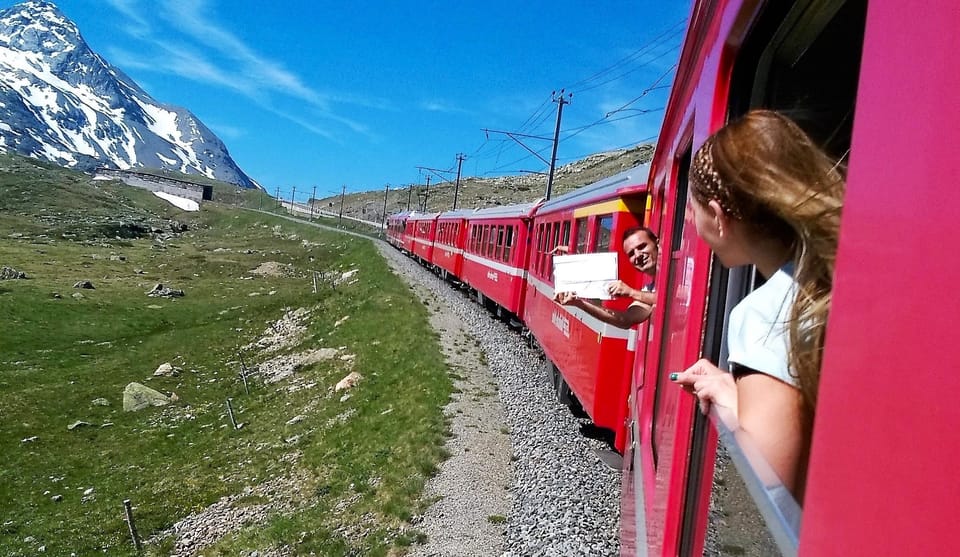
- Bernina Red Train altitude and gradients: The climb reaches about 2,253 meters with steep gradients up to 7%.
- St. Moritz in the middle of the day: About 105 minutes for walking, shopping, and views over the Engadin lakes.
- Opening windows for photos: You can open train windows to cut glare and get better shots.
- Quick, smart stops on the way: Pass-bys like Lake Como and Maloja Pass, plus a short break at Colico Piano.
- A guide who manages the flow: English commentary on the coach and on board, with punctual timing reported again and again.
Price and value: is $120 worth a Bernina train day?
At around $120 per person, this is not a “cheap and cheerful” excursion. You are paying for a full, guided round-trip day from Milan plus the star attraction: the Bernina journey between St. Moritz and Tirano (in either direction, since the schedule may be inverted).
The value is strongest if you care about doing this right instead of cobbling it together yourself. You are getting an English-speaking tour leader, air-conditioned transport, and a guided train explanation—not just a ticket and a map. In practice, that means less stress and more time looking out the window at glaciers, alpine valleys, and classic Bernina scenery.
If you’re the type who hates time pressure and long coach rides, you might feel the day is packed. But if you want an efficient one-day Alps hit, the structure is hard to beat.
You can also read our reviews of more tours and experiences in Milan
Milan to the Swiss border: the coach ride that sets the tone
Most mornings start with a meet-up near Terrazza Gallia (exact point can vary by option). Then you transfer by coach toward the Swiss Alps with an on-board guide and commentary, which helps you understand what you’re seeing before you’re staring at it all day.
You’ll spend about 1.5 hours on the first coach segment. Then comes a short pass-by of Lake Como (about 5 minutes). It is quick, but it works as a warm-up: you see how the scenery shifts as you head north, and it gets you in “mountains mode” without pretending you can fully enjoy a lake stop on a tight schedule.
After that, you stop at Colico Piano for a 15-minute break. This is one of those moments where expectations matter. It is enough to stretch, use restrooms, and grab something small, but it can get busy because tour buses all seem to time these same kinds of pauses.
My practical tip: bring a snack or water plan, even though food isn’t included. Not because you can’t buy anything on breaks, but because the quick stop format can mean waiting—especially around toilets and food lines.
Maloja Pass and the pre-train Alps moments
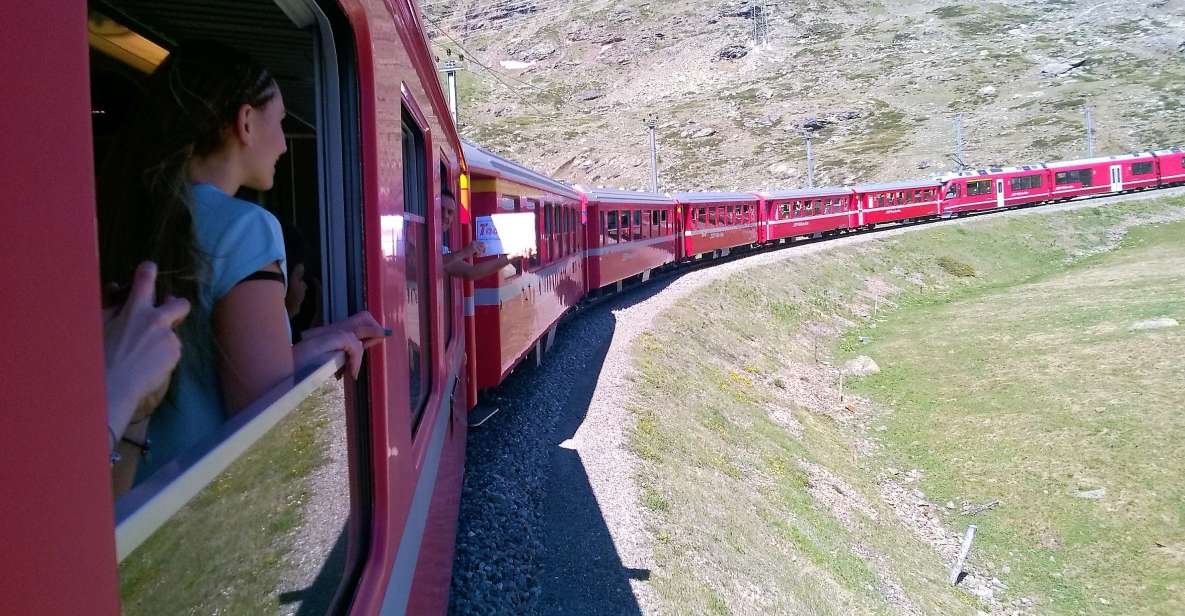
After Colico, you’re back on the coach for roughly 105 minutes of travel. Then you get another key scenic moment: a pass-by of Maloja Pass (about 10 minutes).
This isn’t a long hike stop. It’s more like a moving viewpoint—a chance to glimpse how rugged the area gets as you near the Bernina line. If you’re the kind of person who likes to spot peaks, valleys, and the “where does the train go?” moment, this is the kind of stop that pays off later.
You’ll continue toward St. Moritz, and that lead-in matters. By the time you arrive, you have already seen the terrain change, so St. Moritz doesn’t feel like it came out of nowhere.
St. Moritz at 1,856 meters: shopping, snow vibes, and a quick orientation walk
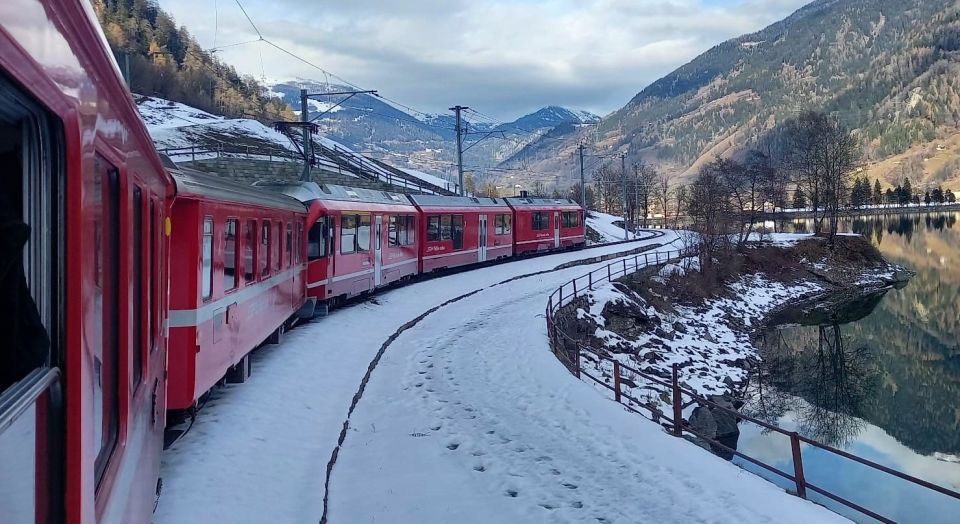
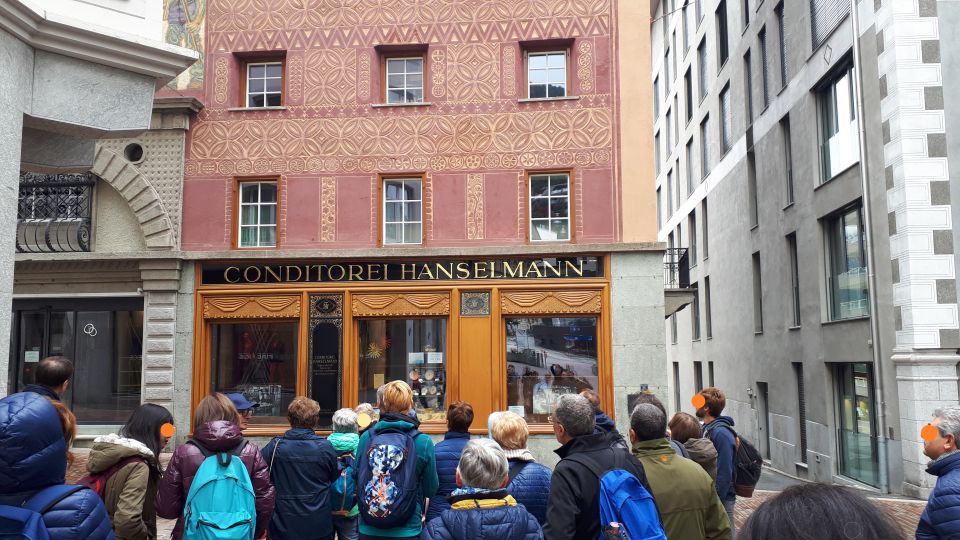
St. Moritz is the famous prize—an Alpine resort town sitting at about 1,856 meters (6,089 feet). It has a reputation for elegance and exclusivity, and you’ll see that in the shops and the general feel. It’s also a great base for mountain views over the Engadin lakes.
You get about 105 minutes here: walk time plus free time for shopping. For many people, that is enough to take a slow stroll and grab a snack or hot drink. Several guides in the tour rotation have been praised for keeping the group on schedule while still letting people explore.
One drawback to be aware of: St. Moritz is not big, but 105 minutes can feel short if you want more than a quick wander. It’s the kind of place where you might start thinking, okay, five more minutes… then suddenly it’s time to board the Bernina.
Practical move: choose one “mission” in St. Moritz—either window-shopping and people-watching, or a short walk for views—so you don’t lose time chasing every street.
The Bernina Red Train: the main event (and why second class is still smart)
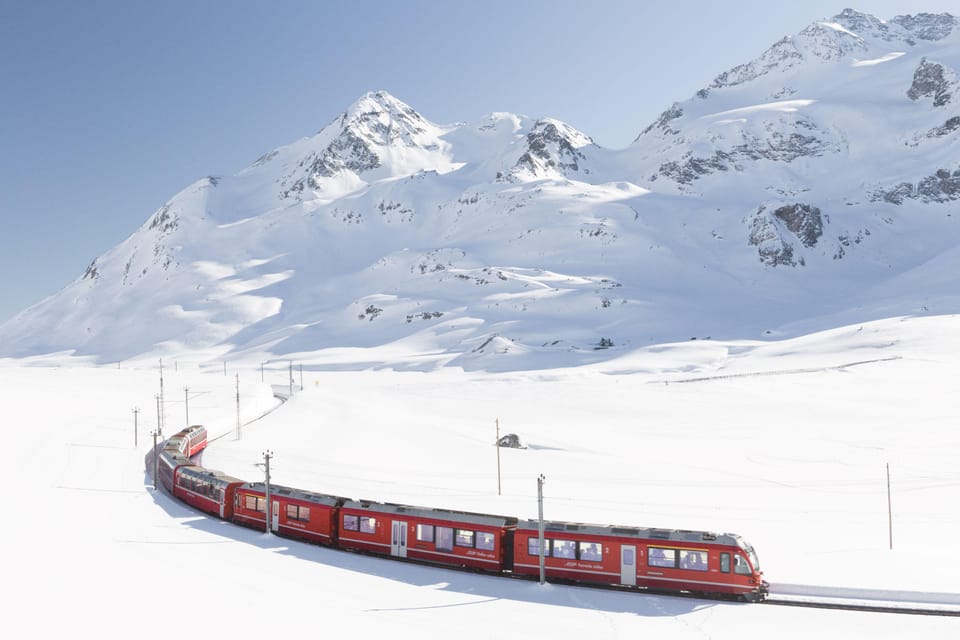
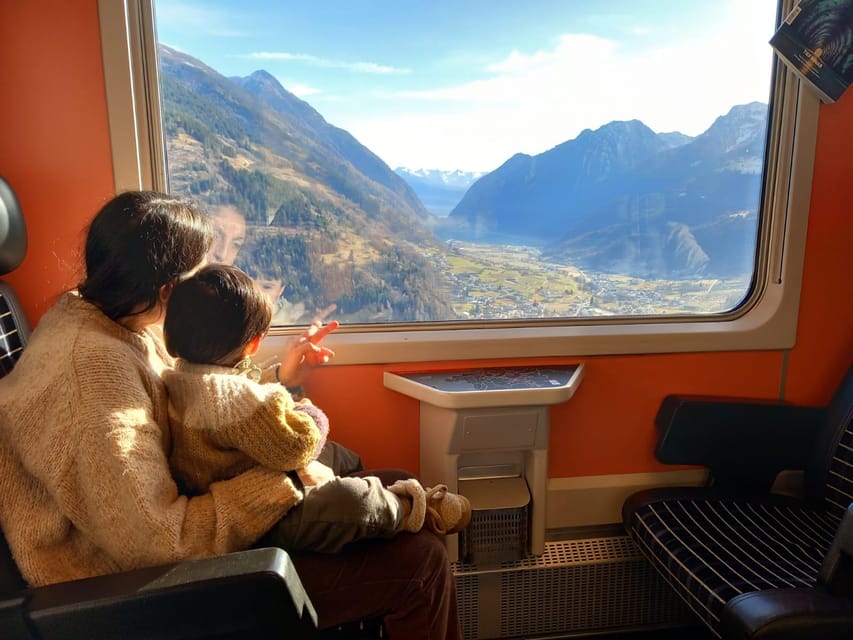
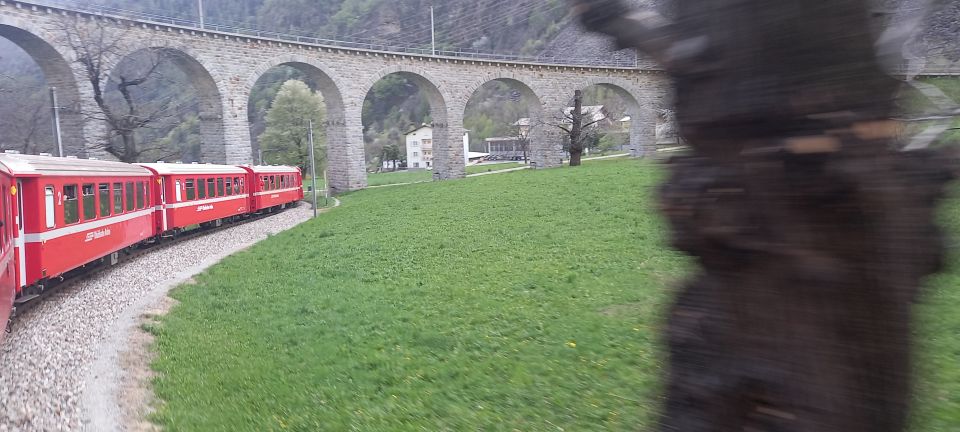
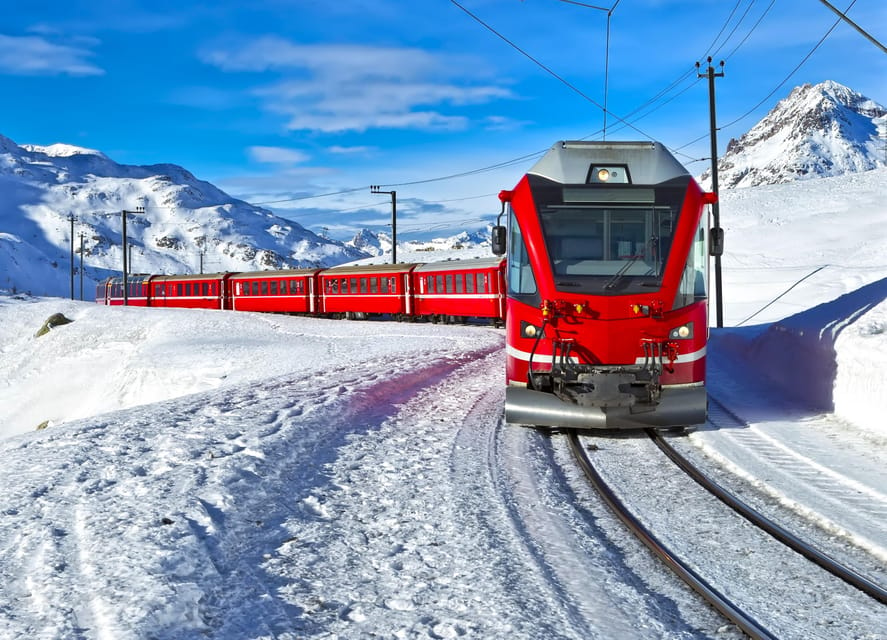
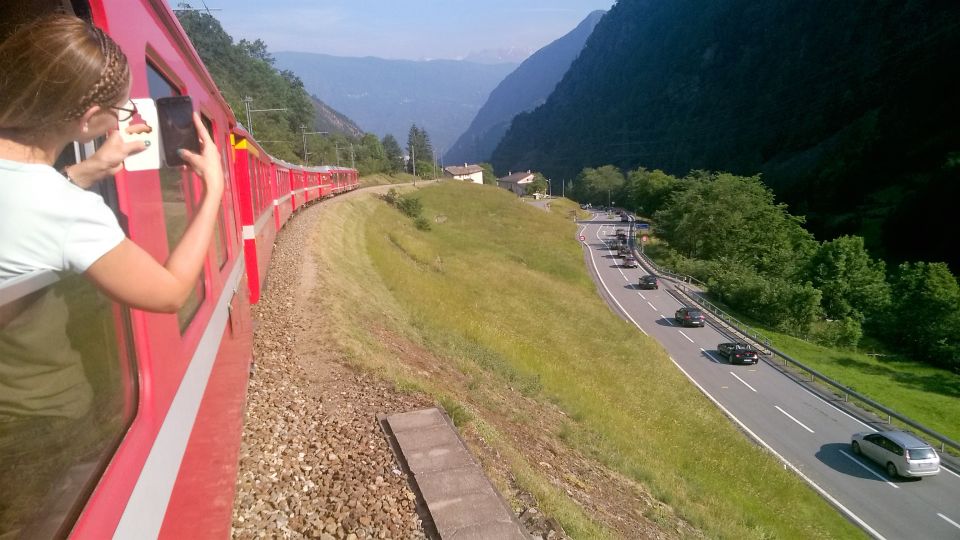
Then you switch from road to rail for the highlight: the Bernina Red Train, often described as one of the most beautiful train rides in the world. The tour includes the train ticket in second class, and the best part for photographers is that you can open the windows for less glare.
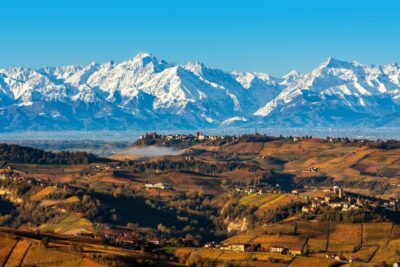
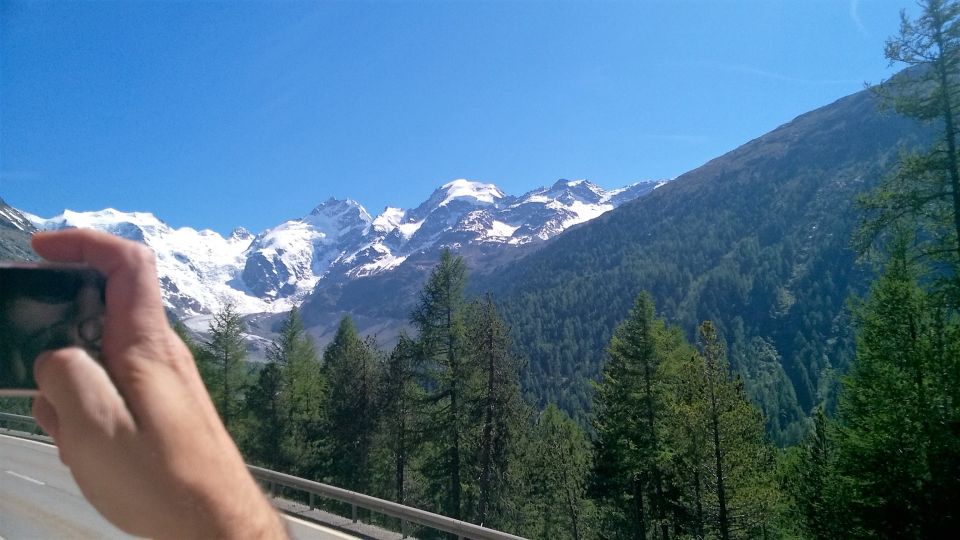
This is not a flat route. The Bernina climbs hard, with gradients up to 7%, reaching around 2,253 meters (7,392 feet). You’ll be looking at glaciers and alpine valleys, and the train route also passes major points like Ospizio Bernina (scenic pass-by) and the Morteratsch Glacier area (also pass-by).
The train segment is listed at about 2 hours 20 minutes (and the total train block in the plan is about 2.33 hours). During this time, the guide provides explanation on board, which helps you connect what you see—ice, valleys, and peaks—to the bigger story of why this line is so famous.
My honest take: you don’t need first class to get the experience. If your priority is the views and photo access, second class on this route is a very sensible way to spend your money.
Tirano break and the return to Milan by coach
After the train, you may have a short Tirano break of about 10 minutes. Think of this as a quick pause rather than a full stop. If you want a deeper look at Tirano, you’d need more time than this itinerary allows.
Then you’re back on the coach for about 2.5 hours to return to Milan. The ride can still be scenic, and the day often stretches into evening daylight depending on timing and traffic.
Some reviews note that coach comfort can vary—heat on the way back and even reports of buses without charging ports. That doesn’t ruin the trip, but it’s good to plan for it: bring a phone battery or power bank so you can keep snapping photos and storing memories without stress.
Guide and timing: what “good execution” looks like on this tour
One of the strongest themes is how smoothly the day runs. Multiple guides (like Alejandro, Maja, Monica, Chiara, and Maria Cristina) are repeatedly praised for being helpful, funny in a friendly way, and good about punctual timing. Drivers such as Enzo are also singled out for navigating efficiently.
Why this matters: the Bernina train is the anchor. If your logistics are sloppy, you’d risk missing windows, skipping viewpoints, or losing your best photo time. Here, the structure is built to keep you moving, and the guide handles the rhythm between coach transfers, quick breaks, and the train.
Real-world consideration: this is not a slow travel day. If you prefer breathing room and unplanned detours, plan to save that energy for your later Milan days or a separate Swiss stop.
What to bring so the day feels easy (not exhausting)
You’ll be on your feet during the St. Moritz walk and waiting during short break windows. The tour suggests comfortable shoes and a valid passport or ID card (with ID accepted for Schengen citizens).
For photo lovers, remember the opening windows feature. That’s great for glare-free shots, but also means you’ll want a steady grip and simple camera settings—nothing complicated if you’re also trying to watch the scenery.
Also consider:
- A light layer. Mountain weather changes quickly.
- Water and a small snack plan, since food and drinks are not included.
- A power bank for your phone, just in case the coach setup doesn’t have charging.
Who this day trip is best for
This tour fits best if you want a high-impact Alps day without planning headaches. You’ll likely enjoy it if:
- You are a fan of trains and want the Bernina specifically, not just a scenic bus loop.
- You want a guided day where someone else manages timing and explanations.
- You like short, focused stops—Lake Como pass-by, Colico break, a quick pass of Maloja Pass, then St. Moritz and the train.
It’s less ideal if you need long free time in one place, or if you strongly dislike coach travel. It’s also not suitable for wheelchair users based on the info provided.
Should you book the Bernina Train and St. Moritz day trip?
I’d book it if the Bernina Red Train is high on your wish list and you’re okay with a packed schedule. The main reason: this tour bundles the best parts—guided commentary, photo-friendly window access, and an efficient route from Milan—into one smooth day.
Hold off (or consider adding extra time elsewhere) if you know you’ll want hours, not minutes, in St. Moritz. This itinerary gives you a taste, not a long soak.
If you’re torn, decide based on your personality: if you love one big iconic experience and don’t mind the rest being tightly timed, you’re the target audience.
FAQ
How long is the day trip from Milan?
The total duration is listed as 12 hours. Exact timing depends on the schedule and traffic.
Where do I meet in Milan?
The meet point is listed as TAOTRAVEL meet point, Terrazza Gallia, though it may vary depending on the option booked.
Is the itinerary always the same direction?
No. The train itinerary can be inverted, meaning you may travel St. Moritz to Tirano or Tirano to St. Moritz depending on the day’s schedule.
How much free time do I get in St. Moritz?
You get about 105 minutes for visit, free time, shopping, and walking.
What’s included with the Bernina Train ride?
You get a second class train ticket for the scenic portion (St. Moritz to Tirano or vice versa) with opening windows for better photos, plus an explanation on board the train.
Are the buses and vehicles air-conditioned?
Yes. The itinerary includes air-conditioned vehicle transport.
Is food included?
No. Food and drinks are not included.
Is there time for breaks during the day?
Yes. There is a break at Colico Piano (about 15 minutes) and a short break in Tirano (about 10 minutes), plus the free-time window in St. Moritz.
What documents do I need to bring?
You need a current valid passport or ID card (ID card is accepted for Schengen citizens).