REVIEW · MILAN
Skip the Line: Milan – Brera Art Gallery Ticket
Book on Viator →Operated by Weekend in Italy · Bookable on Viator
Milan’s art scene starts at Brera Palace. This skip-the-line ticket gets you into the Pinacoteca di Brera faster, so you can spend your time on Raphael, Tintoretto, Caravaggio, and more, without losing it to the busiest entrance lines.
I love that the museum is a self-guided walk through 38 rooms, so you can slow down for the big names (Caravaggio and Mantegna are real standouts) or cruise through at your own pace. I also like that you’re not stuck in a rigid program: your ticket covers the core collection from the 13th to the 20th century, plus a temporary exhibition if one is running.
One drawback to plan for: you must follow the exact entrance time on your voucher, and this ticket is non-refundable. If your voucher doesn’t work smoothly at the desk, it can turn a quick museum stop into a stressful one.
In This Review
- Key takeaways before you go
- Why skip-the-line at Pinacoteca di Brera is worth it
- Brera Palace: the building you’re entering matters
- Your self-guided visit: what 2 hours feels like
- The collection you’ll actually see: 13th–20th century highlights
- Caravaggio and Mantegna: how to build your route around the stars
- Temporary exhibition: the small bonus you shouldn’t ignore
- Price, value, and what you’re really paying for
- The Brera logistics that can make or break your experience
- Who should book this, and who might skip it
- Should you book this Milan Brera skip-the-line ticket?
- FAQ
- What does the skip-the-line ticket include for Pinacoteca di Brera?
- How long is the Brera Art Gallery experience?
- Do I choose my own time to enter?
- What do I need to bring to redeem the ticket?
- Where is the Brera Art Gallery located?
- Is transportation or hotel pickup included?
- Can I cancel or change the booking?
Key takeaways before you go
- Fast-track entry helps you avoid the main entrance line at Brera
- 38-room, self-guided layout lets you choose your own pace and priorities
- Big-hitter collection covers 13th–20th century Italian and Flemish painting
- Star works to look for include Caravaggio’s Supper at Emmaus and Mantegna’s Dead Christ
- Multiple entry times are available, but your ticket assigns one you must respect
Why skip-the-line at Pinacoteca di Brera is worth it
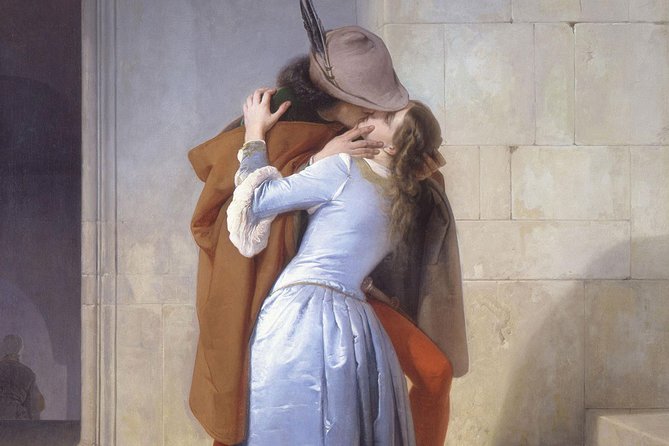
Brera is one of those Milan stops that sounds calm from afar, then hits you with real-world crowds once you’re at the doors. That’s exactly where a skip-the-line ticket pays off. You’re trading ticket-bought convenience for saved time, which matters more in museums than almost anywhere else in a city like Milan.
For this experience, the idea is simple: you show up, use your fast-track access to pass the main entrance line, and then move straight into the museum. The visit is about 2 hours on site, which is a good length for Brera’s main collection without turning it into a marathon.
The price is listed at $25.60 per person, and in my view it’s fair when you use it the way it’s intended: arrive at your assigned time, get in efficiently, and spend your paid time looking at paintings instead of waiting. If you tend to arrive late, wander around first, or forget your voucher, the value drops fast.
You can also read our reviews of more tours and experiences in Milan
Brera Palace: the building you’re entering matters
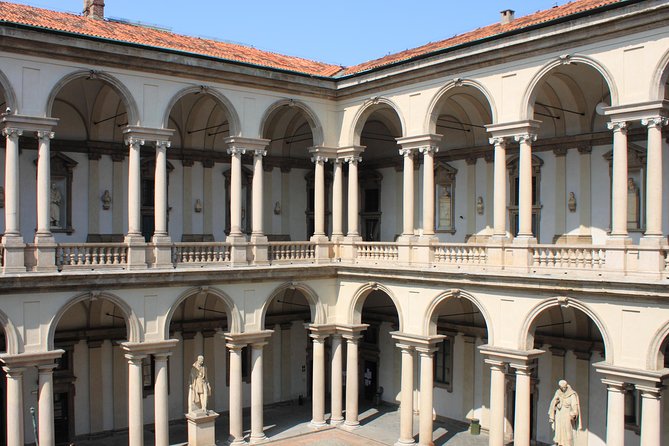
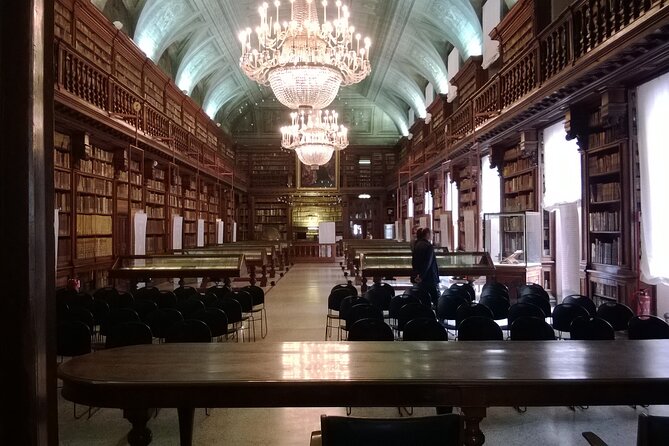
You’re not just walking into a standalone museum. The Pinacoteca di Brera is housed in Brera Palace, which has roots as a 1300s former convent connected to the Humiliati order. Today, it feels like an art campus. Along with the museum, you’ll also find other cultural institutions in the same complex—things like the Library, the Astronomic Observatory, the Botanical Garden, the Lombard Institute of Sciences and Letters, and the Fine Arts Academy.
That context helps because Brera doesn’t feel like a warehouse of paintings. The museum has 17th-century interiors, and it grew from a study collection for students connected to the Fine Arts Academy. Once you notice that, the museum’s rooms start to make more sense: you’re moving through spaces that were designed for looking and learning, not just storing art.
Another detail I find useful: many major works in the collection came to Brera during Napoleonic times, when Milan served as Italy’s capital and paintings were appropriated from churches and other galleries. Later, Brera also received works from the Louvre to represent the 17th-century Flemish school. If you like understanding why a collection looks the way it does, that background makes your visit feel more intentional.
Your self-guided visit: what 2 hours feels like
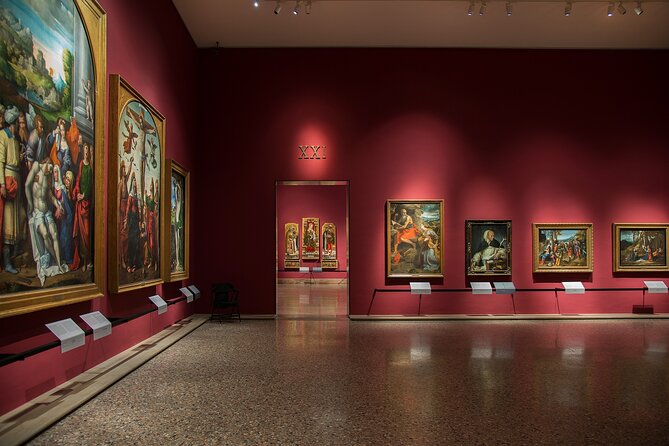
This experience is independent. There’s no set route you have to follow. You enter, then you explore the museum’s collection at your own pace, across 38 rooms.
Practically, here’s how I’d time it so you actually get value out of the ticket:
- Plan on spending the first chunk (about half your time) finding your “anchor works,” the paintings you came to see.
- Use the middle of your visit to connect styles and schools—Italian masters on one stretch, Flemish painting on another.
- Save the last part for whatever surprised you most and any smaller works you might otherwise rush past.
Because the ticket experience concludes when you leave the gallery, the smart move is to build in a buffer. Milan can be busy at walking pace, and Brera’s own entrance timing is strict.
Also, you should know this is not a guided narration tour. That’s part of the appeal for many people, but if you’re craving deep explanations scene-by-scene, you might want to bring your own approach (or plan to read labels closely).
The collection you’ll actually see: 13th–20th century highlights
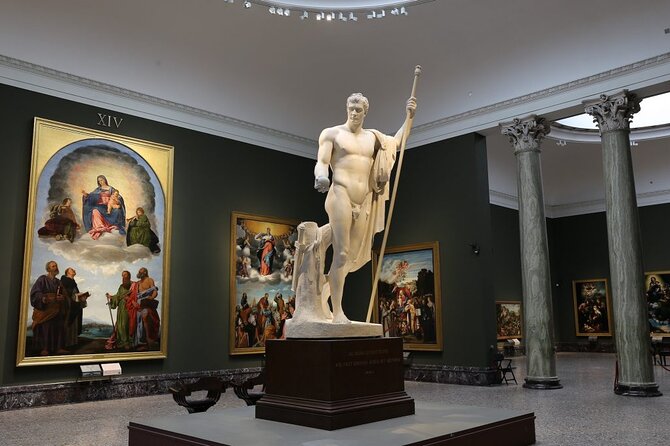
Brera’s collection range is one of its biggest strengths: you’re looking at art from the 13th to the 20th century. That means you’re not just doing a single “Renaissance hour.” You’ll see how tastes and techniques change over time, even within one building.
On the Italian painting side, you’ll be in the same museum where you can spot names like:
- Titian
- Tintoretto
- Raphael
- Andrea Mantegna
- Giovanni Bellini
- Modigliani
On the Flemish side, Brera is especially strong for seeing how northern European painting contrasts with Italian styles. Works tied to artists such as:
- Rubens
- Jacob Jordaens
- Van Dyck
- Rembrandt
appear because Brera received selections linked to the Louvre for the 17th-century Flemish school.
If you enjoy “comparison viewing”—standing in front of two works and feeling the difference in light, brushwork, or mood—Brera is built for that. You don’t need a formal tour script to get meaning from it.
Caravaggio and Mantegna: how to build your route around the stars
Two works here are famous enough that people plan their whole visit around them, and with good reason:
Caravaggio’s Supper at Emmaus
This painting is known for its dramatic lighting and intense mood. In a museum filled with masterpieces, it has that pull where your eyes keep returning, even if you start drifting through other rooms. I’d treat it as your first anchor if your time is tight.
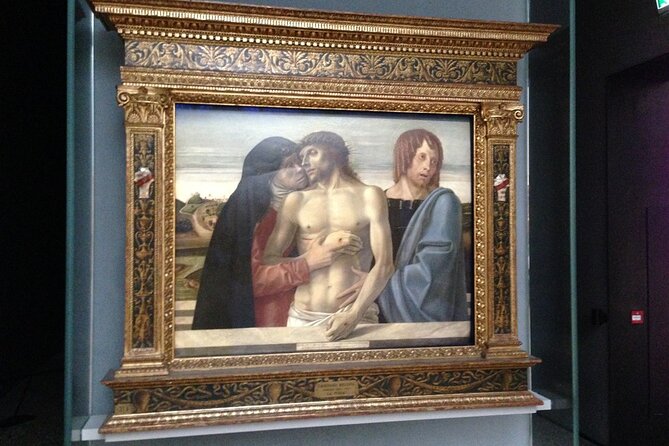
Mantegna’s Dead Christ and Three Mourners
Mantegna’s work tends to hit you with emotional weight and a clear, sharp visual structure. If Caravaggio is the intensity, Mantegna is the gravity. These are paintings that work best when you give yourself a moment of stillness rather than trying to “get it done.”
Beyond those, look out for:
- Pietà by Giovanni Bellini
- Enfant Gras by Modigliani (a nice later-period contrast that stops the visit from feeling stuck in one century)
Even if you’re not a hardcore art person, it’s hard to leave Brera without noticing at least one of these as a true emotional moment.
You can also read our reviews of more museum experiences in Milan


Temporary exhibition: the small bonus you shouldn’t ignore
Your ticket includes entry to a temporary exhibition in addition to the permanent collection. That’s not always a major headline in museums, but it can be a smart way to make your time feel fuller—especially if you finish the core highlights a bit early.
The key is to not treat it like a chore. If you’re already pressed for time, use it as a bonus circuit after your main paintings. If you’re enjoying yourself, add it as a mid-visit reset.
Price, value, and what you’re really paying for
Let’s talk money like grown-ups. The ticket cost is $25.60 per person, and the listed booking pattern is about 13 days in advance on average. You’re paying for:
1) Guaranteed skip-the-line access (time saved)
2) A 2-hour window of self-guided museum time
3) Admission to the permanent collection plus a temporary exhibition
If your goal is to see Brera’s greatest hits without losing half your day to a queue, that’s a direct value match. A museum ticket that speeds you past a line often feels more useful than a ticket that gives you a “perk” you can easily skip.
If your goal is purely to wander and you’re flexible about timing, you might decide you can save money with standard entry. But Brera can be a place where standard entry feels like a tax on your schedule.
The Brera logistics that can make or break your experience
This is where you should be a bit street-smart.
Your ticket assigns an exact entrance time, and you have to respect it. The time can be any time during opening hours, but once it’s on your voucher, it’s the time you should plan for.
You’ll also need to be ready with the required Weekend in Italy confirmation voucher. The instructions specify that you must print it and present it at the moment of the visit.
Two more practical notes:
- The museum is described as near public transportation, so you don’t need a car plan.
- The experience doesn’t include food or drinks, so if you’re staying a while in the Brera area, plan a snack break elsewhere.
And a note worth taking seriously: the overall rating for this booking experience is 3.1 out of 5 based on 23 reviews. The positive comments focus on smooth organization and skipping lines. Some negative comments focus on problems like tickets or vouchers not arriving, unclear instructions, or the museum not accepting the supplier reservation. I can’t predict which scenario you’ll get—but I do recommend you treat voucher readiness as your main job before you leave your hotel.
Who should book this, and who might skip it
I’d recommend this ticket if you:
- Want to see major Italian and Flemish works without waiting in an entrance line
- Prefer self-paced museum time over a group tour
- Are planning a focused Milan day and need something that fits into about 2 hours
- Like the idea of pairing Brera’s core collection with other nearby cultural stops
I’d think twice if:
- You’re not good with strict timing and printed vouchers
- You’re hoping for a guided narrative experience (this is independent)
- You’re showing up with last-minute tech issues and no printed proof
If you’re the kind of traveler who enjoys planning and then letting the art do the talking, you’ll likely get your money’s worth.
Should you book this Milan Brera skip-the-line ticket?
If you want the practical version of Brera—faster entry, independent exploration, and a shot at major works like Caravaggio’s Supper at Emmaus and Mantegna’s Dead Christ—then yes, this ticket is a solid choice. The price makes sense when the skip-the-line benefit actually saves you time, and the museum’s scale (38 rooms) means two focused hours can feel satisfying.
Just don’t treat the voucher instructions like “nice to know.” Make sure your assigned entrance time lines up with your day, print the confirmation, and build in a little buffer so you’re not rushing at the doors. If you do that, this becomes one of the easier, more time-efficient museum stops in Milan.
FAQ
What does the skip-the-line ticket include for Pinacoteca di Brera?
It’s a skip-the-line admission ticket to the Brera Art Gallery (Pinacoteca di Brera), plus entry to a temporary exhibition.
How long is the Brera Art Gallery experience?
The duration is listed as about 2 hours.
Do I choose my own time to enter?
No. You’ll be assigned an exact entrance time on your voucher, and you must respect that time within the museum’s opening hours.
What do I need to bring to redeem the ticket?
You must print the Weekend in Italy confirmation voucher and present it at the time of your visit.
Where is the Brera Art Gallery located?
It’s located in Brera Palace (Pinacoteca di Brera) in Milan, Italy.
Is transportation or hotel pickup included?
No. Food and drinks, transportation, and hotel pickup/drop-off are not included.
Can I cancel or change the booking?
This experience is non-refundable and cannot be changed for any reason.