REVIEW · MILAN
Miles and smiles /// Milan’s ride
Book on Viator →Operated by Allride - Milan Bike Tour · Bookable on Viator
Pedal power beats figuring out Milan alone. This small-group Milan bike tour strings together modern landmarks and classic streets on a brand-new Rossignol bike, usually led by guides like Giacomo or Stefano, so you’re not just moving from stop to stop. You’ll get a cycle helmet and complimentary bottled water, which sounds basic until you’re riding through a warm afternoon.
I like how the route is designed to help you see a lot without making it feel like a race. The stop mix includes Vertical Forest, Brera, Sforzesco Castle area, the Arch of Peace, the Navigli/Darsena zone, and the Duomo core—plus plenty of in-between streets for context. The main drawback to plan for: you do need comfort biking in an urban environment, and the tour expects at least moderate fitness (even though Milan is bike-friendly and relatively flat).
In This Review
- Key things that make this ride worth your time
- Why a Milan bike tour like this works fast
- Starting at Via della Moscova: easy to reach, quick to get rolling
- Moscova to Gae Aulenti: modern Milan sets the tone
- Brera and the city center flow: classic streets with a sense of order
- Sforzesco, Sempione Park, and the Arch of Peace: big sights in manageable time
- Cadorna to Sant’Ambrogio: Milan beyond the main postcard loop
- Darsena and the Navigli area: canals, energy, and a different Milan mood
- San Lorenzo columns and the Duomo approach: where your route earns its payoff
- Repubblica, Central Station, and Pirellone: finishing with perspective
- Price and value: $59.13 feels fair for what’s included
- What the ride is like day to day: pace, safety, and guide style
- Comfort level check: who this suits best
- Choosing a time slot: summer heat and timing matter
- Should you book this Milan bike tour?
- FAQ
- How long is the Miles and Smiles Milan bike tour?
- What does the tour cost?
- Is the tour in English?
- What’s the group size limit?
- Do I get a bike helmet and water?
- What bike will you use?
- Where does the tour start and end?
- Do I need to buy tickets to see the sights?
- What fitness level do I need?
- What if the weather is bad or I need to cancel?
Key things that make this ride worth your time
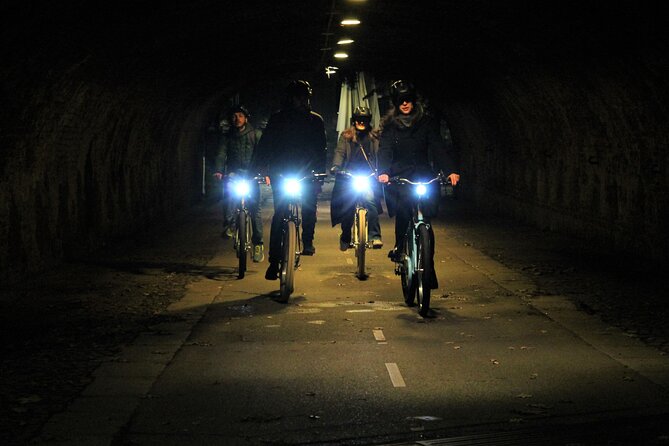
- A tight max group size (8 riders) keeps the pace friendly and the guide’s attention focused.
- New Rossignol bikes plus a helmet and bottled water mean you show up and go.
- A route that links neighborhoods: Moscova → Gae Aulenti/Vertical Forest → Brera → Sforzesco area → Sempione → Navigli/Darsena → Duomo zone.
- Stops are built for photos and orientation, so you understand how the city fits together.
- Urban-cycling focus, with safety checks and route choices that work even on crowded streets.
- English-language guiding, with multi-lingual operation noted depending on the day.
Why a Milan bike tour like this works fast
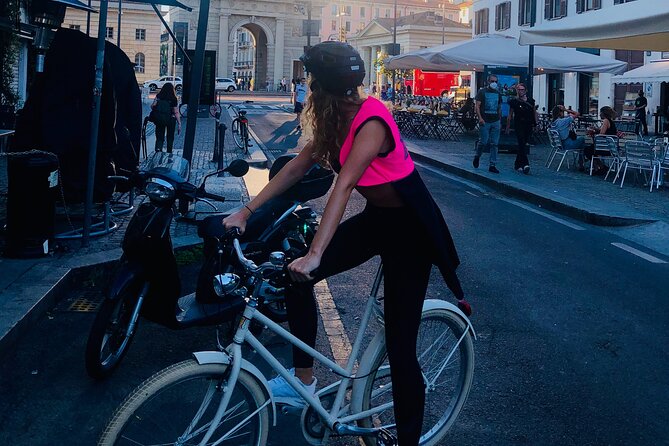
Milan can feel like a puzzle when you first arrive. The streets are busy, attractions are scattered, and you can burn time just commuting between them. This kind of ride solves that by wrapping a logical loop of sights into a few hours on two wheels.
I also like that the format is designed for real city movement. You’re not stuck in one view corridor, and you’re not limited to a walking pace. Instead, you cover long distances efficiently while still getting frequent chances to pause, ask questions, and take in details.
The “small group” part matters more than people expect. With a cap of eight riders, it’s easier for the guide to manage safety, adjust pace, and handle different comfort levels without the whole group turning into a traffic jam.
You can also read our reviews of more tours and experiences in Milan.
Starting at Via della Moscova: easy to reach, quick to get rolling
The meeting point is Via della Moscova, 26, 20121 Milano MI, Italy, and the tour ends back there. It’s marked as near public transportation, which helps a lot if you’re pairing this with other things the same day.
One thing to watch: some guests found the start confusing. So do yourself a favor—arrive a few minutes early and use navigation to pinpoint the exact address rather than just searching the general area. If you’re unsure, ask a transit worker or nearby shop employee for directions to the specific street number.
Comfort tip: wear shoes you can walk in comfortably. Even though you’re cycling, you’ll likely be stopping often and stepping on and off the bike route.
Moscova to Gae Aulenti: modern Milan sets the tone
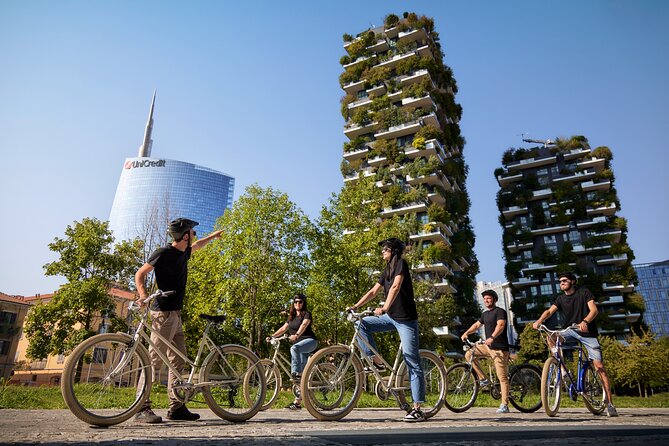
You start from the Moscova area and head toward Piazza Gae Aulenti. This is a smart opening choice. It gives you a modern “entering Milan” moment right away, before you slide into older districts.
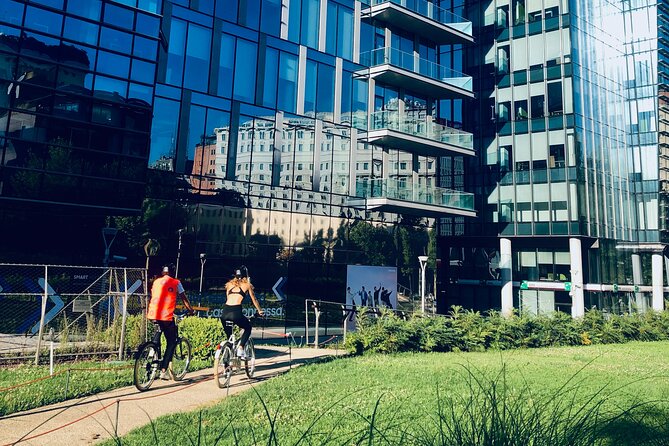
From there, the route reaches Bosco Verticale, also called the Vertical Forest. On bike, it’s one of those sights you can’t really appreciate fully from a quick street-side glance—you get a better sense of scale and placement. It’s also a good first stop because it wakes up your visual attention early, so the rest of the ride feels like it’s building a story.
In practical terms, this section is also a warm-up. You settle into the bike rhythm, the group format, and the guide’s safety talk before heading deeper into busier streets.
Brera and the city center flow: classic streets with a sense of order
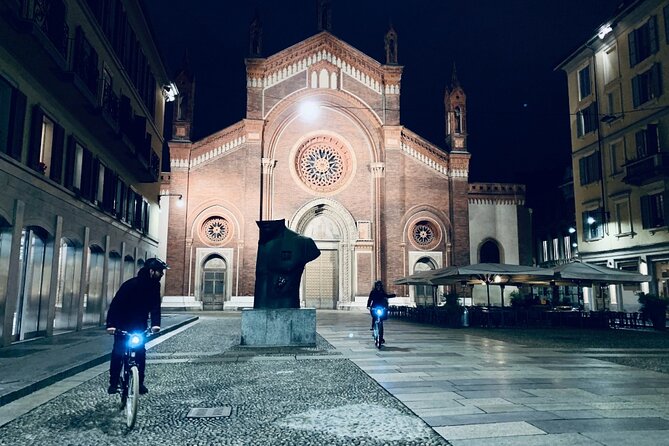
Next comes Brera, which is a big reason this tour feels useful. Brera isn’t just “one pretty place”—it’s a neighborhood vibe, and it helps you understand how Milan clusters art, shopping streets, and historic quarters together.
From there, you move through central plazas such as Piazza dei Mercanti and Piazza della Borsa. These stops are especially valuable because they give you anchors. After the ride, when you’re walking on your own, you can locate these areas in your head instead of constantly checking your map.
Expect the guide to connect the dots between what you see and how the city developed. The ride is timed so you’re not just looking at landmarks; you’re building an internal map.
Small drawback to consider: city-center streets can feel tight and busy. If you’re not used to riding in traffic, you’ll want to keep a calm focus and avoid overthinking your balance.
Sforzesco, Sempione Park, and the Arch of Peace: big sights in manageable time
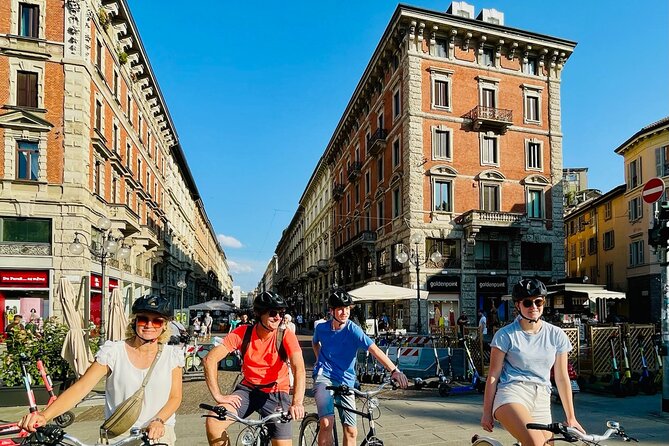
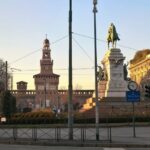
As the route reaches the Sforzesco Castle area, you get one of Milan’s most recognizable “gravity points.” The city slows down visually here, and it’s a nice shift after denser streets.
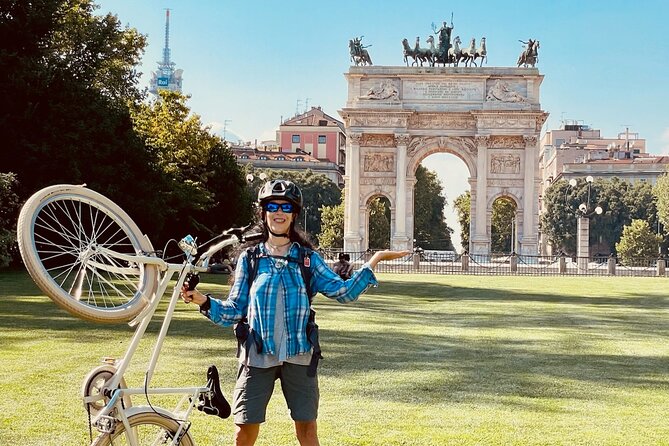
The ride continues toward Sempione Park and the Arch of Peace. Doing this by bike is a time-saver, because you can cover the distance between attractions without arranging separate transport. It also helps you see how the park functions as a break in the urban grid.
This is a section where the guide’s pacing style really matters. Multiple guides are described as attentive and accommodating, especially on hot days. That means you should expect the ride to include safety checks and sensible stop spacing rather than a constant pedaling sprint.
Cadorna to Sant’Ambrogio: Milan beyond the main postcard loop
From the center arc, the route continues through areas including Cadorna and Sant’Ambrogio. These stops are a good reminder that Milan isn’t only Duomo-and-shopping. You get a taste of how the city feels in different quarters.
If you enjoy architecture and atmosphere, this stretch is likely to please. It’s also useful if you want to plan dinner, nightlife, or a later walking detour—because you’ll start to notice which parts of Milan feel livelier, calmer, or more local.
This part of the route also helps you understand Milan’s layout. When you later walk from one attraction to the next on your own, you’ll recognize the “shape” of the city instead of treating it like unrelated dots.
Darsena and the Navigli area: canals, energy, and a different Milan mood
One of the highlights built into the route is Darsena, including the area known for Navigli. This is where Milan’s mood shifts. The city feels more social and more “hang out” than strictly “see sights.”
Cycling here is a smart move because the Navigli/Darsena zone can be time-consuming to access on foot if you’re trying to squeeze it between major landmarks. On bikes, you can approach the area efficiently and still spend time looking around when you arrive.
I like that this stop is not just a drive-by. You get a chance to process what you’re seeing, which helps you decide later whether you want to come back for an evening stroll, a drink, or just more photos.
San Lorenzo columns and the Duomo approach: where your route earns its payoff
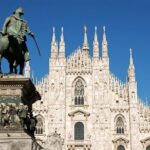
San Lorenzo columns are on the route, and then the ride reaches Duomo. That Duomo finish is the reason many people book a bike tour in the first place: you want the wow factor, and you want the context around it.
The Duomo zone sequence includes Piazza San Fedele and La Scala, plus streets like via Manzoni, then Palestro, Repubblica, and more. In other words, you’re getting a guided connection between Milan’s major icons: the religious landmark, the opera theater, and the central thoroughfares.
On bikes, this segment becomes more than a sightseeing checklist. You can understand how the major sites relate to one another in real distance and real street geometry. That’s what makes the tour practical for the rest of your trip.
Repubblica, Central Station, and Pirellone: finishing with perspective
The final stretch includes Repubblica, Central Station, and Pirellone before returning to the meeting point. This is an underrated way to end.
Often, visitors focus only on the “pretty center.” Here, you also get to see parts of Milan that feel more like the functioning city. Central Station and Pirellone give you a different kind of Milan texture—less postcard, more lived-in.
It’s also a good mental reset. After cycling through the biggest sights, you finish by seeing how those sights connect into the wider city. That makes it easier to plan what you do next day without feeling lost.
Price and value: $59.13 feels fair for what’s included
The price is $59.13 per person for about 3 to 4 hours. That can sound like a “nice-to-have,” but the value is actually pretty clear when you break it down.
You’re not just paying for a guide. You’re also getting:
- a brand new Rossignol bike
- a provided cycle helmet
- complimentary bottled water
- a structured route that packs multiple major areas into one morning/afternoon
If you’ve ever tried to rent a bike in a new city, you know how much time you lose to paperwork, pick-up logistics, and figuring out where you can actually ride safely. This tour removes most of the friction, and the small-group format keeps it more personal than a larger bus-and-zoom experience.
And many sights are handled as free admissions in the tour’s design (no extra ticketing pressure during the ride). That helps you keep the budget predictable.
What the ride is like day to day: pace, safety, and guide style
From the way the experience is described, the ride is friendly but not for people who want a totally effortless commute. This is cycling through real streets—some with people and cars, some through parks, some through shopping and tourist areas.
Good news: Milan is often described as relatively flat, and that helps. Even better: guides are described as attentive to safety, patient with latecomers, and flexible with timing. One guide is praised for keeping the ride moving while still making time to talk, and another is credited with pausing for water breaks on hot days.
What you should take from that: you can expect check-ins. The best guides in this format manage the ride so nobody gets left behind and everyone stays comfortable.
Comfort level check: who this suits best
This tour is best for you if:
- you can handle biking in an urban setting
- you’re okay with a route that mixes parks and city streets
- you want a fast overview that helps you plan the rest of your Milan days
You might want to think twice if:
- you’re uneasy around bikes sharing road space
- you get tired quickly and dislike sustained activity (even if stops are frequent)
- you’re looking for a purely walking-based, low-traffic experience
Parents should note that children must be accompanied by an adult. If you’re bringing kids, you’ll want to be extra sure the child is comfortable biking before signing up.
Choosing a time slot: summer heat and timing matter
The ride is offered for set dates and times, and it runs on good weather. In warmer months, heat becomes the main factor for comfort. The guidance on water breaks suggests the operator is thinking about real conditions rather than pretending it’s always cool.
My practical suggestion: pick a time earlier in the day if you can, or a slot when the light helps you enjoy plazas and architecture without feeling cooked. Milan’s streets are busy, and your enjoyment will depend on both weather and your comfort level with riding.
Should you book this Milan bike tour?
If your goal is to get your bearings fast and see major Milan areas in one coordinated ride, this is an easy yes. The small group size, the brand new Rossignol bikes, and the included helmet and water remove friction so you can focus on the city.
Book it especially if you’re visiting for the first time and want a route that moves beyond just Duomo and La Scala. The way the ride links places like Vertical Forest, Brera, Sforzesco/Sempione, and the Navigli/Darsena zone makes it more than a highlight loop—it helps you understand how the city hangs together.
Skip it only if you’re truly not comfortable biking in traffic. This tour is fun, efficient, and guided—but it still expects you to ride a bike through a real city.
FAQ
How long is the Miles and Smiles Milan bike tour?
It runs for about 3 to 4 hours.
What does the tour cost?
The price is $59.13 per person.
Is the tour in English?
Yes, it is offered in English.
What’s the group size limit?
The tour has a small cap, with a maximum of 8 travelers.
Do I get a bike helmet and water?
Yes. You’ll receive a provided cycle helmet and complimentary bottled water.
What bike will you use?
A brand new Rossignoli bike is used for the tour.
Where does the tour start and end?
It starts at Via della Moscova, 26, 20121 Milano MI, Italy and ends back at the same meeting point.
Do I need to buy tickets to see the sights?
The tour notes that admission ticket costs are free.
What fitness level do I need?
Moderate physical fitness is recommended, and you should be comfortable riding in an urban environment.
What if the weather is bad or I need to cancel?
The experience requires good weather. If it’s canceled due to poor weather, you’ll be offered a different date or a full refund. Cancellation is free up to 24 hours in advance for a full refund.