REVIEW · MILAN
Entrance to the Leonardo da Vinci Science and Technology Museum
Book on Viator →Operated by National Museum of Science and Technology Leonardo da Vinci · Bookable on Viator
Da Vinci meets real-world machines.
This entry ticket takes you into the National Museum of Science and Technology Leonardo da Vinci in Milan, set inside a former 16th-century Olivetan monastery cloister area, where Leonardo’s engineering ideas sit side-by-side with modern science. I like the way the museum links past and future through huge objects and hands-on-style displays. One drawback to know up front: if you expect only Leonardo artworks and models, you may feel the museum is broader than you hoped.
What I especially liked was how much of the experience is visual and active. I had a strong impression that digital installations and videos help explain the science without drowning you in text. My practical note: the museum is big, so going in with a light plan (and not enough time) is the fastest way to miss the parts you actually came for.
In This Review
- Key Highlights Before You Go
- Entering the Leonardo da Vinci Science & Technology Museum in Milan
- The 16th-Century Monastery Setting: Why the Place Feels Different
- What You’ll Actually See: The Main Stop Inside the Museum
- Leonardo da Vinci galleries: what they’re good at
- The rest of the museum: science topics that broaden the visit
- Standout objects you should look for
- Timing Inside: How Long You Need (and When to Arrive Early)
- The late-slot caution
- Opening hours note
- Finding Your Way: Using Floor Arrows and the Second Floor Advantage
- Interactive & Video-Based Learning: What Works Best
- Food and Breaks: Don’t Assume a Full Restaurant Stop
- Who This Museum Entrance Ticket Fits Best
- Best for tech, science, and engineering curiosity
- Great for older kids and teens
- A mixed experience for Leonardo-only fans
- Price and Value: Is $15.69 Worth It?
- Quick Etiquette & Practical Tips to Make It Go Smooth
- Should You Book This Leonardo da Vinci Museum Entrance Ticket?
- FAQ
- Where do I pick up my ticket?
- How long should I plan to visit?
- Is the museum experience available in English?
- What does the ticket include?
- What are the opening hours for this ticket season?
- Is this ticket mainly about Leonardo da Vinci?
- Are there any timing tips if I want to avoid being rushed?
- Is the museum good for children?
- Is there food available on site?
- Can I cancel for a refund?
Key Highlights Before You Go
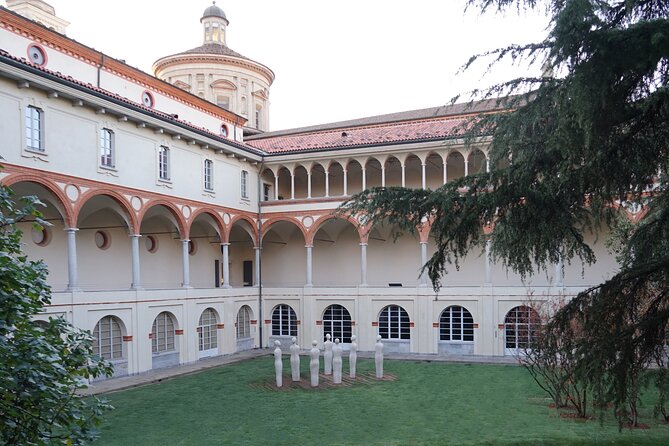
- Timeless building setting: visit in a 16th-century Olivetan monastery setting in Milan.
- Leonardo-focused gallery area: one wing emphasizes his work with historical models, art, volumes, and installations.
- Huge science and tech exhibits: from astronomy and space to transport, energy, and physics.
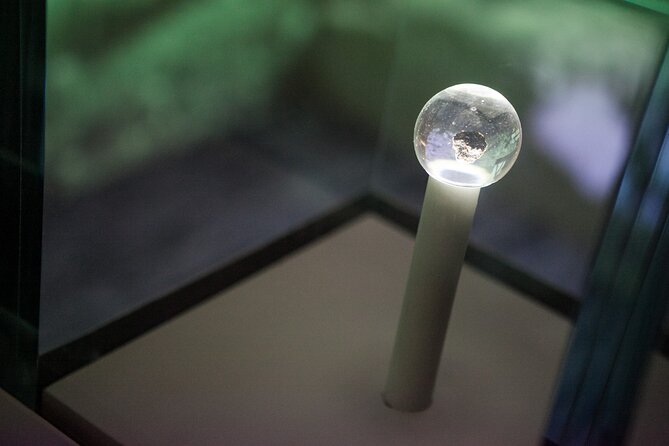
- Famous objects on display: including the only fragment of the Moon in Italy and major vehicles and vessels.
- A visitor flow you can follow: floor arrows help you keep direction and avoid getting lost.
Entering the Leonardo da Vinci Science & Technology Museum in Milan
This is an admission ticket to the National Museum of Science and Technology Leonardo da Vinci, not a guided tour. That matters, because your experience becomes about how you choose to move through the museum once you’re inside.
The ticket redemption point is at the museum itself: Leonardo da Vinci Museum of Science and Technology, Via San Vittore, 21, 20123 Milano MI. If you like starting right away, this setup is a win: you’re not hunting for a separate meeting spot across town. And the museum is listed as near public transportation, so you can build a longer Milan day without needing a car.
Also, the ticket is offered in English, which is useful if you want explanations without switching languages. Confirmation is received at booking time, so you should be set as soon as you arrive at the redemption point.
You can also read our reviews of more museum experiences in Milan



The 16th-Century Monastery Setting: Why the Place Feels Different
One reason this museum gets repeat visits is the setting. The museum isn’t just “a building with exhibits.” It’s housed in the cloisters of a 16th-century Olivetan monastery. That kind of architecture changes the mood.
You’ll notice the space feels structured and old-world, while the exhibits are technical, modern, and sometimes extremely physical (big machines, vehicles, and scale models). That contrast is a big part of the story the museum is trying to tell: people building, testing, observing, and then passing ideas forward.
If you like travel days where the setting supports the theme, you’ll appreciate this one.
What You’ll Actually See: The Main Stop Inside the Museum
There’s one “main” visit zone for your ticket: the museum itself, with a clear emphasis on Leonardo da Vinci plus a wide range of science and technology topics.
Leonardo da Vinci galleries: what they’re good at
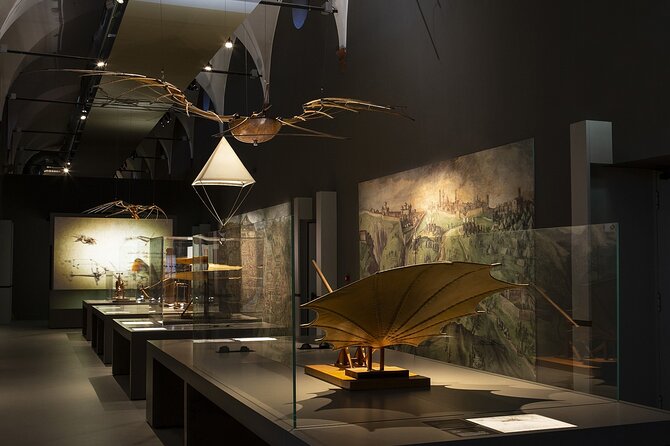
The museum highlights Leonardo through a scenographic journey that features about 170 historical models, along with works of art, ancient volumes, and installations. The goal is to show Leonardo as an engineer and humanist, plus an investigator of nature.
Practically, this means you’re not just looking at one painting or one famous sketch. You’re walking through a broader set of concepts: observation, design, and invention. Expect to spend time reading and looking closely, because the displays are meant to help you connect the ideas across multiple engineering categories.
Some visitors say the Leonardo area is smaller than they expected, and others want even more of his art and manuscripts. So your best strategy is simple: treat Leonardo as the main thread, but don’t be surprised if the museum pulls you into the larger “how science grew” story.
The rest of the museum: science topics that broaden the visit
After the Leonardo-focused area, you’ll find exhibitions and digital installations/labs covering major themes such as:
- Astronomy and space
- Energy and materials
- Transport
- Nutrition
- Genetics and biotechnology
- Particle physics
This is a key point for value. Even if you come primarily for Leonardo, the rest of the museum gives you a reason to linger. If the Leonardo galleries light a spark, the science floors can turn that spark into a “wow, science is everywhere” feeling.






Standout objects you should look for
The museum is known for showing off serious technical artifacts. If you like big-ticket displays, keep an eye out for these named examples:
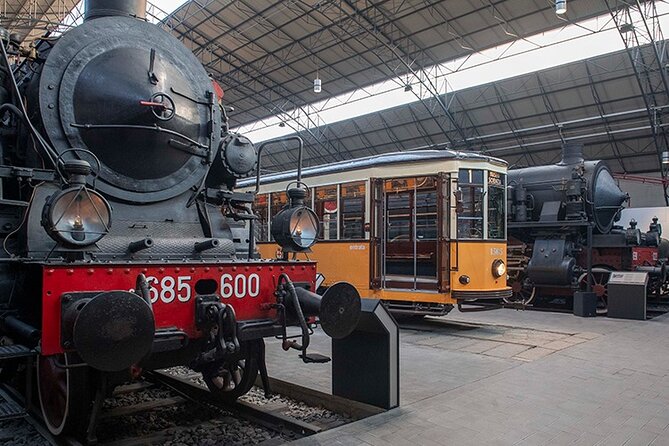
- Steam trains
- AC72 Luna Rossa catamaran
- Schooner brigantine Ebe
- Transatlantic Conte Biancamano
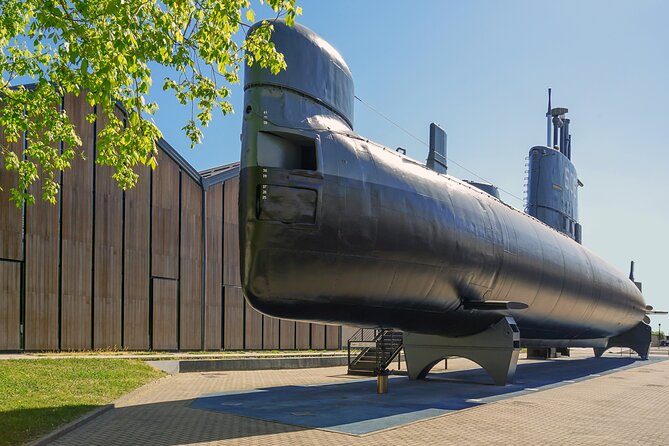
- Submarine Toti
- Launcher Vega
- And the only fragment of the Moon in Italy
Even if you’re not a specialist, that list helps you understand the museum’s personality: it’s not shy about scale or engineering ambition.
Timing Inside: How Long You Need (and When to Arrive Early)
This ticket is typically treated as a 1 to 3 hours visit window, but you’ll get better results if you plan longer. Several experiences put the visit closer to 2.5 to 3 hours, and others recommend 3 to 4 hours to see things properly.
Here’s the practical logic: the museum is large, and the Leonardo galleries aren’t the only draw. If you cut your time too aggressively, you’ll end up racing through the rooms that actually interest you.
The late-slot caution
One specific tip matters: don’t assume a late entry time will feel relaxed. There’s advice not to schedule the 4pm slot, because people reported being asked to leave right around late afternoon when the day’s pace tightened.
The safest approach is to arrive earlier in the day, so you can browse calmly without feeling rushed by closing-time pressure.
Opening hours note
For the listed period, the museum is shown as open Tuesday–Friday 10:00 AM–3:30 PM. That posted window is the number you should trust when planning your schedule. If your day in Milan depends on a longer afternoon, it’s worth checking the day-of timing before you rely on later hours.
Finding Your Way: Using Floor Arrows and the Second Floor Advantage
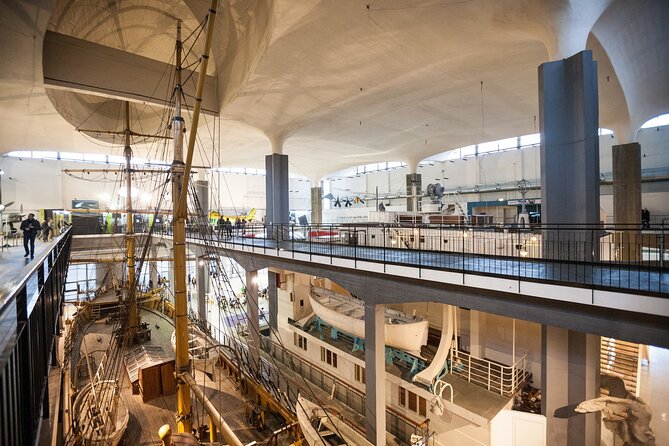
Inside, the museum can feel like several mini-worlds under one roof. That’s where the museum’s internal navigation helps. Floor arrows are designed to guide your movement and create a smoother visitor flow.
This is not a small detail. When you’re in a large science museum, a bad plan turns into wasted time. With the arrows, you can keep your direction and spend your energy on learning.
Also, pay attention to where the “good stuff” lives. One review pointed out that the second floor holds many of the interesting exhibits, so if you only skim it, you risk missing a lot of the value.
Interactive & Video-Based Learning: What Works Best
This museum uses more than static cases. You’ll run into:
- Videos
- Interactive-style elements
- Digital installations
This approach is great for families and for people who learn by seeing something in motion. It also helps you when your interests are broad. You can watch, press buttons (where available), and connect themes across different science areas.
There’s also a balanced caution. Some visitors felt that the Leonardo section wasn’t as interactive as they hoped—especially for younger kids. If your family includes kids under 10, you’ll likely want to focus on the most visual areas and choose the time to avoid long stretches of reading.
Food and Breaks: Don’t Assume a Full Restaurant Stop
Plan for a break, but don’t count on an easy sit-down meal on site. One review mentioned that there wasn’t a restaurant available at the time of their visit, with only vending-machine options due to renovation.
So: carry water, and if food is important to you, think about grabbing something nearby before you enter. That way you don’t lose half your museum time to a food search.
Who This Museum Entrance Ticket Fits Best
I’d book this ticket if you fall into one of these groups:
Best for tech, science, and engineering curiosity
If you like mechanisms, physics, space, and transportation, you’re in the right place. The museum covers astronomy, energy, genetics/biotech, and particle physics—so you can bounce between topics even if Leonardo isn’t the only obsession you have.
Great for older kids and teens
Visitors noted it works well for ages 12+, especially for kids who want to build understanding instead of just chasing “kid-only” attractions. If your children are into LEGO engineering, rockets, or how things work, this is a strong match.
A mixed experience for Leonardo-only fans
If your goal is strictly Leonardo da Vinci—his most famous drawings, paintings, and a heavily art-based walkthrough—you might feel the museum is more science-and-technology general than you expected. There’s even a comparison to another Leonardo-focused museum near the Galleria, called Leonardo3, which may be a better fit if you want a tighter Leonardo-only approach.
In other words: this ticket is ideal for people who want Leonardo as a powerful entry point into technology and science, not people who want just a Leonardo art gallery day.
Price and Value: Is $15.69 Worth It?
At $15.69 per person, the value depends on how you want to spend your time.
If you’re the type who uses museums for learning—watching videos, reading captions, and seeing full exhibits start to finish—this price is a solid deal. You’re paying for:
- A major science-and-technology museum visit
- English-supported interpretation
- A Leonardo-focused gallery plus broad science categories
- Access to big named objects and scale displays (including the Moon fragment)
If you’re short on time and only want the Leonardo section, you may feel it’s “more museum than you needed.” But if you’re open to letting science surprise you, the ticket holds up well for the cost.
Quick Etiquette & Practical Tips to Make It Go Smooth
- Aim to arrive earlier rather than late in the afternoon.
- Plan for at least 2.5 hours, and more if you read and watch.
- Give the second floor real time.
- Bring water and plan your food break off-site if needed.
- Wear shoes you trust: this museum is large and you’ll walk.
Should You Book This Leonardo da Vinci Museum Entrance Ticket?
Book it if you want a science museum in Milan that treats Leonardo as a bridge into technology: models, themed galleries, and the kind of objects that make engineering feel real. It’s especially strong for science-minded adults and families with older kids.
Skip it (or consider a more Leonardo-centered alternative) if you only want Leonardo in a narrow, art-heavy way. In that case, you might be happier with a museum that focuses more tightly on Leonardo’s world.
If you’re flexible, patient, and ready to spend time, this ticket is a good use of your Milan day.
FAQ
Where do I pick up my ticket?
You redeem your ticket at Leonardo da Vinci Museum of Science and Technology, Via San Vittore, 21, 20123 Milano MI, Italy.
How long should I plan to visit?
The experience is listed as 1 to 3 hours. Many people recommend allowing at least 2.5 hours, and some advise 3 to 4 hours to see everything well.
Is the museum experience available in English?
Yes. The experience is offered in English.
What does the ticket include?
An admission ticket is included, giving you entry to the Leonardo da Vinci Museum of Science and Technology.
What are the opening hours for this ticket season?
The museum is listed as open Tuesday to Friday, 10:00 AM to 3:30 PM for the period 01/02/2026 to 01/26/2027.
Is this ticket mainly about Leonardo da Vinci?
Leonardo is a major focus, especially through the Leonardo da Vinci galleries. At the same time, the museum also covers broader science and technology topics across multiple areas.
Are there any timing tips if I want to avoid being rushed?
It’s a good idea to arrive earlier in the day. There is specific advice not to book the 4pm slot, since late-day entry may feel tight near closing.
Is the museum good for children?
It can be a good fit for older kids. One review suggested it may be less engaging for children 10 and under because some parts are not interactive enough.
Is there food available on site?
One review noted there wasn’t a restaurant available at the time, with only vending-machine options due to renovation. Plan your food accordingly.
Can I cancel for a refund?
Yes. You can cancel for a full refund up to 24 hours before the experience start time. Cancellation policies use the local time of the experience, and free cancellation is available within that window. Service animals are allowed, and the museum is near public transportation.